


Asbestos Awareness Training Course: The Essential UK Guide for 2026
- Jun 10
- 9 min read
Updated: Jun 17
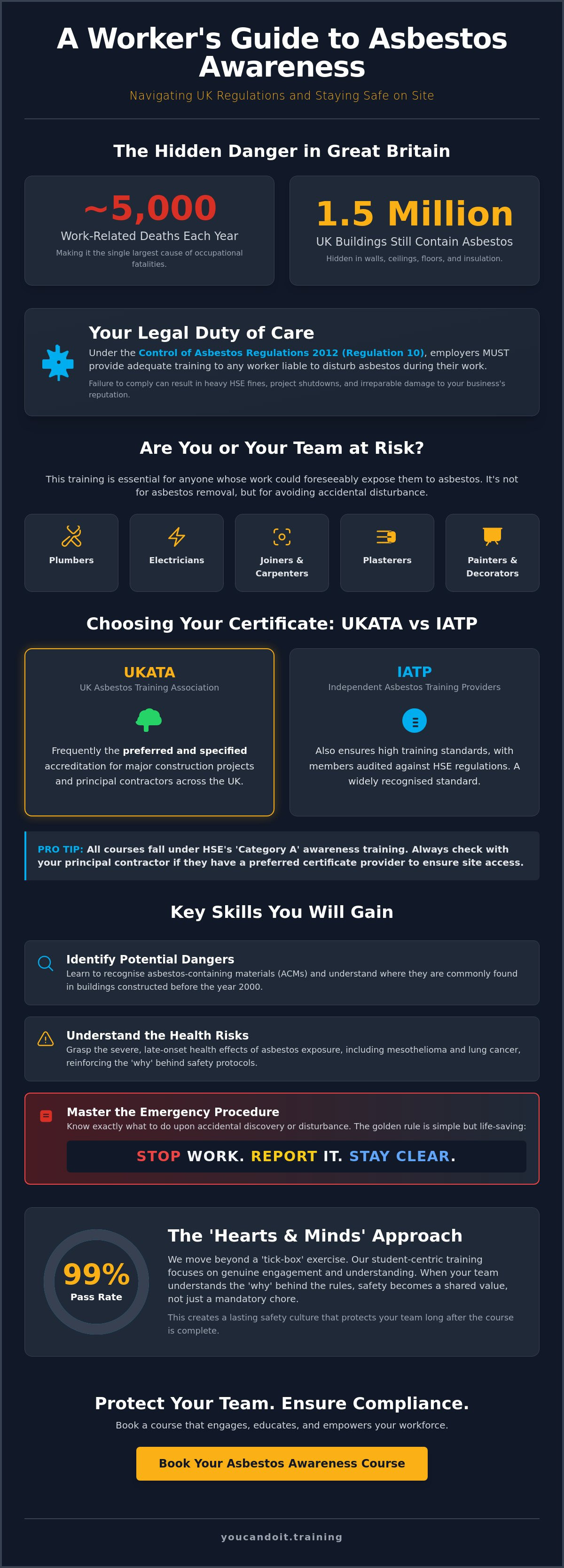
Did you know that asbestos remains the single largest cause of work-related deaths in Great Britain, claiming approximately 5,000 lives every year? With an estimated 1.5 million buildings in the UK still containing this hidden danger, finding a high-quality asbestos awareness training course is more than just a legal hurdle; it's a vital step in ensuring your team returns home safely at the end of every shift.
We understand that health and safety can often feel like a cold, clinical chore, especially when you're caught between confusing accreditation acronyms and the fear of legal consequences. You want your people to be compliant with the Control of Asbestos Regulations 2012, but you also want them to be genuinely engaged whilst they learn. At You Can Do It Training Ltd, we believe the best learning happens when people feel comfortable, perhaps with a warm cup of tea and a bourbon cream in hand, in an environment that fosters real camaraderie and mutual respect.
In this guide, we'll help you find the right training, for the right people, at the right price. You'll learn how to distinguish between UKATA and IATP certificates, what the HSE expects from your business, and how to move beyond theory to ignite a safety culture that puts your workers' hearts and minds at the centre of everything you do.
Key Takeaways
Understand your mandatory legal obligations under the Control of Asbestos Regulations 2012 to ensure your business remains fully compliant and avoids heavy HSE penalties.
Learn how to navigate the differences between UKATA and IATP standards so you can select the most recognised certification for your specific site access requirements.
Discover how an accredited asbestos awareness training course empowers your team to identify dangerous materials in older buildings and respond safely to accidental disturbances.
Gain practical insights into the health risks associated with asbestos, helping your workforce understand the vital importance of safety protocols rather than just treating them as a tick-box exercise.
See how a student-centric 'hearts and minds' approach leads to a 99% pass rate by making technical safety training engaging, supportive, and accessible for every learner.
Table of Contents
Understanding the Legal Necessity of Asbestos Awareness Training
Under Regulation 10 of the Control of Asbestos Regulations 2012, an asbestos awareness training course isn't just a recommendation; it's a legal necessity for a vast range of UK workers. This regulation ensures that anyone who might come into contact with asbestos during their normal day-to-day work receives the right knowledge to stay safe. It's designed specifically for those who don't intend to work with the material directly but need to know how to avoid the dangers of asbestos exposure if they accidentally disturb it whilst on the job.
HSE Guidelines and Compliance for UK Employers
The Health and Safety Executive (HSE) is clear that every employer has a duty to provide 'information, instruction, and training' to their staff. This isn't about filling out a form or completing a 'tick-box' exercise; it's about providing the right training, for the right people, at the right time. Failing to comply can lead to devastating consequences, from massive fines that can cripple a business to immediate project shutdowns that stall your growth. We've seen how a lack of compliance can damage reputations, but more importantly, it puts lives at risk.
Why 2026 Standards Require a Mindset Shift
As we head into 2026, the industry is moving away from cold, clinical instruction toward a 'Hearts and Minds' philosophy that truly engages the learner. We believe that when a worker understands the 'why' behind a safety rule, they're far more likely to follow it than if they're just told 'how' to do it. By igniting a genuine interest in safety, we move from mandatory chores to transformative opportunities for growth. Asbestos awareness is the first line of defence against late-onset respiratory diseases.
Comparing UKATA, IATP, and Category A Training Standards
Choosing the right asbestos awareness training course often feels like navigating an alphabet soup of acronyms. Whilst the core syllabus for every course is strictly defined by the HSE's L143 Approved Code of Practice, the 'badge' on the certificate determines where your team can actually work. You'll typically encounter two main bodies: UKATA (UK Asbestos Training Association) and IATP (Independent Asbestos Training Providers). Both organisations ensure high standards, but UKATA is frequently the preferred choice for major construction projects and principal contractors across the UK.
All of these fall under the umbrella of 'Category A' training. This is the foundational level required for any site worker who might encounter asbestos but isn't there to remove it. It's about providing the right knowledge, for the right environment, at the right time. Before you book your asbestos awareness training course, always ask your principal contractor if they have a specific preference. It's much better to check now than to find your team turned away at the site gates because their certificate doesn't match the project's specific requirements.
Accreditation vs. Self-Certification
We always recommend third-party audited training because it provides a robust layer of legal protection for managers. When a course is audited by a body like UKATA, you aren't just taking the trainer's word for it; you have proof of a high-quality learning environment. This recognised qualification works brilliantly when paired with an iosh working safely course to build a comprehensive safety profile for your workforce. It shows you're serious about the legal requirement for asbestos training and the long-term health of your staff.
How to Verify a Training Provider's Credentials
Don't be tempted by 'certificate mills' that offer suspiciously cheap, un-audited training. These often lack the 'hearts and minds' engagement needed to actually keep people safe. A quick actionable tip: always verify a provider's status by checking their name on the official UKATA or IATP member lists before you commit any budget. If you're looking for a partner that prioritises your team's success, our UKATA Asbestos Awareness training ensures you're fully compliant whilst keeping the atmosphere relaxed and supportive.
The Core Curriculum: Key Skills Gained During the Course
An asbestos awareness training course transforms the way your team perceives a site. It's not just about learning facts; it's about developing a keen eye for hidden dangers in any building constructed or refurbished before the year 2000. We teach our students to look beyond the surface, following the HSE Approved Code of Practice (L143) to ensure every worker understands the gravity of the risks involved. This knowledge empowers them to use on-site asbestos registers and management plans effectively, ensuring they know exactly where hazards are located before they even pick up a tool.
Practical Identification of ACMs
You can't always tell if a material contains asbestos just by looking at it. Because visual identification is never 100% certain, we foster a cautious 'assume it is asbestos' mindset amongst our learners. It's the only way to stay safe. During the course, we highlight common locations where these materials are frequently found, such as:
Ceiling tiles and textured coatings, often referred to by the brand name Artex.
Pipe insulation and boiler lagging found in older plant rooms.
Floor tiles and the bitumen adhesives used to stick them down.
Asbestos cement roofing, soffits, and wall panels.
When you are ready to replace old floor tiles or bitumen adhesives that have been cleared of asbestos, specialists like Surefit Carpets Ltd can provide a wide range of safe, modern flooring options to complete your project.
If a suspicious material is accidentally disturbed, the training provides a clear, logical emergency procedure. Your team will know exactly how to secure the area, report the incident, and prevent the spread of dangerous dust. This immediate response is vital for preventing long-term health issues like mesothelioma and lung cancer, which often don't appear until decades after the initial exposure.
The Link Between Asbestos Awareness and First Aid
A truly safe site is one that is prepared for any eventuality. Whilst awareness training significantly reduces the likelihood of an incident, it's equally important to have trained responders on hand if something goes wrong. This is why many proactive managers choose to pair this qualification with a first aid at work course. By combining these essential skills, you create a workforce that doesn't just understand the theory of safety, but possesses the practical confidence to protect one another. Ready to build a more resilient team? Explore our UKATA Asbestos Awareness training today.
Why the 'Hearts and Minds' Approach Ensures Training Success
Many providers treat health and safety as a digital commodity, a simple box-ticking exercise to be completed as quickly as possible. We take a different view. Our asbestos awareness training course is designed to be a transformative opportunity that ignites a genuine spark of interest in your team. By putting the learner at the heart of everything we do, You Can Do It Training Ltd has maintained a 99% pass rate. This success isn't down to luck; it's the result of a supportive, non-intimidating environment where people feel comfortable enough to truly engage with the material.
You aren't just watching a screen; you're guided by a 'Knowledgeable Mentor' who is a Chartered member of IOSH. This means you're learning from an expert who understands the technical grit of the regulations but communicates with the warmth of a peer. We believe the learning environment matters just as much as the curriculum. Our classrooms are professional yet relaxed, always stocked with plenty of tea, coffee, and those essential bourbon creams to keep energy levels high and spirits up throughout the day.
National Delivery with a Personalised Touch
Actionable Tips for Post-Training Compliance
True safety culture continues long after the certificates are handed out. To keep your team soaring and your business compliant, consider these practical steps:
Organise an annual refresher: Knowledge can fade, especially when workers are busy on-site. A quick yearly update ensures that asbestos awareness remains a top priority rather than a distant memory.
Integrate awareness into inductions: Don't wait for a scheduled course to start the conversation. Make basic asbestos safety a core part of your standard site induction for every new starter or contractor.
You can do it; protecting your team and ensuring they return home safely is the most rewarding part of the job.
Protect Your Workforce and Secure Your Site Access for 2026
Choosing the right asbestos awareness training course is one of the most vital decisions you'll make for the safety of your team and the long-term compliance of your business. By moving beyond simple tick-box exercises and focusing on high-quality UKATA accreditation, you're ensuring that your workers possess the recognised certification required for major sites across the country. It's about more than just avoiding HSE penalties; it's about fostering a culture where everyone understands the real-world risks and knows exactly how to stay safe whilst on the job.
With over 30 years of industry experience, we've seen how our 'hearts and minds' approach transforms technical instruction into life-saving habits. Our Chartered IOSH mentors are dedicated to your success, maintaining a 99% pass rate by putting the learner at the centre of every session. We believe that a supportive atmosphere, complete with a warm brew and a friendly face, is the best way to ignite a genuine passion for workplace safety.
Ready to empower your team with the knowledge they need to soar? Book your UKATA-accredited Asbestos Awareness Training with the experts today and take the first step toward a safer, more compliant future. You've got this, and we're here to help you every step of the way.
Frequently Asked Questions
How long does an asbestos awareness certificate last?
An asbestos awareness certificate does not have a legally mandated expiry date, but the HSE strongly recommends that refresher training is undertaken every 12 months. This ensures that your knowledge of current regulations and safe working practices stays fresh and effective. Many principal contractors and site managers will not accept a certificate older than one year, so keeping your training up to date is essential for maintaining uninterrupted site access.
Is online asbestos awareness training HSE compliant?
Yes, online e-learning is a fully recognised and accepted method for delivering an asbestos awareness training course, provided the content meets the standards set out in the HSE's L143 guidance. It offers a flexible and efficient way for your team to gain essential knowledge without needing to leave the site. To ensure full legal protection, it is always best to choose a provider accredited by a recognised body like UKATA or IATP, as this guarantees the training has been independently audited.
Who is required to have asbestos awareness training by law?
Under Regulation 10 of the Control of Asbestos Regulations 2012, training is mandatory for any worker whose job could potentially disturb the fabric of a building and expose them to asbestos. This includes a wide range of trades such as plumbers, electricians, joiners, and painters who work on buildings constructed or refurbished before the year 2000. If there is a chance you might encounter hidden hazards during your normal work, you must have this foundational awareness to stay compliant.
What is the difference between Category A and Category B asbestos training?
Category A training is for general awareness and is intended for those who may encounter asbestos but will not intentionally work with it. In contrast, Category B training is for workers who carry out 'non-licensed' work where they will purposefully disturb asbestos-containing materials, such as drilling into textured coatings or removing floor tiles. Whilst Category A is the first line of defence for most site workers, Category B requires more practical, hands-on instruction for specific, low-risk tasks.
Can asbestos awareness training allow me to remove asbestos?
No, completing an asbestos awareness training course does not authorise you to remove or even intentionally disturb asbestos-containing materials. The sole purpose of this level of training is to help you identify, avoid, and report potential hazards to prevent accidental exposure. If your job requires the intentional removal of asbestos, you must undergo much more intensive specialist training and, in many cases, work for a contractor who holds a specific license from the HSE.


Comments