
Health and Safety Policy Review Checklist for Key Checks
A policy can look complete on paper yet miss what staff need to do in an emergency. A health and safety policy review checklist should cover the written policy’s statement, organisation and arrangements, alongside the arrangements that put it into practice. The HSE says employers must have a health and safety policy, and those with 5 or more employees must write it down.
Make the review practical: compare the policy with how work is organised, then record anything that needs updating. Clear responsibilities and useful procedures help people understand how to work safely.
This health and safety policy review checklist covers emergency plans, fire assessments and drills, staff training and supervision, and the written policy itself. Use the practical checks to spot gaps, record actions and keep the policy relevant as work changes.
Key Takeaways
- Review emergency arrangements alongside fire assessments, and make sure evacuation instructions are clear to everyone on site.
- Use drill records to identify lessons and follow up on any changes needed to emergency plans.
- Check that staff understand the risks linked to their work and have suitable information, training and supervision.
- Compare the written policy’s responsibilities and arrangements with current working practices, then note any updates needed.
Emergency plans, fire risk assessments and drills
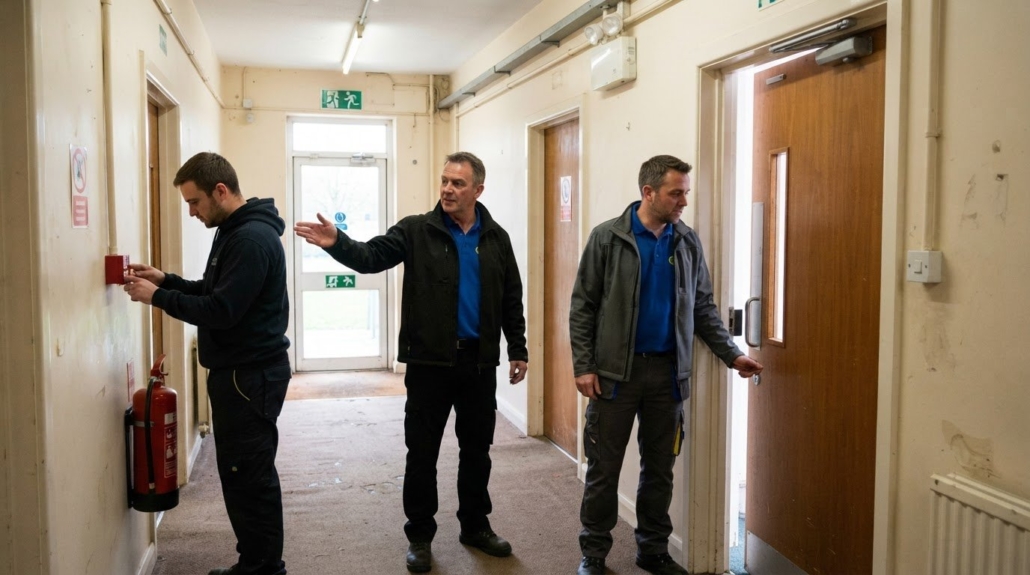
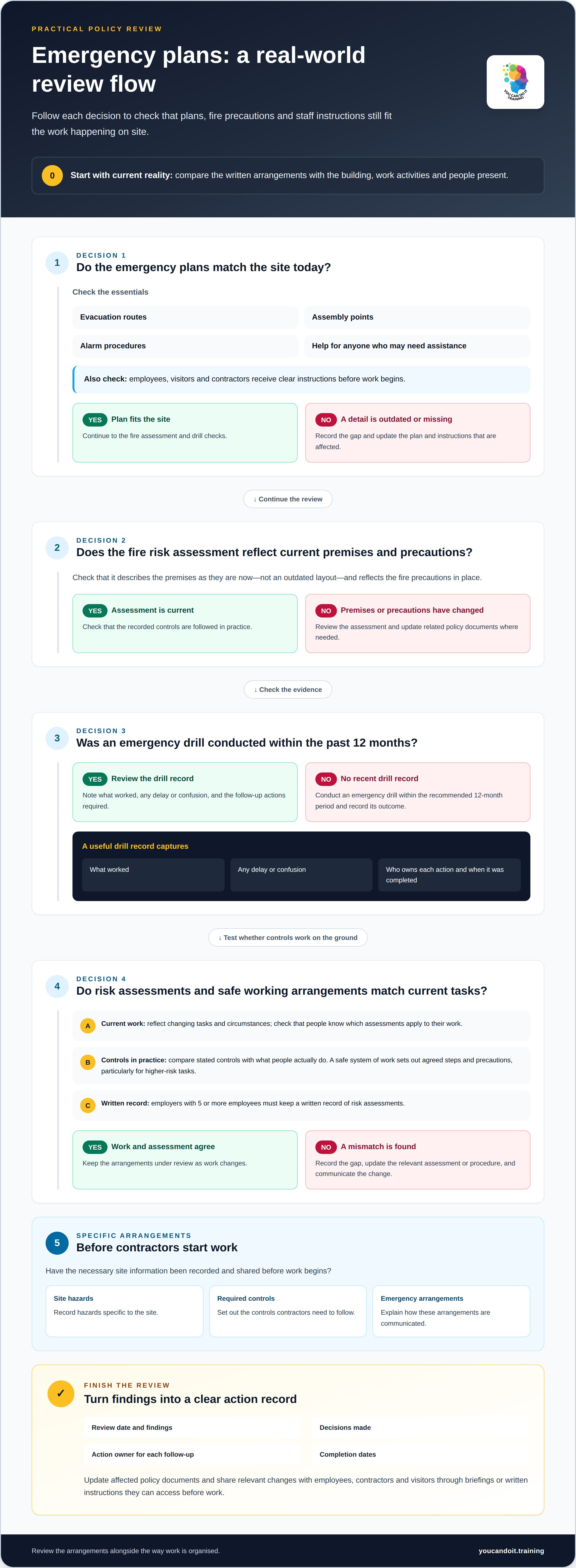
Check that emergency plans reflect the building, work activities and people present. Confirm evacuation routes, assembly points, alarm procedures and arrangements for anyone who may need assistance. Ensure employees, visitors and contractors receive clear instructions before work begins. The fire risk assessment should reflect the current premises and fire precautions, not an outdated layout.
Review drill records and actions: the checklist recommends conducting emergency drills within the past 12 months and recording their outcomes. Note what worked, any delay or confusion, who owns each follow-up action, and when it was completed. The Safety Representatives and Safety Committee Regulations 1977 are relevant to trade union health and safety representatives’ rights, according to UK legislation.
Risk assessments should reflect current tasks and changing circumstances. The NEU checklist calls for reviews or when circumstances change, while employers with 5 or more employees must keep a written record of risk assessments, according to the Health and Safety Executive. Check that employees know which assessments apply to their work, and compare the stated controls with actual practice. A safe system of work is a clear, agreed way of carrying out a task safely, including the steps to follow and precautions to take. These systems should cover higher-risk tasks.
For contractors, record site-specific hazards, required controls and how emergency arrangements are communicated before work starts. Control of Substances Hazardous to Health (COSHH) assessments should identify hazardous substances used, produced or released, and set out the controls. For display screen equipment, check that assessments reflect each user’s workstation and working arrangements. A user often works with screens most days for an hour or more at a time. If a user requests an eye and eyesight test, the employer must provide and pay for it.
Record the review date, findings, decisions, action owners and completion dates, then update affected policy documents. Communicate relevant changes directly to employees, contractors and visitors through briefings or written instructions they can access before work.
Staff information, training and supervision
Review safety responsibilities role by role. Confirm employees receive information about the hazards, controls and procedures relevant to their tasks. A warehouse operative, for example, needs different guidance from a site supervisor. Check that induction, task instructions and supervision match the work people actually do, including when duties or equipment change.
Training attendance alone does not show whether someone can apply what they have learned. Pair each training record with practical evidence, such as an observed inspection, a demonstration or a supervisor’s competency assessment, a check that someone can do their work safely and to the required standard. A useful template records the employee’s name, role, course or instruction, completion date, assessor and any follow-up action. Include a review date when refresher training depends on changing risks or responsibilities.
- Match training to risk: record which instruction supports each task, such as working at height or handling hazardous substances.
- Track competence: note assessment outcomes and any coaching needed before someone works independently.
- Check supervision: confirm a named supervisor can observe work, answer questions and correct unsafe practice.
If health surveillance, regular checks to identify whether work is affecting someone’s health, is part of workplace arrangements, record who needs it, how it is organised and who follows up on concerns. Protect personal health information appropriately and keep it separate from general training logs. Review the process when tasks, substances or equipment change, and record any resulting actions.
For supervisors who need practical health and safety knowledge for their role, You Can Do It Training Ltd provides courses like the CITB Site Supervisor Safety Training Scheme (SSSTS) to support learning about site responsibilities and safe working practices.
The HSE leadership checklist advises organisations to ensure staff, including board members, have enough information, training and supervision to meet their health and safety responsibilities. It also recommends checking whether workers know which risk assessments apply to their work. Include both points in your review: confirm that support reflects each person’s responsibilities, and check workers understand the assessments relevant to their tasks. Use the findings to identify where information, training or supervision needs attention.
Reviewing written health and safety policies
In the UK, employers must have a health and safety policy, and employers with 5 or more employees must write it down, according to the Health and Safety Executive. The Health and Safety at Work etc Act 1974 places responsibilities on employers to take steps to protect employees’ health, safety and welfare at work, according to UK legislation. UK legislation also identifies that Act and the Management of Health and Safety at Work Regulations 1999 as relevant to governing bodies that control premises.
A review checks whether the policy still describes the workplace, responsibilities and arrangements accurately. Update it when circumstances change, such as new work activities, altered responsibilities or changes to premises. The HSE leadership checklist also recommends reviewing arrangements against guidance and making appropriate changes.
Sector-specific requirements may apply. For schools, the NEU checklist calls for policies to be reviewed and revised as necessary at least every two years, in consultation with recognised trade unions. Involve managers, worker representatives and employees so reports and practical concerns inform the review.
Use a health and safety policy review checklist to examine the policy’s statement, organisation and arrangements. Compare risk assessments with current work, training records with staff responsibilities, incident reports with existing controls, and emergency procedures with actual practice. Record gaps, assign an owner and track each action to completion.
You Can Do It Training
You Can Do It Training supports the people-focused part of your review by building staff and managers’ health and safety knowledge through relevant training. If the review identifies gaps in understanding or supervision, consider which roles need stronger foundations and which need training suited to their site responsibilities.
CITB Health and Safety Awareness (HSA) helps build general awareness, while the CITB Site Supervisor Safety Training Scheme (SSSTS) and CITB Site Management Safety Training Scheme (SMSTS) suit supervisory and management roles. The CITB SSSTS Refresher provides refresher training for supervisors. Matching training to responsibilities helps turn policy expectations into informed day-to-day practice.
To discuss suitable training for your team, contact You Can Do It Training.
Make the next review easier to act on
Use the health and safety policy review checklist to start a simple improvement cycle. Give each agreed change an owner, note how progress will be tracked, and make the current policy easy for staff to find. A short review log can show what changed and why, helping future decisions build on previous work rather than start from scratch.
Set a reminder to revisit the log during a suitable management review. If a change affects how people work, make the update clear and practical for everyone involved. Consistent follow-through turns written arrangements into everyday habits and keeps the policy relevant as the workplace develops.
Every thoughtful step helps build a safer, more confident workplace. You can do it.
Frequently Asked Questions
What should a UK health and safety policy include?
The policy should explain how workers can raise safety concerns and how the organisation responds. For example, describe how to report a damaged guard, who decides whether equipment can remain in use, and how corrective action is recorded. Explain how workers’ concerns reach senior decision-makers so feedback from the workplace can inform policy and management decisions.
How often should a health and safety policy be reviewed in the UK?
Set a recurring reminder in your organisation’s governance calendar, and bring the review forward if an incident report or audit identifies a gap. This makes the review responsive to evidence instead of relying on a calendar date as the only trigger. If no changes are needed, record why the policy remains suitable.









Leave a Reply
Want to join the discussion?Feel free to contribute!