
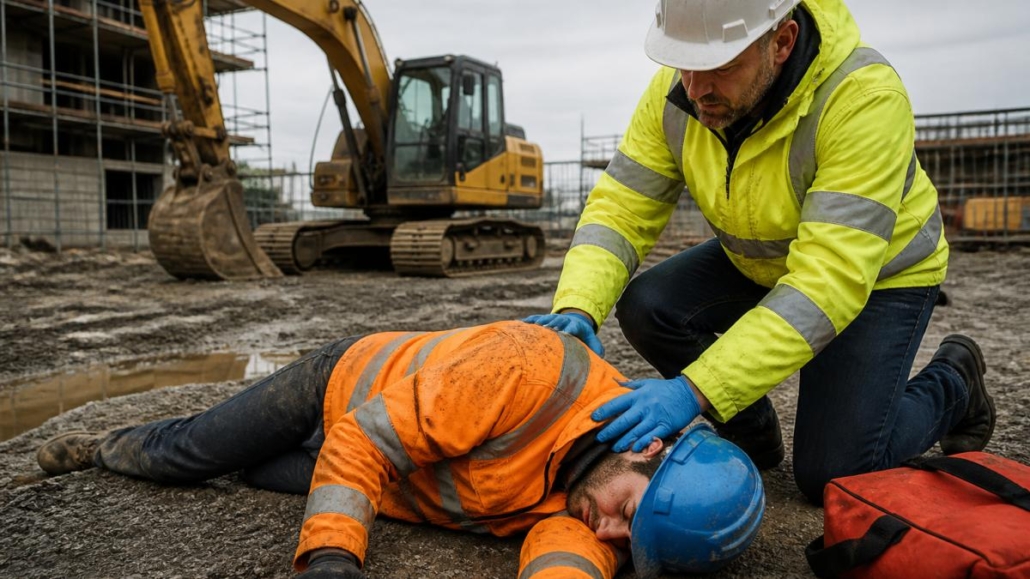
Construction Health and Safety: A 2026 Compliance Guide
Table of Contents
- What Construction Health and Safety Law Actually Requires
- CDM 2015 Regulations: Who Carries Which Duty
- How to Build a Construction Site Risk Assessment Template That Works
- The Hazards That Cause the Most Site Injuries
- Health and Safety Training for Construction Workers: What Each Role Needs
- What to Ignore: Common Bad Advice on Construction Health and Safety
- Frequently Asked Questions
Last Updated: September 30, 2026
What Construction Health and Safety Law Actually Requires
Construction health and safety is the system of legal duties, risk assessments and training that every site must have in place before work starts, and it applies to clients, designers, contractors and workers alike. The core statute is the Health and Safety at Work etc. Act 1974, supported by the Management of Health and Safety at Work Regulations 1999 and the Construction (Design and Management) Regulations 2015. In practice, that means identifying hazards, controlling risks, appointing competent people, and being able to prove all of it. The Health and Safety Executive enforces these duties and publishes its construction guidance, and it expects paperwork to reflect what actually happens on site, not what looks good in a folder.
This guide from You Can Do It Training walks through the duties, the documents and the training each role needs. Most site problems trace back to one gap: nobody owns the risk assessment.
CDM 2015 Regulations: Who Carries Which Duty
CDM 2015 regulations split responsibility across every party in a project, which is why “who owns this?” is the most common question on site. The regulations apply to most construction projects, and duties scale with your level of control.
Client, Principal Designer and Principal Contractor Duties
The client has the most influence and the most duties. They must appoint a principal designer and principal contractor on projects with more than one contractor, make sure suitable management arrangements are in place, and provide pre-construction information. A domestic client’s duties usually pass to the contractor.
The principal designer plans, manages and monitors the pre-construction phase. The principal contractor controls the construction phase, produces the construction phase plan, and coordinates the site. Contractors and workers must cooperate, report risks, and follow the plan.
| Role | Core Duty | Key Document |
|---|---|---|
| Client | Appoint duty holders, provide information | Pre-construction information |
| Principal Designer | Coordinate design-stage risk | Pre-construction information |
| Principal Contractor | Manage the site and trades | Construction phase plan |
| Contractor | Plan own work safely | Risk assessments, method statements |
| Worker | Cooperate and report | Induction records |
The thing nobody tells you about CDM: it is not a form-filling exercise. Inspectors look for evidence that duty holders actually coordinated, not that they emailed a pack once.
How to Build a Construction Site Risk Assessment Template That Works
A construction site risk assessment template works when it forces a decision, not when it records a hazard. The best templates are short, specific to the task, and reviewed before the work starts.
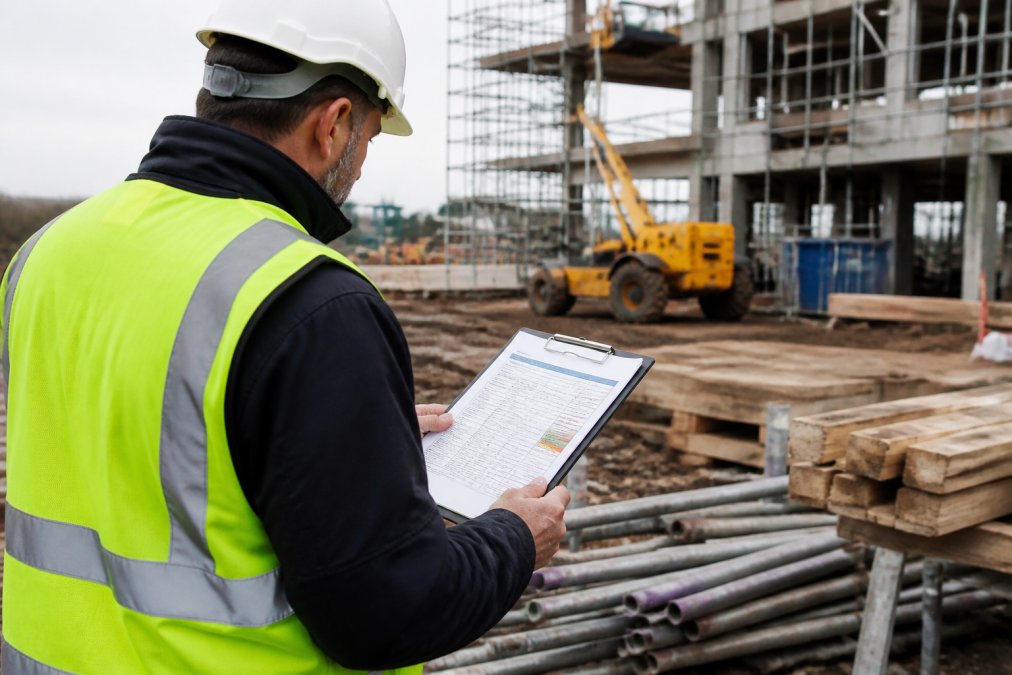
Start by listing the task, not the whole project. “Erecting edge protection on level 3” is assessable. “Working at height” is not.
The Five Columns Every Assessment Needs
- Hazard: what could cause harm
- Who is at risk: named groups, not “everyone”
- Initial risk: likelihood and severity before controls
- Control measures: the specific action, not “be careful”
- Residual risk: the risk once controls are in place
Add a review date and a name against each line. A common mistake is writing controls that nobody on site could actually implement. If the control is “use a tower scaffold”, someone has to have checked it is available and inspected.
Assessments copied from a previous job are the single fastest way to fail an inspection. If the document does not match the site in front of you, the HSE treats it as evidence of a failure to plan, not a paperwork slip.
The Hazards That Cause the Most Site Injuries
Falls from height, moving plant, and manual handling account for the majority of serious injuries on sites, and each has a well-established control. The HSE’s own construction statistics and priorities consistently point to the same handful of causes, which is why they dominate toolbox talks.
Falls from height remain the leading cause of fatal injury in construction. Control means avoiding work at height where possible, then preventing falls with guardrails or working platforms, then minimising distance and consequence with nets or airbags.
Moving plant and vehicles cause serious crush and struck-by injuries. Segregate pedestrians and vehicles, plan traffic routes, and use banksmen where visibility is limited.
Manual handling and musculoskeletal injuries build up slowly and are easy to ignore until someone is off work. Assess the load, reduce the carry distance, and provide mechanical aids.
Asbestos deserves its own line. Any building constructed or refurbished before the year 2000 may contain asbestos, and disturbing it without a survey is a serious offence. Duty holders must manage asbestos in non-domestic premises under the Control of Asbestos Regulations 2012, and anyone likely to disturb it needs awareness training at minimum.
A common mistake is treating asbestos awareness as a one-off induction box. If your team moves between refurbishment jobs, the awareness refresher matters more than the certificate on the wall, because the risk changes with every building.
Health and Safety Training for Construction Workers: What Each Role Needs
Health and safety training for construction workers is not one course; it is a set of role-specific competencies that must match the person’s actual duties. Site access, supervision and specialist work each carry different requirements.
Basic site access usually means a CSCS card, which requires passing the CITB Health, Safety and Environment test. Supervisors typically need SSSTS, and site managers need SMSTS. Both are delivered through accredited providers and are widely treated as the benchmark for supervisory competence.
Specialist roles add their own tickets. Plant operators need NPORS or equivalent certification for the machine they actually use. Anyone working at height on mobile towers needs PASMA. Anyone likely to disturb asbestos needs UKATA or equivalent awareness training.
| Role | Typical Requirement | Refresher |
|---|---|---|
| General site worker | CSCS card, HSE test | Every 5 years |
| Supervisor | SSSTS | Every 5 years |
| Site manager | SMSTS | Every 5 years |
| Plant operator | NPORS ticket | Per category |
| Tower user | PASMA | Every 5 years |
| Asbestos awareness | UKATA | Annually recommended |
At You Can Do It Training, courses are designed to fit around live site schedules rather than stall them.
What to Ignore: Common Bad Advice on Construction Health and Safety
Bad advice on construction health and safety usually sounds sensible, which is what makes it dangerous. Here are the ones worth ignoring.
Frequently Asked Questions
What are the main health and safety regulations for construction in the UK?
The core framework is the Health and Safety at Work etc. Act 1974, supported by the Construction (Design and Management) Regulations 2015, known as CDM 2015. Alongside these sit the Work at Height Regulations 2005, the Control of Asbestos Regulations 2012, the Provision and Use of Work Equipment Regulations 1998 and the Control of Substances Hazardous to Health Regulations 2002. The Management of Health and Safety at Work Regulations 1999 require every employer to carry out suitable and sufficient risk assessments and appoint competent people to manage site risks.
What is the role of the Health and Safety Executive on construction sites?
The Health and Safety Executive (HSE) is the regulator that enforces construction health and safety law. Inspectors can visit sites without notice, issue improvement or prohibition notices, and prosecute serious breaches. HSE also publishes approved codes of practice and guidance that courts treat as evidence of what reasonable compliance looks like. For site managers, this means paperwork alone will not satisfy an inspector: you need evidence that risks were identified, controls were in place, and workers were trained for the tasks they were doing.
How do I ensure my construction site is CDM 2015 compliant?
Start by confirming every duty holder is appointed in writing: client, principal designer and principal contractor where more than one contractor is involved. Build a construction phase plan before work begins, maintain a constantly updated health and safety file, and make sure the site has suitable welfare facilities from day one. CDM 2015 regulations also require cooperation between duty holders, so hold regular coordination meetings and record the decisions. If you are unsure whether your arrangements meet the standard, an external compliance review is cheaper than a prohibition notice.
What training is required for construction site workers?
Most sites require a valid CSCS card, which means passing the CITB Health, Safety and Environment test at the right level for your role. Supervisors typically need SSSTS, and site managers need SMSTS. Trade-specific certification matters too: NPORS or equivalent for plant operators, UKATA asbestos awareness for anyone who may disturb asbestos-containing materials, and PASMA for mobile tower work. Training frequency depends on the certificate, but most carry a five-year renewal cycle, so track expiry dates before they lapse and block site access.
How can I improve health and safety culture on a construction site?
Culture changes when workers see supervisors acting on what they report. Run short daily briefings tied to that day’s actual tasks rather than generic toolbox talks, close out near-miss reports visibly, and make sure PPE rules apply to everyone from the apprentice to the contracts manager. Recognise people who stop work for safety rather than treating it as lost time. Training helps here too: practical, scenario-based sessions stick far better than slide decks, and refreshers keep the standard from drifting as crews change.
Do I need a separate risk assessment for every task on site?
No. A construction site risk assessment template covering your recurring activities, adapted for each project’s specific hazards, is usually sufficient. What matters is that the assessment reflects the actual work, the actual site conditions and the actual people doing it. Generic templates copied from another project fail on all three counts and are easy for an HSE inspector to challenge. Review assessments when the method changes, when new plant arrives, or after any incident, and record who reviewed them and when.

