

Abrasive Wheels Training: Safe Selection, Inspection and Use
A wheel that fits a tool isn’t automatically suitable for the job. Choosing the wrong type, overlooking damage or using it incorrectly can put the operator and people nearby at risk. If you’re searching for abrasive wheels training, make sure you choose a reputable provider that delivers comprehensive, high-standard instruction suited to your operational needs.
Before abrasive-wheel work begins, workers need to know how to choose suitable equipment, what to check and when to stop and seek advice. This guide covers key safety principles in practical terms, drawing on HSE guidance, including HSG17, Safety in the use of abrasive wheels. It also explains what to ask about a course so you can check whether it suits learners’ roles and experience.
You Can Do It Training Ltd offers Abrasive Wheels Training for individuals and employers across the UK. Course content and arrangements can vary, so check the details that matter to your learners before booking.
Key Takeaways
- Choose a wheel by considering the task and the machine it will be used with.
- Before contacting a provider, note learners’ roles, the equipment they use and the questions you need answered.
- Ask about the syllabus, assessment, prerequisites and delivery arrangements before booking.
- Share learner numbers and work context to help establish whether Abrasive Wheels Training suits your needs.
Abrasive wheels training: why safe selection and use matter
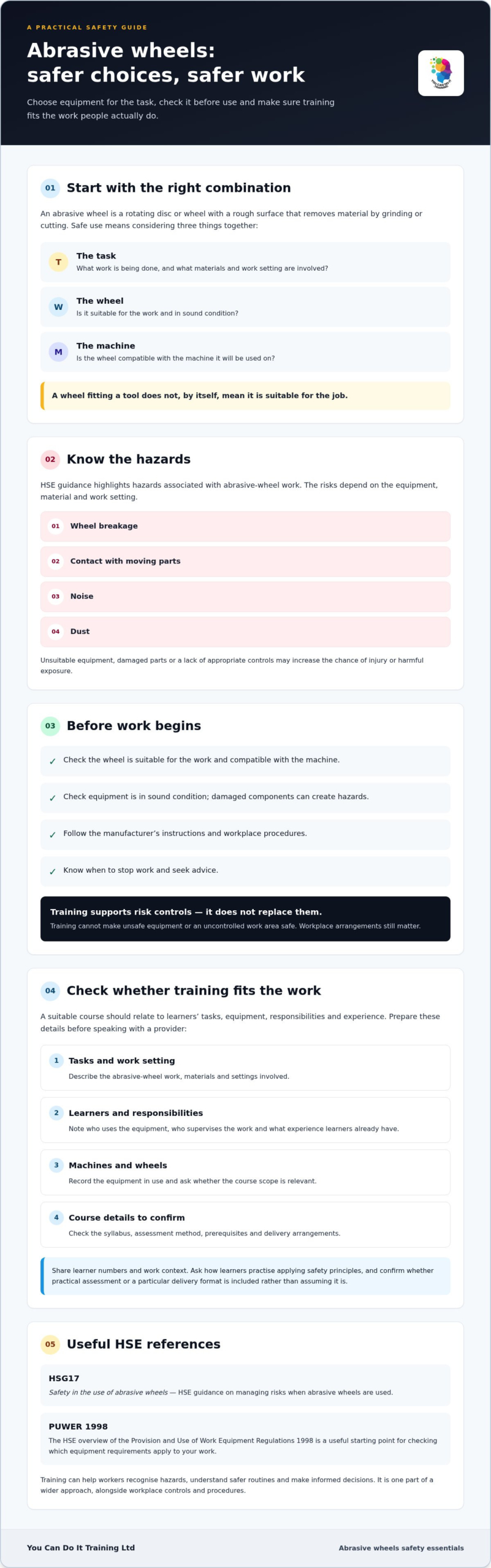
An abrasive wheel is a rotating disc or wheel with a rough surface that removes material by grinding or cutting. It’s fitted to a machine, such as a bench grinder or angle grinder, but the wheel and machine are separate pieces of equipment. The Grinding wheel overview offers a useful introduction to how these wheels work.
Safe use means considering the wheel, machine and task together. Check that the wheel is suitable for the work and compatible with the machine, and follow the manufacturer’s instructions and workplace procedures. Damaged components or unsafe working practices can also create hazards. HSE guidance, including HSG17, explains the need to manage risks when abrasive wheels are used. Training helps workers understand what to consider and when to stop and seek advice.
Good abrasive wheels training helps workers build the knowledge and practical judgement to make safer choices and follow safe working routines. Training supports risk controls; it doesn’t replace them. Employers still need suitable workplace arrangements for the work being carried out.
What can go wrong when abrasive wheels are used unsafely?
HSE guidance highlights hazards associated with abrasive-wheel work, including wheel breakage, contact with moving parts, noise and dust. The risks depend on the equipment, material and work setting. Unsuitable equipment, damaged parts or a lack of appropriate controls may increase the chance of injury or harmful exposure. Before work begins, follow workplace procedures and check that equipment is suitable and in sound condition. Training can help workers recognise hazards and understand what to do, but it can’t make unsafe equipment or an uncontrolled work area safe.
How to assess abrasive wheels training for your work
A suitable course should relate to the work people do, the equipment they use and the responsibilities they hold. If you searched for “abrasive wheels training stoke on trent”, use the results to find possible providers, then check their course details rather than assuming the search phrase confirms a local delivery option.
- List the tasks. Describe the abrasive-wheel work your team carries out, including the materials and work settings involved.
- Identify the learners. Note who uses the equipment, who supervises the work and what experience they already have.
- Describe the equipment. Record the types of machines and wheels used, then ask whether the course scope is relevant.
- Prepare questions. Confirm the syllabus, assessment method, prerequisites and delivery arrangements before booking.
For workplace equipment expectations, consult current HSE guidance and check which requirements apply to your work. The HSE’s overview of the Provision and Use of Work Equipment Regulations 1998 (PUWER) is a useful starting point. Ask providers how learners practise applying safety principles. Don’t assume a practical assessment or a particular delivery format is included unless the provider confirms it.
What should employers check before booking?
Compare the confirmed course information with learners’ roles and workplace tasks. Ask about course content, assessment, entry requirements and delivery. You Can Do It Training Ltd offers Abrasive Wheels Training. Ask about the Abrasive Wheels Training course to discuss its current content and arrangements before deciding whether it fits your needs.
Taking the next step with abrasive wheels training
How to prepare for an enquiry or course
Before contacting a provider, gather the details that will help you check whether the course suits your team:
- Learner numbers and roles: note who uses abrasive wheels and who supervises the work.
- Work context: describe the tasks, equipment and materials involved, as well as learners’ experience.
- Questions about the course: ask what the current course covers, who it’s suitable for, how learning is assessed and what delivery arrangements are available.
Be specific about the work your team does. For example, explain whether learners use different machines or carry out varied tasks, then ask the provider to confirm whether these fit the course scope. If assessment arrangements matter to your organisation, ask how they work rather than assuming a particular method is included.
You Can Do It Training Ltd offers Abrasive Wheels Training for individuals and employers. Before booking, confirm the current syllabus, learner suitability, assessment arrangements and delivery details.
Build safer abrasive-wheel practices with the right training
Safe abrasive-wheel work depends on considering the wheel, machine and task together, and choosing training that fits learners’ roles and experience. Before booking, check the course content, assessment arrangements and delivery details with the provider. Training can support awareness and informed decisions alongside the workplace controls needed for the work.
You Can Do It Training Ltd offers Abrasive Wheels Training in Stoke-on-Trent as part of its health and safety training. Ask about the current course arrangements, whether you’re enquiring for yourself or a team.
Frequently Asked Questions
What does abrasive wheels training cover?
Course coverage varies by provider, so check the current syllabus rather than assuming particular topics are included. Ask whether learners will cover wheel selection, inspection and safe working practices, and how these relate to their tasks. You Can Do It Training offers Abrasive Wheels Training; confirm the current syllabus with the provider before booking.
Who should consider abrasive wheels training?
Anyone who uses abrasive-wheel equipment or supervises related work can ask whether training is appropriate for their role. Suitability depends on the person’s tasks, experience and workplace assessment, so the same course may not suit every learner. Workers should discuss their responsibilities with their employer, who can consider the risks and the knowledge or skills needed for the work.
Is abrasive wheels training a legal requirement in the UK?
There isn’t one answer that applies to every worker and workplace. A particular named course or specific certificate shouldn’t be assumed to be a universal legal requirement. Employers should consult current HSE guidance and consider their equipment, work activities and workforce when checking relevant training expectations. For a tailored interpretation of legal duties, seek competent health and safety advice.
How can I choose an abrasive wheels training course?
Match the course to learners’ tasks, experience and equipment, then ask the provider to confirm its syllabus, assessment method and delivery arrangements. Check that the content relates to the machines and work your team carries out. You Can Do It Training offers Abrasive Wheels Training, but you should enquire directly to confirm the current course details before booking.









Leave a Reply
Want to join the discussion?Feel free to contribute!