

Asbestos awareness training in Stoke-on-Trent for your team
A UKATA asbestos awareness course is for employees whose work could foreseeably disturb a building and expose them to asbestos, as well as people who supervise or influence that work. The AA01 course has a minimum duration of 3 learning hours, including the final exam. It helps workers recognise potential risks and respond appropriately.
It’s understandable to want practical details before arranging training for yourself or your team. Knowing who should attend, how long the session takes and what the certificate means makes planning easier and helps you choose the right next step.
Here’s what to expect: who the course suits, how certificates work, how to plan training for a team and how awareness training supports safe working. It also explains why awareness training does not authorise anyone to work on asbestos.
Key Takeaways
- Identify employees whose work could disturb building materials, along with anyone who supervises or influences that work.
- Plan how you’ll track certificate validity, and remember awareness training doesn’t authorise asbestos work.
- For a team session, consider whether an onsite group of 4 to 15 delegates suits your team’s needs.
- Compare local classroom dates with your rota, and allow time for the end-of-session written check.
Asbestos awareness course duration and certificate validity
According to UK legislation, Regulation 10 of the Control of Asbestos Regulations 2012 requires UK employers to provide suitable information, instruction and training to people liable to be exposed to asbestos and their supervisors. This includes workers whose tasks could disturb materials that may contain asbestos. The Health and Safety Executive says UKATA asbestos awareness training alone does not meet the legal requirements under the Control of Asbestos Regulations 2012. Awareness training is one part of the response, not permission to work on asbestos.
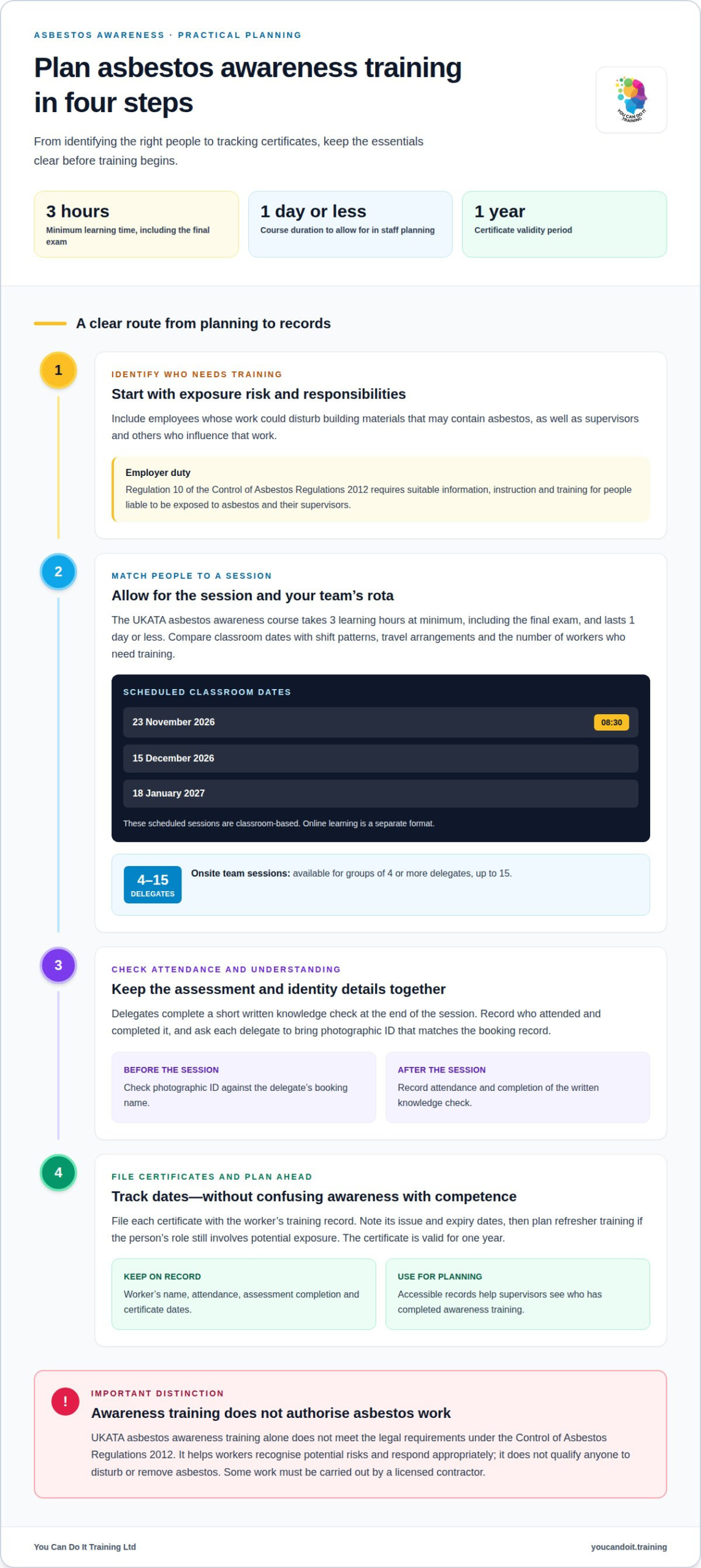
The UKATA asbestos awareness course has a minimum duration of 3 learning hours, including the final exam. The course takes 1 day or less, so allow for the scheduled session when arranging staff cover. Delegates learn about asbestos risks, how to recognise materials that may contain asbestos, and what to do if they suspect exposure. Completing awareness training does not authorise a worker to disturb or remove asbestos.
The certificate is valid for one year. Record its issue and expiry dates, then plan refresher training if the worker’s role still involves potential exposure. A valid certificate does not qualify its holder to carry out asbestos work. UKATA’s awareness course follows its syllabus. Other accredited courses may have different content and aims, so compare their learning outcomes with the hazards and responsibilities in your workplace.
Course fees depend on delivery format, group size and location; the price is provided after a quote request. Consider these factors when planning training for individual delegates or a team.
Team session sizes and certificates
Onsite sessions can accommodate teams of 4 or more delegates, up to 15. That gives employers a practical way to train workers together.
Assessment and certification
Delegates complete a short written knowledge check at the end of the session. This gives each worker a chance to demonstrate their understanding of asbestos awareness. For team planning, record who attended and completed the assessment. These records help employers track training across the workforce and identify who may need a refresher. Awareness training does not authorise anyone to disturb asbestos-containing materials.
Certificates and photographic ID
Set a simple check-in process: ask each delegate to bring photographic ID and ensure the name matches the booking record. This keeps attendance records clear and reduces the risk of certificate details being linked to the wrong worker. File each certificate with the delegate’s training record, so supervisors can see who has completed the course when assigning relevant tasks.
For UKATA certification validation, act promptly if a certificate’s authenticity raises concern. Report concerns immediately by calling UKATA on 01246 824437. Employers can also record the certificate details alongside the worker’s name and training date, then use that information when planning future training. Clear records make it easier to distinguish completed awareness training from practical competence to carry out asbestos work.
Asbestos awareness course dates in Stoke-on-Trent
National training schedules give workers a practical way to plan asbestos awareness training around their duties, including options accessible from Stoke-on-Trent. Match available session dates with staff rotas and the risks of being exposed at work.
Available course dates
The scheduled classroom dates are 23 November 2026 at 08:30, 15 December 2026 and 18 January 2027. Compare each date with shift patterns, travel arrangements and the number of workers who need training.
These scheduled sessions are classroom-based rather than online learning formats. If you prefer this delivery method, plan for in-person attendance; online learning is a separate format offered by You Can Do It Training Ltd.
Course booking
For booking, first identify anyone whose work could expose them to asbestos, then agree which date fits their duties. Include relevant supervisors, since they may also need asbestos awareness training under the Control of Asbestos Regulations 2012.
When arranging places, prepare each delegate’s name and preferred date, then keep the booking details with your staff training records. After the course, record completion and the UKATA certificate date so responsible managers can plan refresher training.
Awareness training helps workers recognise risks, but it does not qualify anyone to disturb asbestos-containing materials. Work that may involve asbestos can require a different level of training, and some work must be carried out by a licensed contractor. Keep this distinction clear when assigning tasks.
To make the date useful, check the team’s work calendar, identify who needs training and choose a classroom session that lets them attend together. Keep the attendance and certificate records accessible to the supervisors responsible for the relevant properties.
You Can Do It Training: CITB Health and Safety Awareness (HSA)
You Can Do It Training Ltd offers CITB Health and Safety Awareness (HSA) for people who need a foundation in workplace health and safety. It can complement asbestos awareness when workers also need broader site safety knowledge, but it does not replace asbestos-specific training or authorise asbestos work.
Choose training to match each person’s responsibilities. Supervisors may benefit from the CITB Site Supervisor Safety Training Scheme (SSSTS), while managers may need the CITB Site Management Safety Training Scheme (SMSTS). The CITB SSSTS Refresher is for supervisors renewing relevant training. Each course serves a different role, so match the option to the work your team carries out.
For training that fits your team’s needs, contact You Can Do It Training Ltd to discuss the suitable next step.
Put safer habits into practice
Make training part of how your team prepares for work, not just a certificate filed away. Before a task begins, give workers space to raise concerns about materials, plans or changing site conditions. Managers can reinforce this by keeping responsibilities clear and making safety conversations a normal part of the working day.
As you plan upcoming work, a UKATA asbestos awareness course in Stoke-on-Trent can support a wider approach to recognising hazards and speaking up. Consider what your team needs next, then align training with the roles people hold and the work they’re preparing to do. Small, consistent steps help turn learning into shared confidence.
With the right preparation and an open learning environment, your team can build safer habits together.
Frequently Asked Questions
Who is it for?
The course is for workers whose tasks could disturb asbestos-containing materials, as well as people who supervise or influence those tasks. For example, a maintenance worker opening a ceiling or a supervisor planning refurbishment work may need awareness training. Consider the actual work and potential exposure, not just job titles, when deciding who should attend.
Who should attend?
Consider anyone whose work could bring them into contact with asbestos-containing materials, including maintenance and refurbishment staff and their supervisors. Employers can start by reviewing planned tasks such as drilling, repairs or work behind wall panels. If a task could disturb building materials, identify the workers involved before work begins.
What is UKATA asbestos awareness training and who needs it?
Asbestos awareness training helps people recognise risks and respond safely if they suspect materials are present. Workers in maintenance, refurbishment and related trades may need it, as may managers who direct their work. For example, a worker who finds a suspect board should stop and report it, not attempt to remove it.
Where can I take a UKATA asbestos awareness course in Stoke-on-Trent?
A classroom course is held at Trent House, 234 Victoria Road, Fenton, Stoke-on-Trent ST4 2LW. Use the full venue address when planning your journey, and allow time to arrive ready for the session. You Can Do It Training also provides UKATA Asbestos Awareness training, so select the course that matches your learning needs.
Are there in-person UKATA asbestos awareness courses in Stoke-on-Trent?
Yes, classroom sessions are available in Stoke-on-Trent. In-person learning lets delegates discuss examples with the tutor and other attendees, which can help make workplace scenarios easier to understand. Before booking, compare the scheduled date with your work rota and travel plans, then prepare the names of the team members who will attend.








Leave a Reply
Want to join the discussion?Feel free to contribute!