
IOSH Certificate Jobs: Roles You Could Be Qualified For
An IOSH certificate can support applications for team leader, supervisor, line manager, department manager, site manager, project coordinator and facilities manager roles, especially when the job involves overseeing people or processes. If you’re asking what job you can get with an IOSH certificate, the clearest fit is a role that includes health and safety responsibilities alongside your main duties. The certificate alone does not qualify you for specialist health and safety posts.
It’s natural to wonder whether this training can help you move into a new job or progress in your current role. The answer depends on your experience and the responsibilities you want to take on. The roles below can help you assess how IOSH training fits your skills, when further qualifications may be needed, and what a realistic next step could be.
Key Takeaways
- Match IOSH Managing Safely to roles where you’ll oversee people, processes or workplace risks, such as supervisor or team leader positions.
- Choose training around your current responsibilities: worker-focused safety awareness differs from learning designed for managers and supervisors.
- Treat IOSH as a way to build safety knowledge, not as an automatic qualification for specialist health and safety posts.
- For construction safety learning, explore You Can Do It Training’s HSA, SSSTS and SMSTS options to find a course suited to your role.
What jobs can I get with IOSH Managing Safely?
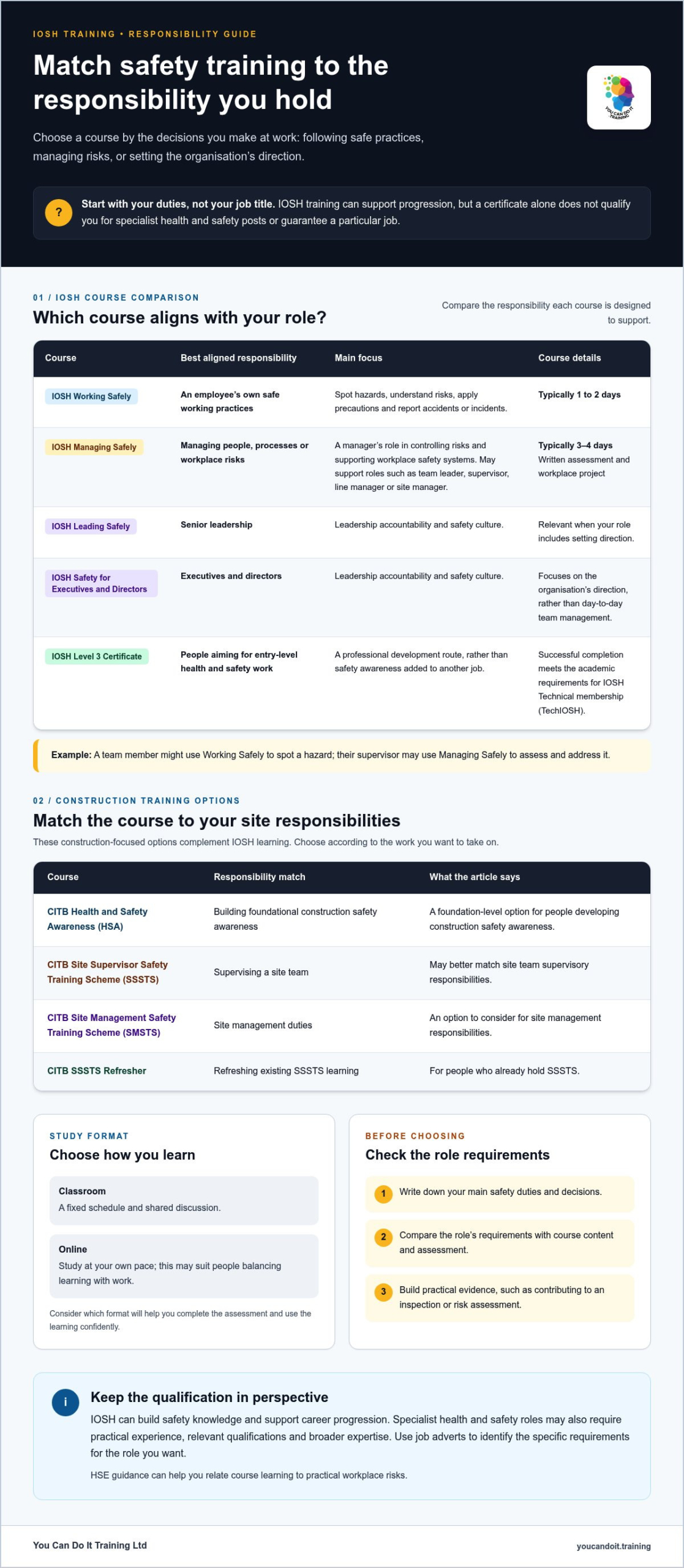
IOSH offers health and safety courses for workers, managers and leaders. IOSH Working Safely suits employees across industries, including those without formal safety responsibilities. IOSH Managing Safely is designed for managers and supervisors who oversee people, processes or workplace risks. Choose based on your duties, not simply your job title.
Managing Safely can support progression into roles such as team leader, supervisor, line manager, department manager, site manager, project coordinator or facilities manager. These jobs may involve contributing to risk assessments, inspections, audits and workplace safety improvements. The course covers health and safety law and practical risk management. Some organisations require this type of training for employees with supervisory duties.
Working Safely introduces the essentials for individual workers. Learners practise identifying hazards, understanding risks, applying precautions and reporting accidents or incidents. Managing Safely focuses on a manager’s role in controlling risks and supporting workplace safety systems. For example, a team member might use Working Safely to spot a hazard, while their supervisor uses Managing Safely to assess and address it.
Senior leaders have different course options. IOSH Leading Safely and IOSH Safety for Executives and Directors focus on leadership accountability and safety culture. Consider the decisions you make: do you mainly follow safe working practices, manage a team, or set the organisation’s direction? That distinction helps you select training aligned with your responsibilities. IOSH Managing Safely can strengthen a management role, but it isn’t a guarantee of a particular job.
Choosing a course to match job responsibilities
Start with your responsibilities, then match training to the decisions you make. An employee seeking broader awareness can consider IOSH Working Safely, which typically takes 1 to 2 days. A supervisor allocating tasks or overseeing controls may need training focused on managing safety responsibilities. Health and Safety Executive (HSE) guidance can help you relate course learning to practical workplace risks.
IOSH Managing Safely typically takes 3-4 days. Its written assessment and workplace project help learners apply knowledge to practical situations. Choose a classroom course if you prefer a fixed schedule and shared discussion. Online courses can be studied at your own pace, which may suit people balancing learning with work. Consider which format will help you complete the assessment and use the learning confidently.
Senior leaders have distinct options. IOSH Leading Safely and IOSH Safety for Executives and Directors focus on accountability and safety culture. They are relevant when your responsibility includes setting direction, not just managing a team’s daily tasks. Before choosing, note the decisions you make about workplace safety and health. Then compare those duties with each course’s stated focus.
Course fees depend on the qualification and study format, and are provided after a quote request; the course and delivery method shape the cost. Employers may also have a preferred course based on your role. A practical next step is to write down your main safety duties, identify the knowledge you need, then compare course content, assessment and format. Reviewing IOSH training options can help you connect those responsibilities with suitable learning.
Career suitability for aspiring occupational safety and health professionals
IOSH training can build safety awareness and support career progression, but the course should match your goal. If you want to pursue a career in occupational safety, distinguish introductory training from qualifications intended for professional development.
Entry-level health and safety roles
For entry-level health and safety jobs, the IOSH Level 3 Certificate is a relevant professional route: successful completion meets the academic requirements for IOSH Technical membership (TechIOSH). This matters if you’re aiming for occupational safety work, rather than adding awareness to another job. IOSH Working Safely introduces employees to hazards and precautions, whilst Managing Safely supports managers responsible for workplace risks. Compare job adverts with your experience, then identify the qualification or practical knowledge each role asks for.
Limits of an IOSH certificate
An IOSH certificate alone does not qualify you for specialist health and safety positions. It can demonstrate safety knowledge, but employers may also assess practical experience, relevant qualifications and the responsibilities involved. A safety representative might contribute to workplace awareness, while a dedicated occupational safety professional may need broader expertise. Treat IOSH training as one part of your development, not a substitute for a role’s full requirements.
Build practical evidence alongside your learning. Record how you supported an inspection, contributed to a risk assessment or helped improve safety at work. On a construction site, experience with site procedures can show how you apply your knowledge. For each role you are considering, note the qualifications requested and the tasks involved. This helps you identify whether you need introductory training, management knowledge or further professional development.
You Can Do It Training: CITB Health and Safety Awareness (HSA)
You Can Do It Training offers CITB Health and Safety Awareness (HSA) for people building foundational construction safety awareness. If you supervise a site team, the CITB Site Supervisor Safety Training Scheme (SSSTS) may better match your responsibilities. For site management duties, consider the CITB Site Management Safety Training Scheme (SMSTS). Choose according to the work you want to take on and its safety responsibilities.
If you already hold SSSTS, the CITB SSSTS Refresher provides refresher training. These construction-focused courses complement IOSH learning but serve different needs. Compare the course content with your current role and intended progression, then choose the one that fits.
For friendly, practical guidance on choosing training, contact You Can Do It Training or visit youcandoit.training.
Plan your next step in occupational safety
If you’re considering what job you can get with an IOSH certificate, turn the question into a practical career plan. Choose a role that interests you, then compare its day-to-day responsibilities with your existing skills and experience. This helps you identify the gap between your current position and the work you want to do.
Review job descriptions and note whether they focus on supporting a team, coordinating safety activity or taking broader responsibility. Use those duties to decide what experience to build and which training could help demonstrate your readiness. A clear target makes each development step purposeful, rather than simply adding another qualification to your CV.
A career can grow through steady, deliberate progress. Build practical experience, strengthen your knowledge and take the next step with confidence.
Frequently Asked Questions
What job can I get with an IOSH certificate?
An IOSH certificate may support applications for safety representative, health and safety coordinator, compliance officer, facilities or operations roles. The best match depends on the course and your work experience. For example, a logistics worker might apply safety knowledge in an operational role, while someone who has supported inspections could target a coordination position. Compare each vacancy’s duties with your practical experience.
Are IOSH courses suitable for all industries?
Yes. IOSH courses suit people working across industries, including those without dedicated safety duties. The workplace risks and examples will vary, however. An office worker may focus on everyday hazards and reporting, while a construction worker needs to understand site-specific risks. Relate the course learning to your tasks and workplace procedures.
What jobs can you get with an IOSH certificate in the UK?
In the UK, IOSH learning may support applications for safety representative, compliance, facilities, operations, logistics and construction site support roles. Job titles vary between organisations, so look at the duties as well as the title. A role involving inspections or incident reporting, for example, may value practical safety knowledge alongside relevant workplace or sector experience.
Does an IOSH certificate qualify you to work as a health and safety officer?
Not by itself. An IOSH certificate can demonstrate health and safety knowledge, but specialist officer roles may involve broader responsibilities than an introductory or management course covers. Employers may consider relevant qualifications, practical experience and the role’s specific demands. Review vacancy requirements and identify any experience or further learning you need.
What UK employers and industries recognise IOSH certificates?
IOSH certificates are relevant to employers in sectors where staff manage workplace risks, including construction, facilities, logistics and operations. There is no universal list of employers that require them: organisations set requirements according to the duties involved. Check job descriptions for IOSH training requirements, then compare the course named with the responsibilities of the role.









Leave a Reply
Want to join the discussion?Feel free to contribute!