
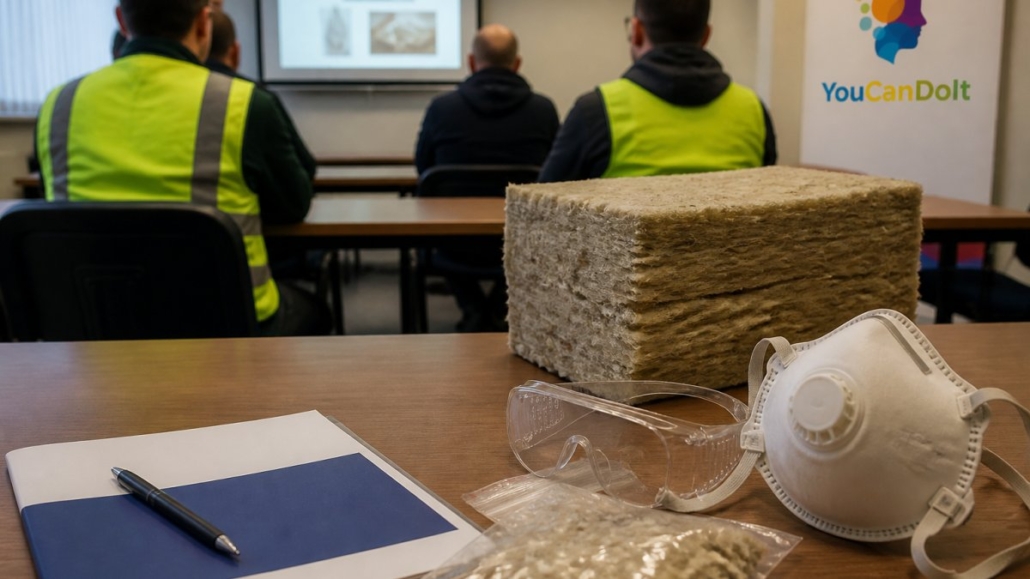
5 Best Asbestos Awareness Training Providers UK
Table of Contents
- What the HSE Requires: Asbestos Awareness Training Requirements HSE
- How Long Does Asbestos Awareness Training Take?
- Why UKATA Accredited Asbestos Training Matters
- What to Look for in Asbestos Awareness Training Providers
- 5 Best Asbestos Awareness Training Providers in the UK
- Comparing Costs and Delivery Options
- Frequently Asked Questions
Last Updated: October 2, 2026
What the HSE Requires: Asbestos Awareness Training Requirements HSE
Asbestos awareness training is a legal requirement for anyone whose work could disturb asbestos-containing materials, and the Health and Safety Executive (HSE) expects employers to provide it before staff begin work. This is not optional box-ticking. It is a duty under the Control of Asbestos Regulations 2012, and getting it wrong carries real consequences.
The HSE’s own guidance on asbestos licensing and training makes clear that awareness training is the minimum standard, not a substitute for licensed removal work.
Who Needs Asbestos Awareness Training?
Anyone who may encounter asbestos during their normal duties needs awareness training. That includes:
- Construction and demolition workers
- Electricians, plumbers and heating engineers
- Maintenance and facilities staff
- Roofers and shopfitters
- Supervisors and site managers overseeing trades
The HSE’s asbestos essentials guidance is blunt about this: if there is any chance a worker could disturb asbestos, awareness training is the floor, not the ceiling.
Skipping awareness training because “we’ve never found asbestos” is a common mistake. Asbestos was used in buildings well into the 1990s, and it is often hidden behind walls, under floors and inside ceiling voids. A single disturbed panel can release fibres that cause serious long-term harm.
How Long Does Asbestos Awareness Training Take?
A standard asbestos awareness course takes around half a day, typically three to four hours. Most providers deliver it in a single morning or afternoon session, either on site or at a training centre.
The length is short by design. Awareness training is not a removal qualification. It teaches people how to recognise asbestos, understand the risks, and know what to do if they suspect it is present. It does not authorise anyone to work with or remove asbestos.
For teams spread across multiple sites, the practical question is usually about disruption. A half-day course can often be run around shift patterns, but pulling an entire crew off site for a week is rarely necessary. This is where delivery format matters as much as the content.
Refresher Training: When to Renew Your Certificate
Refresher training is generally recommended every 12 months. There is no single statutory expiry date printed on an asbestos awareness certificate, but the HSE expects training to be kept up to date, and most main contractors and principal contractors enforce an annual renewal policy on their sites.
If a worker’s certificate is more than a year old, expect it to be questioned at site induction. Renewing annually keeps teams compliant and avoids the awkward conversation at the gate.
Why UKATA Accredited Asbestos Training Matters
UKATA accredited asbestos training is the benchmark most clients and principal contractors look for. UKATA, the United Kingdom Asbestos Training Association, sets standards for course content, trainer competence and certification, and its members are audited against those standards.
Choosing an accredited provider gives you three practical things:
- A certificate that is recognised and accepted across the industry
- Assurance that the course content meets a defined standard
- A clear audit trail if a regulator or client asks for evidence
Non-accredited courses exist, and they are usually cheaper. They are also the fastest way to end up with a certificate that a main contractor refuses to accept. For anyone working on commercial or public sector sites, accredited training is the safer choice.
When you book a course, ask for the accreditation body and the trainer’s credentials in writing. Reputable providers will share this without hesitation. If a provider is vague about who accredits them, treat that as a warning sign.
What to Look for in Asbestos Awareness Training Providers
The best asbestos awareness training providers share a handful of traits, and none of them are about price. Look for accreditation, trainer experience, delivery flexibility and clear certification.
Work through this checklist before you book:
- Is the provider accredited by a recognised body such as UKATA?
- Do the trainers have real site experience, not just classroom theory?
- Can the course be delivered on site to avoid pulling teams off the job?
- Is certification issued promptly and in a format clients accept?
- Does the provider offer refresher reminders so certificates do not lapse?
- Are group sizes manageable enough for genuine interaction?
The trainer’s background matters more than most buyers realise. Someone who has spent years on live sites explains asbestos risk differently from someone reading from a slide deck. That difference shows up in how well the message sticks.
5 Best Asbestos Awareness Training Providers in the UK
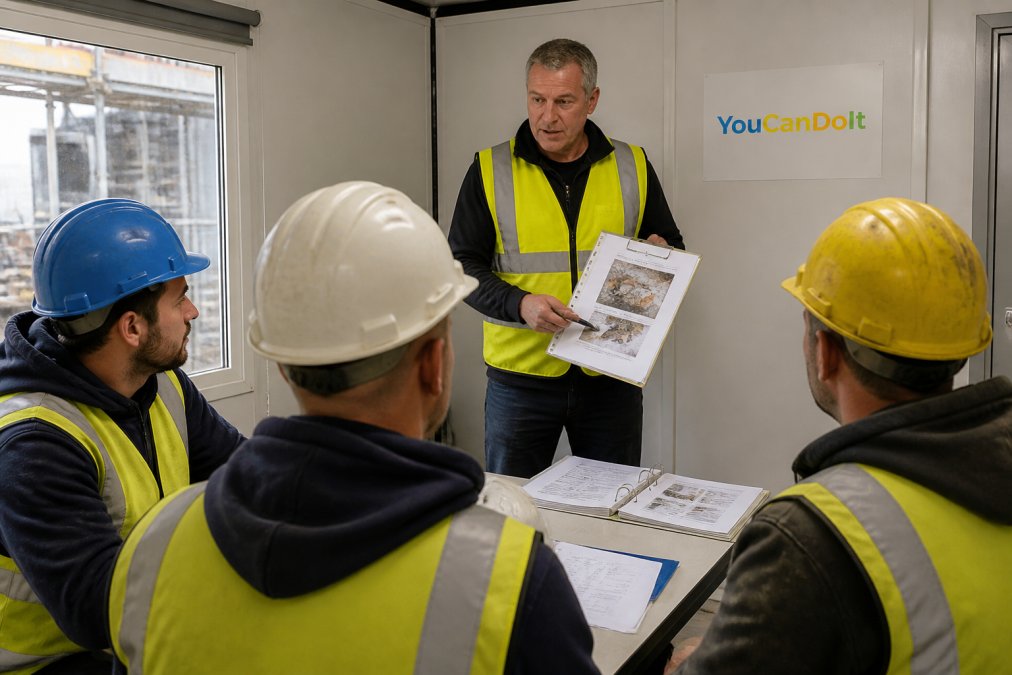
The best asbestos awareness training providers in the UK combine recognised accreditation, experienced trainers and delivery that fits around live construction programmes. Below are five options worth considering. Comprehensive instruction ensures that site managers remain vigilant when they check for asbestos during the renovation of older properties.
How We Evaluated These Providers
We assessed each provider on accreditation, trainer experience, delivery options, certification speed and how well the training fits around site schedules. Price was a factor, but a minor one.
1. You Can Do It Training (Our Top Pick)
You Can Do It Training delivers accredited health and safety training built specifically for the construction and plant sectors, with courses designed to avoid disrupting live programmes. Trainers bring hands-on site experience, and the focus is on practical understanding rather than box-ticking.
The key strengths:
- Accredited training recognised across the industry
- Expert instructors with real construction backgrounds
- Delivery structured around your programme, not the other way round
- Courses that support wider compliance, including CDM 2015 duties
2. National training centres
Large national training centres offer asbestos awareness as part of a broad course catalogue. They are convenient if you already use them for CSCS or other certifications, and quality is generally consistent. The trade-off is flexibility. Courses run to fixed schedules, and getting a full team onto the same session can mean waiting.
3. Trade association courses
Some trade bodies run asbestos awareness training for their members. Content is usually solid and tailored to the specific trade, which is a genuine advantage for specialist subcontractors. Availability can be limited, and courses may only run at set points in the year.
4. Online e-learning providers
Online asbestos awareness courses are the cheapest and fastest option. They suit lone workers or refreshers where a classroom session is impractical. The limitation is engagement. There is no trainer to read the room, and practical understanding of what asbestos looks like in situ is harder to convey through a screen.
5. In-house delivery by larger contractors
Some larger contractors deliver awareness training in-house for their own staff. It gives full control over timing and content, and it can be cost-effective at scale. The catch is that it only works if you have the qualified trainers and accreditation to back it up. Most SMEs do not.
Comparing Costs and Delivery Options
Pricing for asbestos awareness training depends on quantity, dates and delivery method. Group bookings delivered on site usually work out better per head than individual places on open courses, and online options sit at the lower end. For an accurate figure, request a quote based on your team size and location.
| Provider type | Delivery | Best for | Flexibility |
|---|---|---|---|
| Specialist provider | On site or centre | Teams needing minimal disruption | High |
| National training centre | Centre only | Individuals and small groups | Low |
| Trade association | Centre or regional | Specialist subcontractors | Medium |
| Online e-learning | Remote | Lone workers and refreshers | High |
| In-house contractor | On site | Large contractors with trainers | Medium |
The pattern is clear. If disruption to your programme is the main worry, on-site delivery from a specialist provider is usually the answer. If you are booking one refresher for a single worker, an online course will do the job.
Asbestos awareness training is one of the smallest line items in a construction budget and one of the most important. Getting it wrong risks enforcement action, rejected certificates and, worst of all, a worker exposed to fibres that cause harm decades later. You Can Do It Training delivers accredited asbestos awareness courses with expert instructors, hands-on content and delivery built around your site schedule, so your team stays compliant without losing days off the job. Get started with You Can Do It Training and keep your programme moving while your certificates stay valid.
Frequently Asked Questions
Is UKATA certification mandatory for asbestos awareness training?
UKATA certification is not a legal requirement, but it is widely recognised as the industry standard. The HSE requires that asbestos awareness training meets specific criteria, and UKATA accreditation demonstrates that a course has been independently verified against those standards. Many construction sites and principal contractors insist on UKATA accredited asbestos training as a condition of site access, so choosing an accredited provider avoids potential compliance issues.
How long does an asbestos awareness certificate last?
The HSE recommends that asbestos awareness training is refreshed at least annually. While there is no formal expiry date on most certificates, industry best practice and many site requirements expect workers to complete a refresher every 12 months. Some providers issue certificates with a stated validity period, so check with your training provider. Annual refreshers ensure your knowledge stays current with any regulatory updates.
Can I complete asbestos awareness training online?
Yes, many providers offer online asbestos awareness training, which can be completed at your own pace. However, online courses suit initial awareness only. Practical elements and site-specific hazards are better covered through face-to-face or on-site delivery. For teams needing group training without disrupting schedules, on-site delivery from a provider like You Can Do It Training keeps everyone on the same page without pulling staff off-site for extended periods.
What is the difference between UKATA and IATP accredited training?
UKATA (United Kingdom Asbestos Training Association) and IATP (Independent Asbestos Training Providers) are both recognised accreditation bodies. UKATA is the larger and more widely known scheme, with rigorous auditing of member providers. IATP also sets standards for asbestos training but operates independently. Both accreditations indicate a provider meets HSE requirements, though UKATA is more commonly requested by principal contractors on construction sites.

