

Construction Health and Safety: The Ultimate Guide to UK Compliance and Culture in 2026
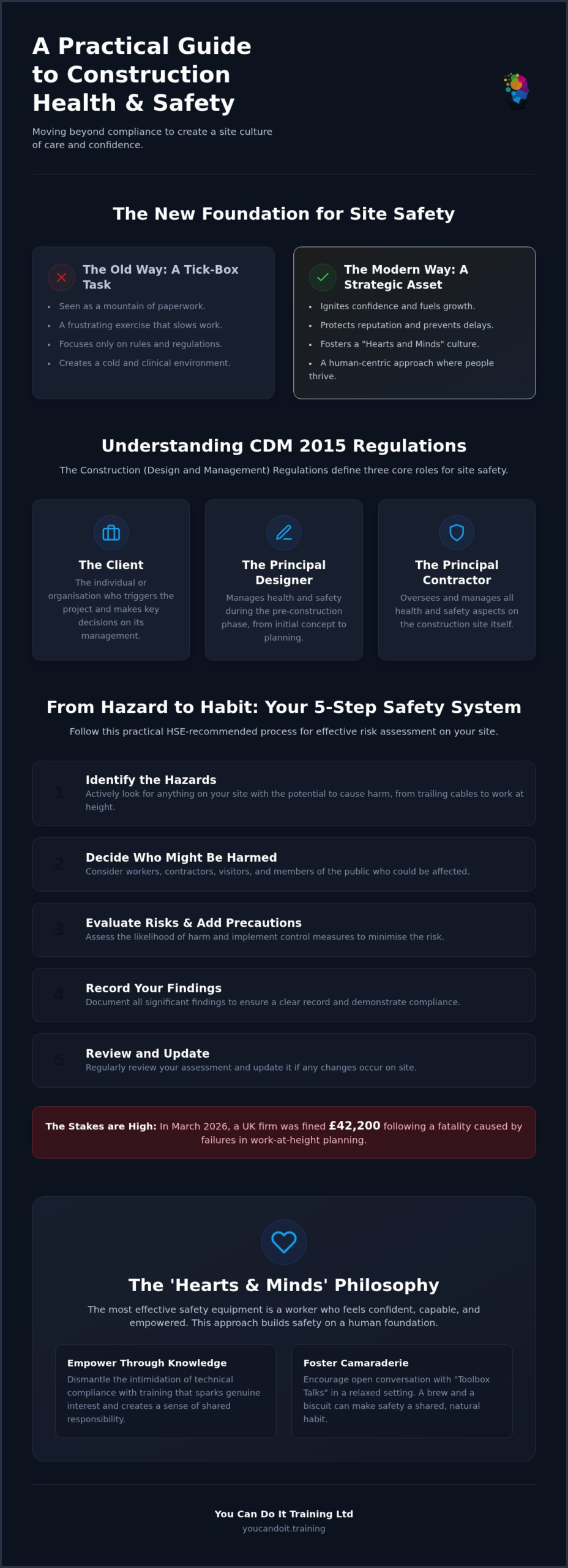
What if the secret to a zero-harm site isn’t found in a thicker rulebook, but in the steam of a morning brew, a plate of bourbon creams, and a genuine conversation? We know that keeping up with construction health and safety can feel like a daunting climb, especially when you’re facing the complex jargon of the Building Safety Act or the new 2026 Building Safety Levy. It’s frustrating when safety feels like a box-ticking exercise that slows down your site. This guide promises to clear the fog, offering a path to full compliance with the Construction (Design and Management) regulations, or CDM, whilst fostering a culture where every worker feels valued and heard. We’ll walk through the essential Health and Safety Executive (HSE) standards, the “hearts and minds” approach, and how the right training provides the right knowledge, for the right site, at the right time.
Key Takeaways
- Understand why modern construction health and safety is a strategic asset that protects your reputation whilst igniting a positive culture of growth.
- Implement Safe Systems of Work (SSoW) effectively by blending safety protocols seamlessly into your team’s existing daily habits and workflows.
- Foster a “hearts and minds” culture that moves beyond simple box-ticking to ensure every worker feels emotionally and intellectually engaged with site safety.
- Navigate the path to full regulatory compliance with practical advice on choosing the right accredited training to secure a safer, more productive workforce.
Navigating the Landscape of Construction Health and Safety in 2026
At its heart, construction health and safety is the systematic way we spot hazards and control risks before they cause harm. While some see these protocols as a mountain of paperwork, we view them as a transformative opportunity to ignite confidence in your team and fuel sustainable business growth. The Health and Safety Executive (HSE) serves as the UK’s national regulator, setting the essential standards that keep our industry moving safely. By adopting a “hearts and minds” philosophy, you move beyond basic rules to create an environment where every worker feels truly valued and involved. This human-centric approach aligns perfectly with global construction safety standards, ensuring your site is a place where people don’t just work, they thrive.
The Legal Framework: CDM Regulations and HSG150
The Construction (Design and Management) Regulations 2015, commonly known as CDM, remain the bedrock of site safety in 2026. These regulations ensure that safety is baked into a project from the very first day. They define three core roles that carry the weight of responsibility: the Client, who triggers the project; the Principal Designer, who manages health and safety during the pre-construction phase; and the Principal Contractor, who oversees the site itself. In 2026, the influence of the Building Safety Regulator (BSR) has only heightened the need for this clarity, especially on higher-risk projects. It’s about ensuring clear communication and coordination amongst everyone involved. For those looking to organise their site effectively, the HSE’s HSG150 guidance provides a practical blueprint. It covers everything from managing site traffic to protecting the public, offering a clear path to compliance that prevents project delays and protects your reputation.
Practical Steps to Organise a Safer Construction Site
Organising a site doesn’t have to be a headache. It’s about building a Safe System of Work (SSoW) that feels like a natural part of the day. When safety is integrated into the morning routine, it becomes a habit rather than a hurdle. A great way to do this is through “Toolbox Talks”. Grab a brew, pass around the bourbon creams, and have a chat about the day’s tasks. This relaxed setting encourages everyone to speak up, making construction health and safety a shared responsibility. It’s also vital to understand UK health and safety regulations to ensure your site stays on the right side of the law. If a major incident does occur, you must follow the correct RIDDOR reporting procedures to stay compliant and protect your business.
Identifying Hazards and Controlling Risks
To keep people safe, you need to know what you’re looking for. A hazard is something with the potential to cause harm, like a trailing cable. A risk is the likelihood that someone will actually get hurt by it. Mastering construction health and safety means managing both. In March 2026, a UK construction firm was fined £42,200 following a fatality caused by failures in work-at-height planning, showing how high the stakes really are. Use this five-step checklist for your risk assessments:
- Identify the hazards on your specific site.
- Decide who might be harmed and how.
- Evaluate the risks and decide on precautions.
- Record your significant findings.
- Review your assessment and update if necessary.
Common site hazards often involve working at height or hidden dangers like asbestos. Taking a proactive approach ensures your team stays safe whilst keeping projects on track. If you’re looking to sharpen these skills, our accredited safety courses provide the practical knowledge you need to lead with confidence.
Empowering Your Workforce: The “Hearts and Minds” Approach to Training
The most effective piece of safety equipment on any site isn’t a high-vis jacket or a hard hat; it’s a worker who feels confident, capable, and empowered. Technical regulations can feel cold and clinical, but we believe that construction health and safety works best when it’s built on a “hearts and minds” foundation. This means creating a learning environment where people feel at ease. In our classrooms, you’ll find a relaxed but professional atmosphere where the tea is always hot and the bourbon creams are plentiful. By dismantling the intimidation of technical compliance, we ignite a spark of genuine interest that workers carry back to the site. This shared knowledge fosters a sense of camaraderie, ensuring everyone looks out for their mates whilst following HSE guidance on construction safety.
Choosing the Right Accredited Training Path
Finding the right course is the first step toward a safer career. The CITB hierarchy offers a clear path: HSA for labourers, SSSTS for supervisors, and SMSTS for managers. Specialised skills like PASMA tower safety or UKATA asbestos awareness handle specific site risks. Always check that your provider is fully accredited so your certificates are industry-recognised. This ensures your team has the skills to keep the business soaring safely and compliant.
Lead Your Site with Confidence into 2026
Success on site starts with a shift in perspective. By mastering construction health and safety, you’re doing more than just meeting HSE standards; you’re investing in the people who make your business soar. We’ve explored how clear compliance with CDM regulations and a genuine “hearts and minds” culture can transform your workplace. Our expert mentors bring decades of industry experience to every course. They ensure you gain practical knowledge in a space that feels like a home away from home. With our 99% pass rate and the best bourbon creams in the business, technical training isn’t intimidating anymore. It’s time to take that next step toward a safer, more successful career.
The goal is always achievable when you have the right support. We’re here to help you foster the safe site culture your team deserves.
Frequently Asked Questions
What is the most important health and safety law in UK construction?
The Health and Safety at Work etc. Act 1974 is the primary legislation, whilst the Construction (Design and Management) Regulations 2015 (CDM) provide the specific framework for our industry. These laws ensure that every project phase, from design to demolition, accounts for worker safety. Following HSE guidelines is essential to dismantle the risks that can lead to accidents or costly project delays on site.
Do I need a specific qualification to work on a construction site in 2026?
Most UK sites require a valid CSCS card, which proves you have the necessary knowledge to work safely. For labourers, the CITB Health and Safety Awareness (HSA) course is the standard entry point for obtaining this. It’s about more than just a plastic card; it’s about gaining the confidence to identify hazards and contribute to a positive site culture from day one.
What are the main responsibilities of a Site Supervisor regarding safety?
A Site Supervisor is responsible for the day-to-day management of construction health and safety on the ground. This includes leading Toolbox Talks, ensuring Safe Systems of Work (SSoW) are followed, and monitoring the site for new risks. Qualifications like the SSSTS provide supervisors with the technical skills and leadership confidence needed to engage their teams effectively whilst maintaining high safety standards.
How often should construction health and safety training be refreshed?
Major CITB certifications like the SSSTS and SMSTS must be refreshed every five years to remain valid. However, high-performing teams often revisit their construction health and safety training more frequently to keep their skills sharp. We recommend checking your expiry dates early to book a refresher course, ensuring your project never stalls due to an out-of-date certificate or a gap in essential knowledge.








Leave a Reply
Want to join the discussion?Feel free to contribute!