

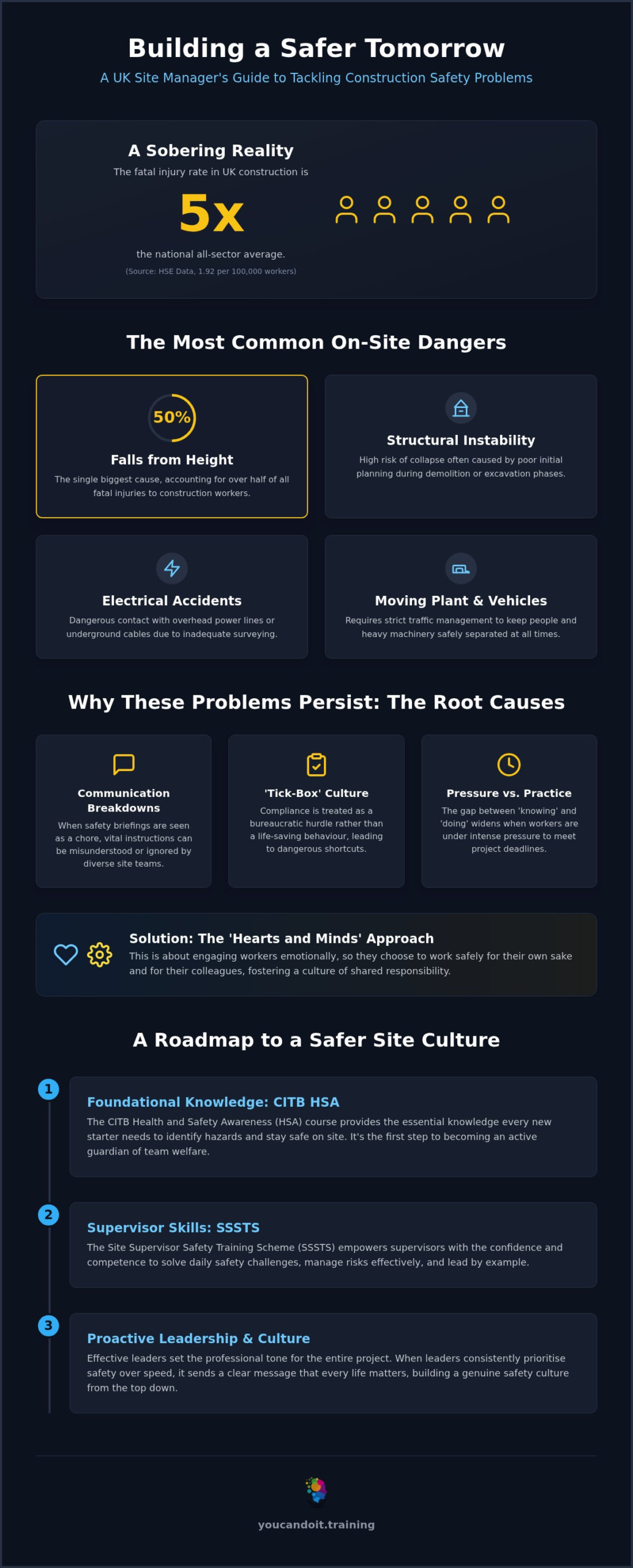
Construction Safety Problems: Identifying and Solving Site Hazards in 2026
Did you know the fatal injury rate in our sector is currently 1.92 per 100,000 workers, nearly five times the national average? It’s a sobering figure that highlights why tackling construction safety problems is more than just a legal necessity; it’s a moral one. We know you’re likely feeling the pressure of complex HSE regulations and the daily struggle to get your team to take site hazards seriously without causing project delays.
This guide identifies the most prevalent risks on 2026 building sites and provides practical, training-led strategies to solve them. You’ll learn how to move beyond the intimidation of CDM 2015 compliance to foster a genuine safety culture. By focusing on a “hearts and minds” approach, we’ll help you create a supportive environment where every team member feels empowered to work safely, ensuring your projects stay on track and your people stay protected.
Key Takeaways
- Recognise the most significant risks on modern sites, such as working at height and structural instability, to ensure your planning aligns with HSE standards.
- Understand why communication breakdowns and “tick-box” mentalities often lead to persistent construction safety problems that threaten your project timelines.
- Learn how foundational training courses like the CITB HSA empower your workers to spot hazards and speak up when they see something wrong.
- Discover practical ways to build a genuine “hearts and minds” culture where safety is seen as a shared value rather than just a bureaucratic chore.
The Most Common Construction Safety Problems on UK Sites
Identifying The Most Common Construction Safety Problems starts with recognising that working at height remains the industry’s biggest challenge. In 2026, falls from height still account for over half of all fatal injuries amongst construction workers. It’s a sobering statistic that reminds us safety isn’t just about checklists; it’s about ensuring every person returns home safely. Poor initial planning during demolition or excavation often leads to structural instability, creating a high risk of collapse that can be avoided with better foresight.
Electrical accidents frequently occur when site surveying isn’t thorough enough, leading to dangerous contact with overhead power lines or underground cables. These construction safety problems are often preventable through better communication and technical awareness. Increasingly, we’re also seeing mental health and fatigue recognised as primary contributors to accidents. A tired or distracted mind is just as dangerous as a faulty ladder, making worker wellbeing a vital part of your safety strategy.
Physical Hazards: From Falling Objects to Fragile Surfaces
Managing moving plant machinery and preventing falling objects requires strict adherence to the HSE’s ‘Traffic Management’ guidelines. It’s about keeping people and vehicles apart. We always encourage regular scaffold inspections and the proper use of MEWPs (Mobile Elevating Work Platforms), which are mechanical devices used to provide temporary access for people or equipment to inaccessible areas, to mitigate height risks effectively. You should also stay alert for “silent” hazards. Knowing what is asbestos and how to manage it during refurbishment is essential for protecting your team’s long-term health. It might feel like a lot to take in, but with the right approach, you can master these regulations and keep your site running smoothly.
Root Causes: Why Construction Safety Problems Often Persist
Understanding the Root Causes: Why Construction Safety Problems Often Persist is essential for any site manager looking to make a lasting change. It’s rarely a simple lack of equipment or gear. Instead, the real issues often lie in communication breakdowns amongst diverse site teams. When safety briefings feel like a mandatory chore, instructions are easily misunderstood and vital signage is ignored. This disconnect fosters a “tick-box” culture where compliance is viewed as a bureaucratic hurdle rather than a life-saving behaviour. We see a persistent gap between “knowing” and “doing.” Even the most seasoned workers might take dangerous shortcuts whilst under intense pressure to meet project deadlines. These construction safety problems are often exacerbated by the stress of the 2.5 million working days lost annually to sector-wide ill health.
The ‘Hearts and Minds’ Gap in Safety Culture
At You Can Do It Training, we champion the “Hearts and Minds” approach. This isn’t about clinical instruction; it’s about engaging workers emotionally so they choose to work safely for their own sake and for their mates. If a supervisor lacks the confidence to lead, that uncertainty trickles down, leading to inconsistent enforcement of safety standards. It’s about building genuine camaraderie and mutual respect on the ground. We also believe that RIDDOR reporting should be embraced as a powerful tool for learning from every incident, not just a legal requirement to be feared. By creating a relaxed, supportive atmosphere where people feel safe to challenge unsafe acts, we can ignite a spark of real change. If you want to transform your site culture, our person-centred safety courses put your team’s success at the heart of everything we do.
Solving Safety Problems Through Accredited Training and Leadership
Training gives you the technical ‘how-to’ whilst igniting the sparks of confidence needed to challenge unsafe behaviour amongst your peers. It’s about moving from a passive observer to an active guardian of your team’s welfare. By tackling construction safety problems through accredited education, you ensure everyone on site understands their role in maintaining a secure environment. Effective leadership is the ultimate fix for persistent construction safety problems. Site managers and supervisors don’t just oversee tasks; they set the professional tone for the entire project. When leaders prioritise safety over speed, it sends a clear message that every life matters.
The Roadmap to Competence: HSA, SSSTS, and SMSTS
Accredited courses like the CITB HSA provide the foundational knowledge every new starter needs to stay safe. As careers progress, the SSSTS course empowers supervisors to solve daily safety problems on the ground, ensuring small risks don’t turn into major incidents. For those at the helm, the SMSTS plays a strategic role in planning for safety before a single brick is laid. We believe learning shouldn’t be a mandatory chore. A relaxed learning environment, complete with tea and bourbon creams, ensures these vital safety lessons actually stick. When people feel comfortable, they engage more deeply with the material, turning complex HSE guidelines into practical site behaviours.
Transforming Your Site Safety Culture Today
We’ve looked at how common hazards like working at height and the “invisible” risks of fatigue define the modern landscape. Solving these construction safety problems isn’t just about following HSE guidelines; it’s about shifting from a ‘tick-box’ mindset to a genuine “hearts and minds” approach. By investing in the right training pathway, you empower your team to lead with confidence and look out for their mates on the ground. At You Can Do It Training, we make this transition feel achievable and even enjoyable. We offer a supportive, person-centred learning environment backed by thirty years of experience and a 99% pass rate.
Come and experience our relaxed atmosphere, complete with tea and bourbon creams. You can do it, and we are ready to help you soar.
Frequently Asked Questions
What are the four main safety hazards in construction?
The four most significant hazards on site are falls from height, being struck by moving vehicles, electrical incidents, and falling objects. Falls from height remain the leading cause of fatalities, accounting for more than half of all deaths in the sector. Addressing these construction safety problems requires a mix of technical controls, such as proper scaffolding, and thorough training to ensure everyone understands the risks involved.
How can we improve safety culture on a busy building site?
Improving culture requires moving beyond a “tick-box” exercise to embrace a “hearts and minds” philosophy. This involves engaging workers emotionally so they choose to work safely for themselves and their mates. You can foster this by creating a supportive, relaxed atmosphere where supervisors lead by example. When leadership prioritises human connection and mutual respect, safety becomes a shared value rather than just a mandatory chore.
Is health and safety training a legal requirement for all construction workers?
Employers have a clear legal duty under the Health and Safety at Work etc. Act 1974 to provide sufficient training and instruction. For most site roles, foundational courses like the CITB Health and Safety Awareness (HSA) are required to demonstrate competence. Managers and supervisors also need accredited training, such as the SMSTS or SSSTS, to ensure they can effectively manage site hazards and meet CDM 2015 regulations.
What should I do if I identify a safety problem on my site?
You should report any hazard to your supervisor or site manager as soon as you spot it. If there is an immediate danger to life, stop the work right away until the area is secured. Effective communication is the best way to solve construction safety problems. Reporting isn’t about pointing fingers; it’s a vital tool for learning that helps prevent future accidents and project delays.









Leave a Reply
Want to join the discussion?Feel free to contribute!