
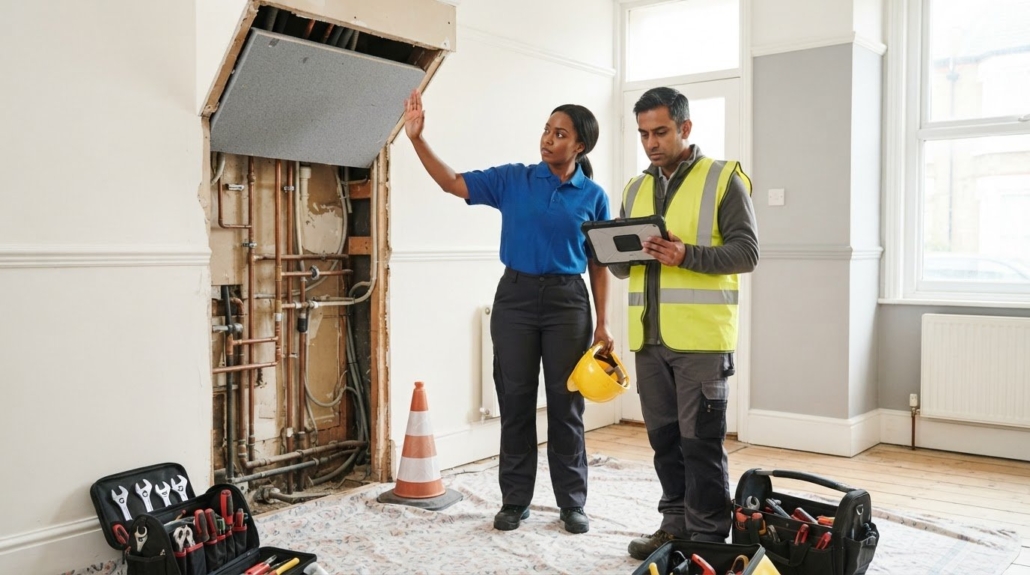
Asbestos Awareness for UK Plumbers and Electricians
Could drilling a wall for a new cable or pipe bring you into contact with asbestos? For plumbers and electricians, routine jobs such as chasing, replacing fittings or accessing older equipment can involve materials whose contents aren’t obvious. Asbestos awareness for plumbers and electricians helps you recognise where risks may arise and make a safer decision before work begins.
When a job is routine and time-sensitive, it can be tempting to assume a material is harmless. The safe response is clear: stop work that could disturb it, avoid contact and follow site procedures to report your concern. This article explains where asbestos-containing materials may be found, what to do if they’re suspected or damaged, and how UKATA asbestos awareness training can build your understanding. Awareness training helps you avoid accidental disturbance; it doesn’t qualify you to remove asbestos or carry out work on it.
Key Takeaways
- Know which routine plumbing and electrical tasks could bring you near asbestos-containing materials in older buildings.
- If you suspect asbestos, stop the task, avoid disturbing the material, keep others away and report your concern.
- Asbestos awareness for plumbers and electricians can help you recognise risks and respond safely when materials are uncertain.
- UKATA awareness training supports safer decisions, but it doesn’t qualify you to remove asbestos or carry out asbestos work.
Asbestos awareness for plumbers and electricians: where work can create risk
Some older buildings may contain asbestos materials, but a building’s age alone doesn’t confirm that asbestos is present. The risk for plumbers and electricians is that routine work can reach hidden materials in walls, ceilings, cupboards and service routes. Even a small repair can become a concern if it disturbs material containing asbestos.
For example, drilling to secure pipework or electrical equipment, chasing a route through a wall, replacing a fitting or opening a service void could disturb hidden boards or insulation. Work around pipe insulation, ceiling materials and electrical boards may also call for caution. These examples are prompts to pause and check relevant site information, not a complete inventory of asbestos materials or a way to identify them.
Appearance isn’t a reliable test. HSE guidance says you can’t tell whether a material contains asbestos just by looking at it; it needs to be assessed appropriately. The Asbestos overview offers general background on the material, but it can’t identify what’s in a particular building. Check the relevant site information before starting, and treat any uncertainty as a reason to stop and raise a concern rather than guess.
Which plumbing and electrical jobs can disturb asbestos-containing materials?
Consider what your task may penetrate or expose: a board behind equipment, insulation around a pipe, ceiling material above a light fitting, or material beside a service route. Before starting, review the site’s asbestos information and compare it with the planned work. If the work could disturb material identified or suspected as asbestos-containing, don’t proceed until the concern has been addressed through site procedures. For broader context on materials and hazards, read the UK worker’s guide to asbestos. Trade-relevant asbestos awareness for plumbers and electricians can help you recognise when a routine job calls for caution.
What plumbers and electricians should do if they suspect asbestos
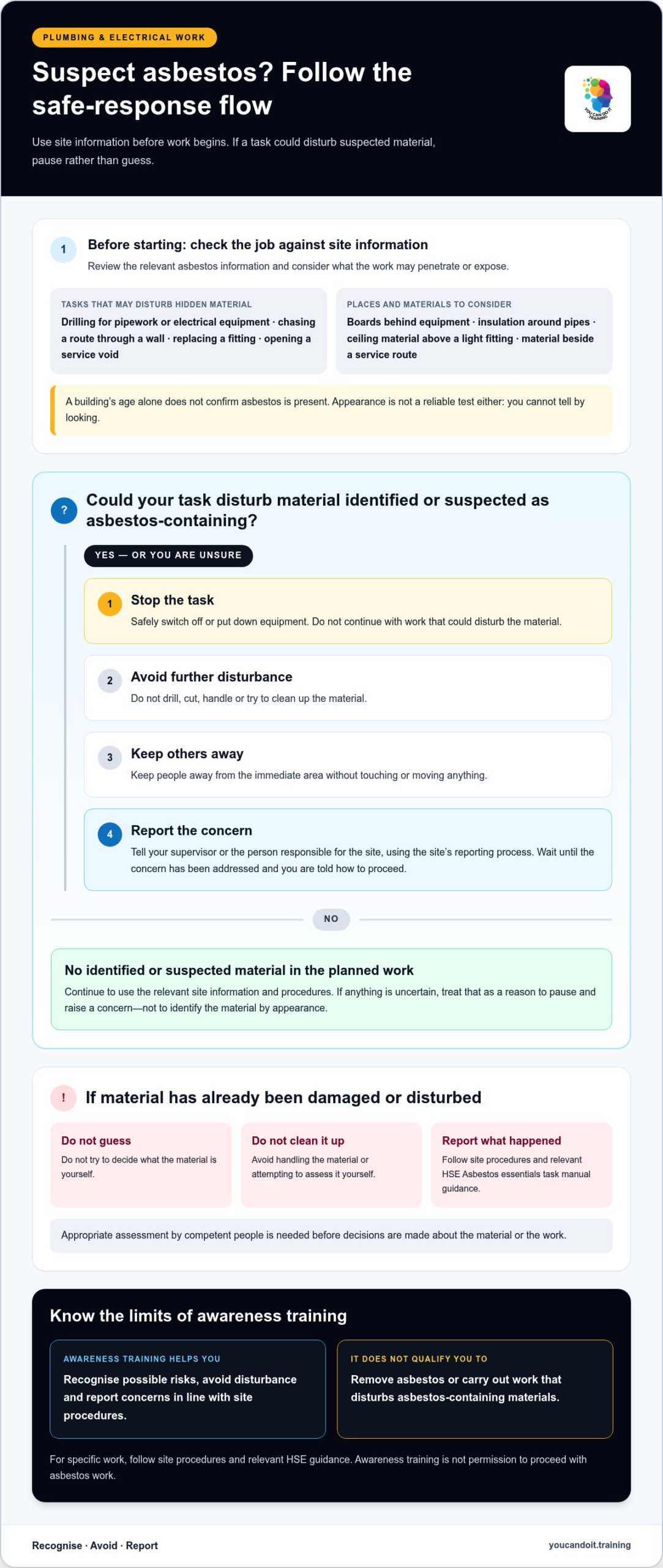
If a material may contain asbestos, don’t continue with any task that could disturb it. Pause the work and take these practical steps:
- Stop the task and switch off or put down equipment safely.
- Avoid further disturbance. Don’t drill, cut, handle or try to clean up the material.
- Keep others away from the immediate area, without touching or moving anything.
- Report the concern to your supervisor or the person responsible for the site, using the site’s reporting process.
If the material has been damaged or disturbed, don’t guess what it is or attempt to assess it yourself. Report what happened and follow site procedures and relevant HSE Asbestos essentials task manual guidance. Appropriate assessment by competent people is needed before decisions are made about the material or the work.
Can you carry on working when a material might contain asbestos?
Don’t continue with work that could disturb the suspected material. Wait until the concern has been addressed and you’re told how to proceed through the site’s procedures. Asbestos awareness for plumbers and electricians helps you recognise possible risks, avoid disturbance and report concerns. It isn’t permission or a qualification to work with, remove or repair asbestos-containing materials. HSE task guidance explains safe practice for specific work, but it doesn’t replace site procedures or authorise you to undertake asbestos work.
Building this knowledge through UKATA Asbestos Awareness training can help you make informed decisions before a routine job becomes a risk.
How asbestos awareness training helps tradespeople work with confidence
For plumbers and electricians, confidence comes from knowing when to pause, not from trying to identify or handle a suspicious material. Awareness training helps learners recognise situations where asbestos may be present, understand how work could disturb it and know how to respond in line with site procedures. This knowledge supports safer decisions before a routine task begins. Whether training locally or developing technical skills through vocational courses for international students Australia, mastering core workplace health and safety principles is essential for any hands-on career.
You Can Do It Training provides UKATA Asbestos Awareness training for tradespeople whose work may bring them near asbestos-containing materials. The course focuses on awareness: recognising potential risks, avoiding disturbance and understanding the limits of your role. This is the practical value of asbestos awareness for plumbers and electricians, without suggesting that training makes uncertain materials safe to work on. As occupational health and safety specialists like Shebin Abraham emphasise, proactive hazard awareness and strict site compliance are essential to maintaining safe working conditions across all trade disciplines.
What is the difference between asbestos awareness and asbestos work training?
Awareness training helps you recognise a possible hazard and choose a safer response. It doesn’t qualify you to remove asbestos or carry out work that disturbs it. Asbestos work requires separate, task-appropriate training and competence; the requirements depend on the work involved. Read current HSE Asbestos Essentials guidance for practical information relevant to specific tasks, and follow your site’s procedures. If you’re unsure whether a task is suitable for your training and role, stop and raise the question with the responsible person rather than treating awareness training as permission to proceed.
Use awareness learning to build sound judgement: recognise, avoid, report. Explore asbestos awareness training and take a practical step towards working with greater confidence.
Build safer habits into every job
Asbestos risks can arise during everyday plumbing and electrical work, especially where materials are hidden or uncertain. Remember the practical response: stop work that could disturb suspected asbestos, keep others away and report the concern through site procedures. Awareness training helps you recognise possible hazards and make informed decisions, but it doesn’t qualify you to remove asbestos or carry out asbestos work.
You Can Do It Training provides accredited health and safety training, including UKATA Asbestos Awareness. Build your understanding of how to recognise possible risks, avoid disturbing materials and respond appropriately on site.
With the right knowledge, you can approach uncertain materials calmly, protect those around you and know when to pause and report a concern.
Frequently Asked Questions
Is asbestos awareness training relevant to plumbers and electricians?
Yes. Asbestos awareness for plumbers and electricians is relevant because work in existing buildings can bring tradespeople near materials that may contain asbestos. Training helps learners recognise potential risks, avoid disturbing material and follow site procedures if they have a concern. Training needs can vary by role and task, so refer to current HSE guidance for requirements that apply to your work.
Can plumbers or electricians remove asbestos after awareness training?
No. Awareness training isn’t permission or a qualification to remove asbestos or carry out work on it. If you suspect a material may contain asbestos, stop any task that could disturb it, avoid further contact and report the concern through site procedures. Follow current HSE guidance for information about the training and competence required for the work involved.
What should an electrician do if drilling exposes suspected asbestos?
Stop drilling and avoid disturbing the material further. Keep others away from the area where appropriate, then promptly report what you’ve found through the site’s reporting process. Don’t try to clean up or take a sample yourself. Follow site procedures and current HSE guidance for the appropriate next steps, including how the material should be assessed.
Does asbestos awareness training teach workers how to identify asbestos by sight?
No. Appearance alone can’t reliably confirm whether a material contains asbestos. Awareness training can help you recognise materials or work situations that call for caution, but it can’t identify a specific material. If you’re concerned, stop work that could disturb it and report the issue through site procedures so it can be assessed appropriately.










Leave a Reply
Want to join the discussion?Feel free to contribute!