
Permit to work: why systems matter and how they protect workers
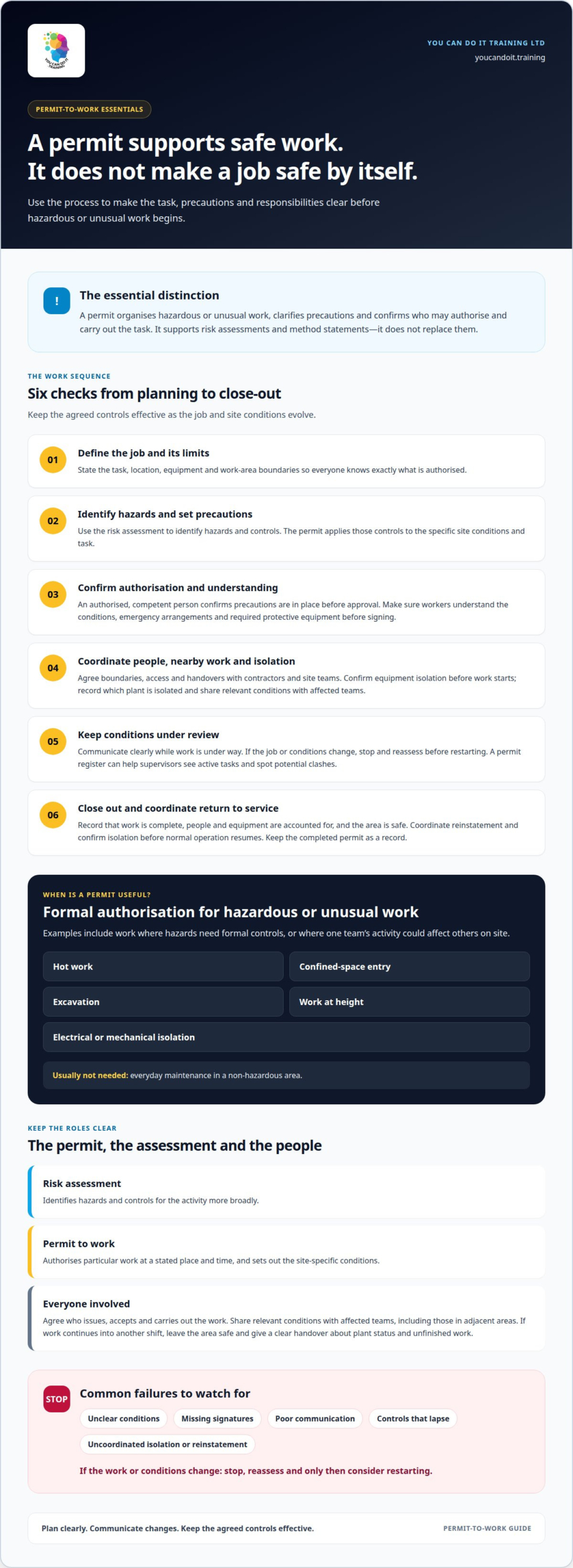
A signed form alone won’t keep anyone safe. The Health and Safety Executive says a permit to work does not, by itself, make a job safe; its value is in organising hazardous or unusual work, making precautions clear and confirming who can authorise and carry out the task.
That distinction matters on a busy site, particularly when contractors, nearby work or equipment isolation are involved. Paperwork only helps when people understand the conditions, follow the agreed controls and speak up if the job changes.
This guide explains why permit systems matter, what they are designed to do and how they work alongside risk assessments and method statements. It also covers shared responsibilities, coordinating isolations, and what to do when conditions change or the work is complete.
Key Takeaways
- Use a formal permit process for hazardous or unusual work, and make sure it supports rather than replaces risk assessments and method statements.
- Set out the task, work area, hazards, controls, authorisation and safe conditions clearly before work begins.
- Agree who issues, accepts and carries out the work, and coordinate contractors and equipment isolation to keep precautions effective.
- Explore relevant Construction Industry Training Board (CITB) training; CITB is a construction training organisation. This can build the health and safety knowledge needed for site work and supervision.
Why are permit to work systems important?
A permit to work helps organise hazardous or unusual tasks before they begin. Its controls must reflect the specific job, site and people involved.
High-risk and non-routine work
A permit system manages tasks outside routine operations when hazards require formal authorisation. It matters because the work can affect people beyond the immediate team. Examples include hot work, confined-space entry, excavation, work at height, and electrical or mechanical isolation. Complex tasks such as industrial surface preparation and protective coating also introduce specific access and hazardous substance controls, with training resources like dangleacademy.com supporting operatives working under these demanding conditions. Define the work area and task limits so workers know exactly what is authorised. Everyday maintenance in a non-hazardous area does not normally need a permit.
Risk documentation and worker authorisation
Task-specific permits and risk assessments
A task-specific permit authorises particular work at a stated place and time. A risk assessment identifies hazards and controls for the activity more broadly. The permit applies those controls to site conditions, such as fire precautions for a hot-work task. The Management of Health and Safety at Work Regulations 1999 require risk assessment and proportionate controls for work activities in the UK, according to the UK legislation register. A permit to work supports these measures; it does not replace the assessment.
Permit-to-work risks and common failures
Common failures include unclear conditions, missing signatures, poor communication and controls that lapse during the task. Isolation and reinstatement also require coordination. Confirm the isolation before work starts and before normal operation resumes. Stop if the job or conditions change, and reassess before restarting. At close-out, record that the work is complete, people and equipment are accounted for, and the area is safe.
Permit to Work system definition and purpose
A permit system connects safety planning with the point when hazardous work takes place. It gives the site team a planned opportunity to confirm that the job can proceed alongside other activities and that current conditions still match the plan.
The Health and Safety Executive notes that a permit does not, by itself, make a job safe. It is one part of a wider approach that relies on suitable planning, clear communication and people who understand their responsibilities.
For site supervisors and managers, practical health and safety training can strengthen understanding of responsibilities and safe working arrangements. Explore site health and safety training as a way to build that foundation.
Contractors, isolation and roles in permit-to-work systems
On a shared site, permit arrangements help contractors coordinate with site operations. Clear boundaries and communication are essential whenever one team’s work could affect another.
Isolation within permit systems
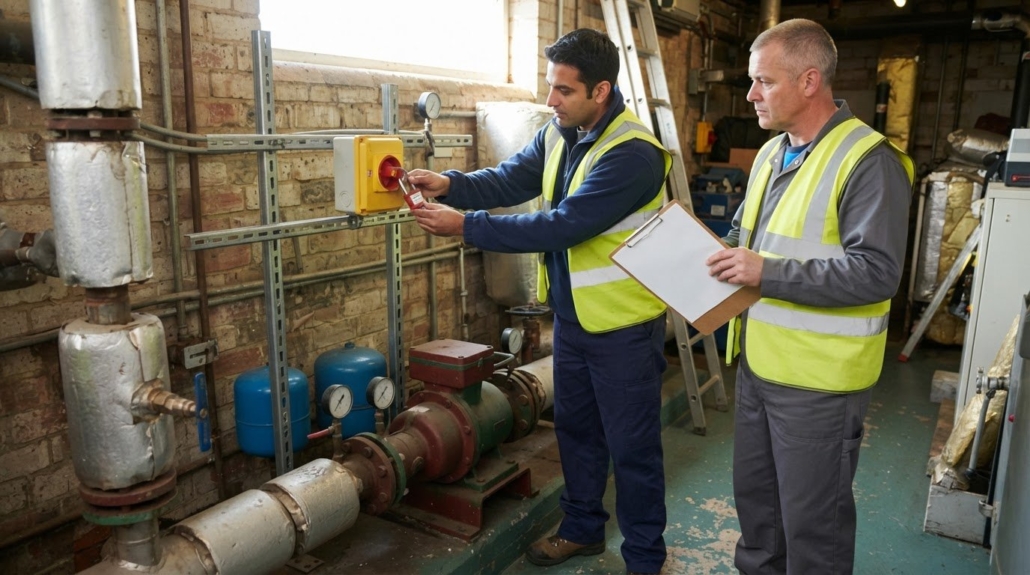
Isolation separates equipment from its energy source to prevent unexpected operation during work. Machinery or electrical equipment may be locked off. Record which plant is isolated and coordinate the handover before it returns to service. This is especially important when contractors work on equipment used by site teams, who need to know its status.
Roles and responsibilities
Contractors and site teams should agree work boundaries, access arrangements and how nearby activities will be coordinated. Share relevant permit conditions with everyone whose work could be affected, including teams in adjacent areas. Keep permits with the authorised people and company, rather than passing them to another contractor. If work continues into the next shift, leave the area safe and give a clear handover so the incoming team understands the plant status and any unfinished work.
Legal context in the UK
The Health and Safety at Work Act 1974 requires employers to provide systems of work that are safe and without risks to health, according to the UK legislation register. The Work at Height Regulations 2005 require work at height to be properly planned, appropriately supervised and carried out safely, according to the UK legislation register. They do not specifically require a permit; a permit may be required by site procedures or as part of risk controls. The Confined Spaces Regulations 1997 require a safe system of work for confined-space entry in the UK, according to the UK legislation register. The Electricity at Work Regulations 1989 govern the control of work on or near live conductors in the UK, according to the UK legislation register. These requirements make coordination between contractors and site teams a practical part of managing work safely.
You Can Do It Training
You Can Do It Training provides health and safety training to support safe work planning and clear site responsibilities. Its CITB courses suit different roles: Health and Safety Awareness (HSA) introduces essential site safety knowledge, while SSSTS and SMSTS focus on supervisors and site managers. The SSSTS Refresher supports supervisors renewing their existing knowledge.
Training can be useful when workers are new to construction, supervisors take on more responsibility, or managers want to strengthen their understanding of site health and safety. Choose a course that matches the learner’s role and experience so they can apply what they learn to everyday site decisions.
Contact You Can Do It Training to discuss which course best fits your team’s needs.
Build confidence into everyday site decisions
Make safe planning part of everyday work, not a formality reserved for complex jobs. Use the permit to work process to prompt practical conversations about changing conditions, shared areas and who needs to know before work proceeds. Clear communication helps turn written arrangements into habits across the site.
A useful next step is to identify where your team would benefit from stronger health and safety knowledge. You Can Do It Training offers Construction Industry Training Board (CITB) Health and Safety Awareness (HSA), a course covering basic site safety; Site Supervisors’ Safety Training Scheme (SSSTS), for site supervisors; and Site Management Safety Training Scheme (SMSTS), for site managers. The right training can help workers, supervisors and managers better understand their responsibilities.
Keep building that understanding as a team. A workplace where people feel prepared to speak up can support safer decisions.
Frequently Asked Questions
What is the difference between a permit to work and a risk assessment?
A risk assessment examines hazards and controls for an activity; a permit authorises a specific job under defined conditions. For example, an assessment might cover machinery maintenance in general, while the permit states which machine is involved, who is doing the work and how it will be handed back. Review both if the work area or circumstances change.
When do you need a permit?
A permit is needed when site procedures identify a task as hazardous or non-routine and formal authorisation is required to manage it. Consider the hazards, equipment, nearby work and whether other teams need to coordinate. For example, a lift that affects access or rescue arrangements may need a permit to make the limits and timing clear to everyone involved.
When is a Permit to Work Required on UK Construction Sites?
There is no universal requirement for a permit on every construction task; its use depends on the risks and site arrangements. The Construction (Design and Management) Regulations 2015 provide the regulatory framework for proportionate controls on construction risks, according to the UK legislation register. Site procedures may require permits for high-risk work or where activities could conflict.
What is a permit-to-work system in the UK?
A permit to work is a documented process for controlling and authorising specified hazardous work. The system should explain how a request is reviewed, who can approve it, how workers are told the conditions and how completion is recorded. A permit register can help site teams track jobs happening at the same time and spot clashes between work areas.










Leave a Reply
Want to join the discussion?Feel free to contribute!