

Health and Safety at Work Act 1974: What Employers Must Do
The Health and Safety at Work etc. Act 1974 makes workplace safety an active employer responsibility. According to UK legislation, section 2 sets out employers’ general duties, while sections 7 and 8 cover employees’ duties. Understanding the Health and Safety at Work Act 1974 means seeing how those duties guide everyday decisions, not just written policies.
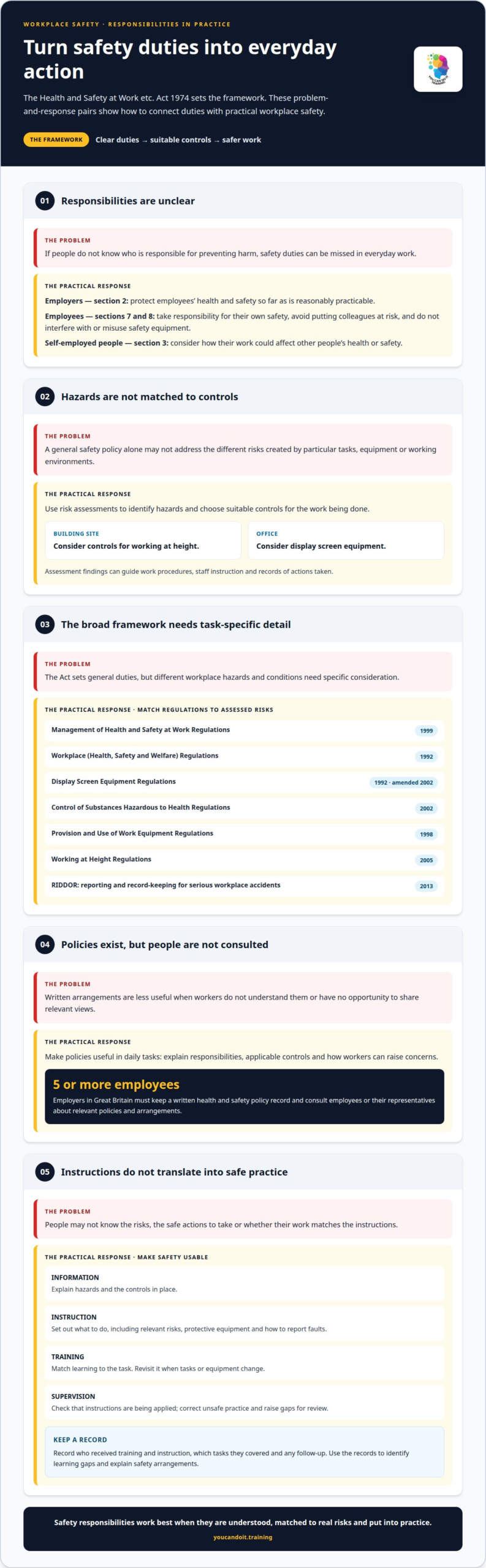
Health and safety is more than a set of rules to file away. People are safer when responsibilities are understood and put into practice. Employers must protect employees’ health and safety so far as is reasonably practicable, including by providing clear information, suitable instruction and proper supervision.
This guide explains what the Act requires, how related workplace regulations add detail, and how training supports safer working. You’ll get a straightforward view of the responsibilities behind compliance, so you can connect legal duties with practical action at work.
Key Takeaways
- According to UK legislation, section 2 of the Health and Safety at Work etc. Act 1974 sets out employers’ general duties, while sections 7 and 8 cover employees’ duties.
- Use the Management of Health and Safety at Work Regulations, which date from 1999 according to UK legislation, to understand how the wider legal framework supports workplace safety.
- Make training, clear information, practical instruction and appropriate supervision part of how people work safely, rather than treating them as paperwork alone.
- Explore CITB Health and Safety Awareness, SSSTS or SMSTS training from You Can Do It Training Ltd to build safety knowledge suited to different workplace roles.
What is the Health and Safety at Work Act 1974?
The Act sets the framework for workplace health and safety duties in the UK. Understanding it means knowing who must prevent harm and how those responsibilities work in practice.
Employer Duties and Prevention
Employers must protect workers’ health and safety so far as is reasonably practicable. According to UK legislation, section 2 of the Health and Safety at Work etc. Act 1974 sets out employers’ general duties, while sections 7 and 8 cover employees’ duties. This means assessing workplace risks, including dangerous equipment or manual handling, and taking practical steps to reduce them. A written policy can explain who is responsible, what controls apply and how workers should raise concerns.
Employee Responsibilities and Consultation
Employees must take responsibility for their own safety and avoid putting colleagues at risk. Section 8 prohibits interfering with or misusing safety equipment provided under the Act. Employers should explain relevant procedures, invite workers’ views and make the policy useful in daily tasks, not just paperwork. According to the Health and Safety Executive, employers in Great Britain with five or more employees must keep a written health and safety policy record and consult employees or their representatives about relevant policies and arrangements.
Self-Employed Responsibilities
Self-employed people have duties when their work could affect other people’s health or safety. What responsibilities do self-employed people have under the Act? According to UK legislation, section 3 sets out general duties for employers and self-employed people towards people other than their employees. A self-employed contractor working in a shared workplace, for example, must consider risks their work may create for other people. If they employ workers, employer duties also apply. These responsibilities make coordination essential: explain hazards, follow agreed controls and avoid creating dangerous conditions for others.
What are the main workplace health and safety regulations?
Act 1974 provides a broad framework for workplace safety. Supporting regulations address specific risks and working conditions.
The Act as a Workplace Framework
The Act sets general duties, while related regulations explain how to manage particular workplace hazards. According to UK legislation, the Management of Health and Safety at Work Regulations date from 1999. Risk assessments connect these requirements to actual tasks, equipment and working environments.
Risk assessments identify hazards and help employers choose suitable controls. Their findings can guide work procedures, staff instruction and records of actions taken. Duties apply across workplaces, but risks vary: a building site may need controls for working at height, while an office may need to address display screen equipment.
Supporting Regulations and Welfare Requirements
Specific regulations help employers manage hazards and maintain a suitable working environment. The Workplace (Health, Safety and Welfare) Regulations date from 1992. The Display Screen Equipment Regulations date from 1992 and were amended in 2002. Each applies to particular workplace conditions or activities.
Other examples include the Control of Substances Hazardous to Health Regulations, made in 2002, and the Provision and Use of Work Equipment Regulations, made in 1998. The Working at Height Regulations 2005 cover risks from that activity. The Reporting of Injuries, Diseases and Dangerous Occurrences Regulations (RIDDOR), dated 2013, set reporting and record-keeping duties for serious workplace accidents.
Employers also need to consider risks for people working from home, including the work setup and emerging concerns such as mental health. Match relevant regulations to risks identified in assessments, then communicate appropriate controls. For working-at-height hazards, working at height training can support safer practices.
Training, information, instruction and supervision
Training turns safety procedures into skills workers can use in real situations. Understanding the Health and Safety at Work Act 1974 also means matching learning to the task. Manual handling training, for example, can help workers assess a load, plan a route and move it safely. Equipment training should explain its intended use, limits and hazards, with learning revisited when tasks or equipment change.
Information explains hazards and controls; instruction sets out what actions to take. Before work begins, explain relevant risks, required protective equipment and how to report faults. Anyone using abrasive wheels needs clear operating instructions and guidance on what to do if equipment appears damaged. Keep procedures practical and accessible to the people doing the work.
Supervision checks whether workers can apply those instructions correctly. For supervisors, understanding the Health and Safety at Work Act 1974 involves noticing when actual conditions differ from procedures, correcting unsafe handling and raising gaps for review. This feedback helps managers improve guidance and identify where further support or training would help.
Record training, instruction and follow-up, including who received them and which tasks they covered. These records help managers identify learning gaps and explain safety arrangements during an enforcement visit. The Health and Safety Executive and relevant local authorities share workplace health and safety enforcement in the UK, so clear records are a practical part of managing responsibilities.
You Can Do It Training Ltd
You Can Do It Training helps employers build practical health and safety knowledge through role-relevant, award-winning training. When you’re translating legal responsibilities into workplace practices, training can help workers and supervisors understand hazards, follow procedures and make safer decisions.
CITB Health and Safety Awareness (HSA) introduces core site safety principles. The CITB Site Supervisor Safety Training Scheme (SSSTS) and CITB Site Management Safety Training Scheme (SMSTS) support people with supervisory and management responsibilities. Choose a course according to each learner’s role and the safety knowledge they need to apply at work.
Training works best alongside suitable information, instruction and supervision. Contact You Can Do It Training Ltd to discuss which course may fit your workplace needs.
Put safer practice into motion
A practical understanding of the Health and Safety at Work Act 1974 can guide your next step: building safety knowledge that fits the roles and tasks in your workplace. Consider where clearer instruction or stronger safety awareness could support your team, then choose learning that helps turn those priorities into everyday practice.
You Can Do It Training offers CITB Health and Safety Awareness (HSA), the CITB Site Supervisor Safety Training Scheme (SSSTS) and the CITB Site Management Safety Training Scheme (SMSTS). These courses provide learning relevant to different workplace responsibilities, from site safety awareness to supervisory and management roles. A conversation can help you consider which course best matches your team’s needs.
A safer workplace starts with people who feel ready to act. Build that confidence through practical, award-winning training.
Frequently Asked Questions
What Does “Reasonably Practicable” Mean?
It means weighing the risk against the effort, time and cost of reducing it. A serious danger calls for stronger precautions than a minor hazard. For example, where there is a risk of falling, consider barriers or other effective controls before relying on a warning alone. The aim is proportionate prevention, not eliminating every risk regardless of practicality.
Who enforces health and safety legislation?
The Health and Safety Executive and relevant local authorities enforce workplace health and safety legislation in the UK. Which authority leads depends on the workplace and activity. For example, enforcement responsibilities may differ between a construction site and a shop. Inspectors can examine how safety duties are managed and whether workplace conditions meet legal requirements.
Do Employers Have to Carry Out Risk Assessments?
Yes. Employers must assess workplace risks and use the findings to decide suitable precautions. The Management of Health and Safety at Work Regulations date from 1999, according to UK legislation. For a practical example, an assessment of moving deliveries should consider the load, route and handling method, then inform safer arrangements and staff instruction.
Does the Act Protect People Who Are Not Employees?
Yes. The Act includes duties concerning people affected by work, such as visitors, customers and members of the public. For example, a business carrying out repairs should consider whether its tools, materials or work area could put passers-by at risk. Section 3 of the Act sets out relevant duties towards people other than employees.
Is HSWA 1974 still in force?
Yes. Act 1974 remains the central framework for workplace health and safety in Great Britain. Its general duties continue to guide employers, employees and others with responsibilities at work. Related regulations add detail for particular hazards, so applying the Act means considering the relevant rules for the work being carried out.









Leave a Reply
Want to join the discussion?Feel free to contribute!