Construction Safety Problems: Identifying Hazards and the ‘Hearts and Minds’ Solution
What if the biggest risk on your site isn’t a faulty scaffold or a frayed cable, but a culture that treats safety as a chore rather than a commitment? In the UK, we know that staying ahead of construction safety problems can feel like a constant battle against HSE fines, project stoppages, and an overwhelming mountain of technical jargon. It’s exhausting to feel like a policeman on your own site, especially whilst all you want is to get the job done properly and ensure every worker gets home safely to their family at the end of the day.
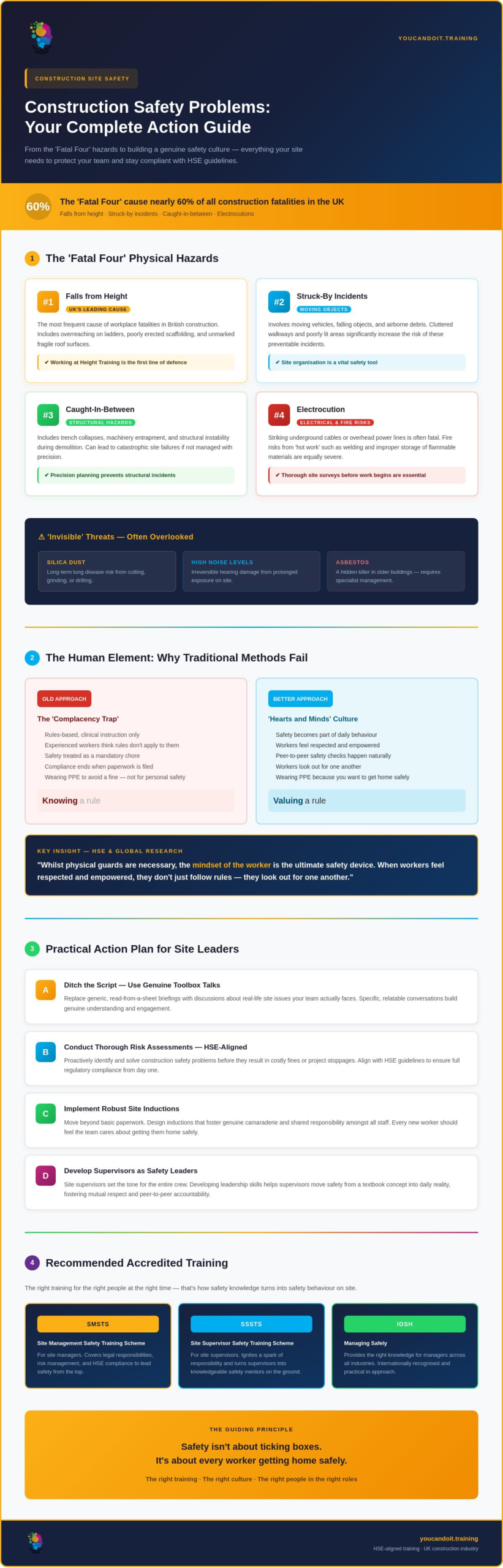
We believe that safety is about more than just ticking boxes; it’s about fostering a genuine “hearts and minds” connection that protects your team from the ‘Fatal Four’ hazards that account for nearly 60% of fatalities. This article will show you how to move beyond simple compliance to create a supportive environment where safety becomes second nature amongst your crew. We’ll explore practical site culture improvements and guide you through the essential accredited training, such as SMSTS or IOSH Managing Safely, that provides the right knowledge, for the right people, at the right time. Grab a quick cuppa and settle in; we’re here to help you turn those safety challenges into a foundation for lasting success.
Key Takeaways
- Identify the ‘Fatal Four’ physical hazards that cause the majority of site incidents and learn why simple site organisation is a vital safety tool.
- Understand the ‘complacency trap’ and how to use a ‘Hearts and Minds’ approach to engage your team’s emotions rather than just their rulebooks.
- Discover how to conduct thorough Risk Assessments that align with HSE guidelines to proactively solve construction safety problems before they lead to costly fines or site stoppages.
- Learn how to move beyond basic paperwork by implementing robust site inductions that foster a genuine sense of camaraderie and shared responsibility amongst all staff.
The ‘Fatal Four’ and Common Physical Construction Safety Problems
Identifying construction safety problems begins with recognising the ‘Fatal Four’, a group of hazards that consistently cause the most harm on UK sites. These include falls from height, struck-by incidents involving moving vehicles or falling objects, caught-in-between accidents such as trench collapses, and electrocutions. Whilst these are the most dramatic risks, they often stem from a lack of basic site organisation. A cluttered walkway or a poorly lit stairwell might seem like a minor annoyance, but they are the root of many avoidable injuries. Beyond the obvious, structural instability during demolition can lead to catastrophic site failures if not managed with precision. Effective construction site safety requires an eagle-eyed focus on both these physical dangers and ‘invisible’ threats like silica dust, high noise levels, and asbestos.
Working at Height: The UK’s Leading Site Hazard
Falls remain the most frequent cause of workplace fatalities in the British construction industry. Common errors often involve overreaching on ladders, using poorly erected scaffolding, or failing to identify fragile roof surfaces. The HSE sets rigorous standards for fall prevention, yet accidents still happen when compliance feels like a chore. This is why working at height training is so vital; it transforms a set of rules into a practical, life-saving skill set that workers actually value. It’s the first line of defence in ensuring everyone stays safe while working above ground level.
Electrical and Fire Risks on Site
Electricity and fire present sudden, catastrophic dangers that can devastate a project in seconds. Striking an underground cable or touching an overhead power line is often fatal, making thorough site surveys essential before any work begins. Fire risks are equally pressing, often sparked by ‘hot work’ like welding or the improper storage of flammable materials. A trained Fire Marshal plays a crucial role here, ensuring that exit routes are always clear and that fire extinguishers are ready for action. It’s about having the right people, in the right place, with the right skills to keep the site running smoothly and safely.
The Human Element: Why Traditional Safety Methods Often Fail
Even with the most advanced protective equipment, construction safety problems persist when the human element is ignored. We often see the ‘complacency trap’ catching out the most experienced workers on site. After twenty years of doing the same job without a scratch, it’s easy to believe that the rules are for someone else. This overconfidence leads to cutting corners, which is often where avoidable accidents happen. Traditional safety methods fail because they focus purely on clinical instruction rather than engaging the heart. To truly protect your team, you have to move from ‘knowing’ a rule to ‘valuing’ it as a part of your daily behaviour.
The ‘Hearts and Minds’ approach is about making safety personal. It’s the difference between wearing a harness because you’ll get fined and wearing it because you want to walk through your front door at the end of the shift. Research from global bodies like OSHA construction industry safety standards confirms that whilst physical guards are necessary, the mindset of the worker is the ultimate safety device. When workers feel respected and empowered, they don’t just follow rules; they look out for one another.
The Role of Supervision in Safety Culture
Site supervisors are the heartbeat of any project. They set the tone for the entire crew, moving safety from a textbook into reality. Leadership isn’t about shouting from the side lines; it’s about fostering camaraderie and mutual respect so that peer-to-peer safety checks become a natural part of the day. Developing these leadership skills through the SSSTS course allows supervisors to ignite that spark of responsibility in their team. It’s about being a knowledgeable mentor who is both an expert and a peer.
Overcoming the ‘Box-Ticking’ Mindset
Compliance shouldn’t be a mandatory chore that ends when the paperwork is filed. We believe in the right training, for the right people, at the right price, delivered in a way that actually sticks. To keep safety conversations fresh, try these practical steps:
- Ditch the script: Use ‘Toolbox Talks’ to discuss real-life site issues rather than reading from a generic sheet.
- Encourage feedback: Ask your team to identify one hazard they’ve noticed each morning.
- Humanise the risk: Talk about the impact of an injury on a worker’s family, not just the site’s insurance premium.
If you’re looking to shift your site culture from compliance to genuine care, exploring a fresh approach at You Can Do It Training Ltd can provide the inspiration your team needs to soar.
Solving Construction Safety Problems: A Practical Action Plan
Solving construction safety problems isn’t an overnight fix; it’s a steady process of building a safer environment through clear, logical steps. It starts with a thorough Risk Assessment grounded in HSE guidelines. This isn’t just about spotting a hole in the ground; it’s about evaluating the likelihood of harm and putting controls in place that actually work. Once the plan is set, robust site inductions ensure that every worker understands the specific hazards of the project. Move beyond basic paperwork by walking the site with new starters, pointing out real-world risks rather than just reading from a folder. Finally, regular site audits allow you to monitor performance and celebrate what’s going well, turning safety into a shared achievement.
Planning and Risk Management
Success on site is built in the planning stage. The SMSTS course is essential for anyone managing a project, as it provides the leadership skills needed to design safe systems of work. Even when things go wrong, you can turn a negative into a positive. Treat RIDDOR reporting as a tool for learning rather than a legal chore. By analysing near-misses, you can prevent construction safety problems from escalating into serious injuries. A practical tip you can implement today is to organise your site layout to completely separate plant machinery from pedestrian walkways, reducing the risk of struck-by incidents.
Training as the Ultimate Safety Tool
Accredited certifications from CITB, IOSH, and UKATA are the industry standards for a reason. They ensure everyone on site speaks the same safety language. We believe in matching the right training to each individual’s career path, whether they’re starting with a Health and Safety Awareness (HSA) certificate or moving into senior management. We also know that people learn best when they feel at ease. That’s why we foster a relaxed but professional learning environment where the tea is hot, the coffee is fresh, and the bourbon creams are always plentiful. When workers feel comfortable and respected, they don’t just pass a test; they gain the confidence to lead a safer site for everyone. For those in leadership roles within municipalities or agencies, Civic Shield Inc. also provides expert emergency management consulting and training to enhance large-scale safety protocols. Similarly, for those looking for professional development and training excellence in Singapore, you can visit Trainetics Academy to discover how their comprehensive programmes empower individuals and organisations alike.
Building a Safer Future on Your Site
Tackling construction safety problems effectively requires a dual approach that respects both the technicalities of the law and the humanity of your team. By identifying the physical risks we’ve explored and dismantling the ‘complacency trap’ amongst experienced staff, you can create an environment where everyone feels responsible for one another. True site safety isn’t found in a dusty ring-binder; it’s forged through proactive risk management and a culture that values every individual’s contribution. With thirty years of industry-leading experience, we’ve seen how the right training can ignite a spark of change that transforms a mandatory chore into a collective achievement.
We’re proud to be accredited by CITB, IOSH, and UKATA, maintaining a 99% pass rate that reflects our student-centric approach. Whether you’re looking for a fresh perspective on site management or essential awareness for new starters, we’re here to help you soar. Book your accredited CITB training with You Can Do It Training Ltd today and take the first step towards a site culture that truly protects your most valuable asset: your people. You’ve got the vision to grow, and with the right support, you can do it.
Frequently Asked Questions
What are the most common safety hazards on a construction site?
The most frequent hazards include working at height, moving plant machinery, and uncontrolled electrical cables. Beyond these obvious dangers, manual handling injuries and exposure to harmful dust or noise are significant daily risks that require constant vigilance. Ensuring your site is tidy and well-organised is a simple but effective way to prevent the slips and trips that often lead to more serious accidents.
How can I improve health and safety on my construction site?
Improving site safety starts with moving beyond a “box-ticking” culture to one that truly engages the hearts and minds of your workforce. You should conduct thorough risk assessments following HSE guidelines and implement site inductions that focus on real-world scenarios rather than just paperwork. Encouraging staff to identify hazards themselves helps solve construction safety problems before they lead to an incident, fostering a sense of shared responsibility amongst the whole team.
What are the ‘Fatal Four’ construction safety problems?
The ‘Fatal Four’ refer to the four most dangerous hazards: falls, struck-by incidents, caught-in-between accidents, and electrocutions. These categories are responsible for nearly 60% of construction worker deaths, making them the most critical construction safety problems to address through rigorous planning. By prioritising these high-risk areas during site audits, you ensure your safety efforts are focused where they are needed most to save lives.
Why is safety training important for construction workers?
Safety training is the foundation of a competent workforce, providing the essential skills to recognise hazards before they cause harm. Accredited courses from bodies like CITB or IOSH give workers the authority to act whilst fostering a culture of camaraderie and mutual respect. With our thirty years of experience and a 99% pass rate, we focus on making learning accessible and empowering, ensuring every student leaves with the tools to soar in their career.







Leave a Reply
Want to join the discussion?Feel free to contribute!