

How Long Does a CITB Certificate Last? 2026 Guide
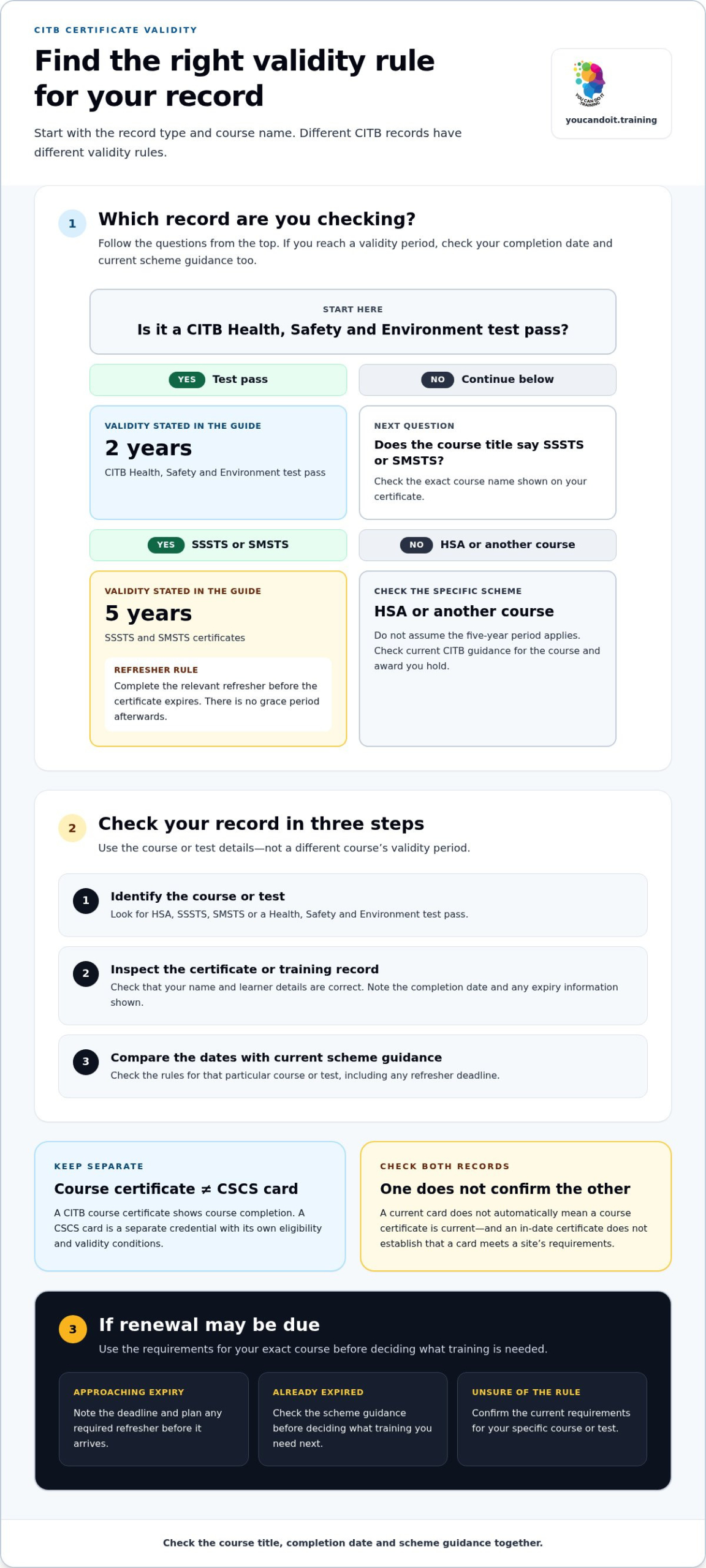
Could your training certificate expire whilst your CSCS card still appears current? It’s easy to confuse the two, especially because CITB courses and tests have different validity rules. The answer to how long does a CITB certificate last depends on what you completed: SSSTS and SMSTS certificates are valid for five years, while a CITB Health, Safety and Environment test pass is valid for two.
This guide explains the difference between course certificates, test passes and CSCS cards, and shows you what to check on your record. You’ll also learn when to plan a refresher. For SSSTS and SMSTS, you must complete it before the certificate expires, as there’s no grace period afterwards. Checking the dates early can help you avoid a last-minute rush and keep your training on track.
Key Takeaways
- There isn’t one validity period for every CITB course, so identify whether your certificate is for HSA, SSSTS or SMSTS.
- To answer how long does a CITB certificate last, check the course name and date on your certificate, then consult the current scheme guidance.
- A CITB course certificate and a CSCS card are separate credentials, each with its own validity rules.
- Before booking a refresher, check the requirements for your specific course and plan ahead if renewal is required.
How long does a CITB certificate last? It depends on the course
There isn’t one expiry period for every CITB course certificate. The answer to how long does a CITB certificate last depends on the training you completed and the rules for that scheme. SSSTS and SMSTS certificates are valid for five years. To remain certified, you must complete the relevant refresher before your certificate expires. Don’t assume the same period applies to Health and Safety Awareness (HSA): check the current CITB guidance for the specific course and award you hold.
Start by finding the exact course name on your certificate. HSA, SSSTS and SMSTS are separate courses, and a CITB Health, Safety and Environment test pass is a different record again. Identifying what you completed helps you find the right validity rules and work out whether a refresher is needed. For background on the organisation behind the training, see the Construction Industry Training Board (CITB) Wikipedia page.
Is a CITB certificate the same as a CSCS card?
No. A CITB course certificate shows that you completed a particular training course. A Construction Skills Certification Scheme (CSCS) card is a separate credential, with its own eligibility and validity conditions, used to demonstrate relevant qualifications for site access. Passing a course doesn’t make the certificate and card interchangeable. If you’re checking an SSSTS award, our SSSTS guide covers that course specifically.
Keep the two records separate when you check dates. A current card doesn’t automatically mean a course certificate is current, and an in-date certificate doesn’t establish that a card meets a site’s requirements. Check the CITB scheme guidance for training rules and the applicable card conditions for CSCS requirements.
Checking your CITB certificate and renewal date
Start with the course name, then check the dates against the rules for that course. To work out how long does a CITB certificate last, follow these steps:
- Identify the course or test. Note whether your record is for Health and Safety Awareness (HSA), SSSTS, SMSTS or a Health, Safety and Environment test.
- Inspect your certificate or training record. Check that your name and learner details are correct. Record the completion date and any expiry information shown.
- Compare it with the current scheme guidance. Check the rules for that specific course or test, including any refresher deadline. CITB requirements can differ, so don’t apply one course’s validity period to another.
What should you check on a CITB training record?
Read the course title, learner details, completion date and any stated expiry date together. If you’re checking SMSTS, use guidance for that scheme rather than relying on general advice or the SSSTS rules. The official CITB government page provides background on the organisation. For validity and refresher requirements, use the current guidance for your specific course.
A date printed on a certificate is useful, but it may not answer every site-access question. Employers and individual sites can set their own requirements, so distinguish those conditions from the course’s stated expiry and CITB scheme rules. Check each separately before relying on a record for work or site access.
Once you’ve identified the course and deadline, add a reminder to review your record before it is due. If your SSSTS or SMSTS guidance calls for refresher training, explore CITB refresher training as part of your plan.
What to do when a CITB certificate is due for renewal
Use the course title on your certificate to work out your next step. HSA, SSSTS and SMSTS have different requirements, so don’t book a refresher based only on a date or advice that applies to another course. Check the current CITB guidance for your scheme, including whether a refresher is required and when it must be completed.
If your certificate is approaching its stated expiry, note the deadline and plan your training before it arrives. Refresher requirements can include a specific completion window, so check the latest course rules rather than relying on a general booking timeframe. If your certificate has already expired, check the scheme guidance before deciding what training you need next.
When should you book a CITB refresher course?
Once you’ve confirmed the requirements for your course, plan to complete the refresher within the required period. You Can Do It Training Ltd delivers SSSTS and SMSTS refresher courses, helping learners revisit relevant health and safety knowledge. Match the refresher to the certificate you hold rather than booking general CITB training.
If you’re unsure how long does a CITB certificate last, return to the course name, check the current CITB rules and record the deadline somewhere you’ll see it. Planning your next learning step early can help you avoid a last-minute rush. Explore CITB training and refresher courses to find the right route for your learning needs.
Keep your training on track
There isn’t one expiry rule for every course, so the answer to how long does a CITB certificate last depends on the training you completed. Check the course title, completion date and any expiry information on your record, then compare them with current guidance for that scheme. Keep your CITB course certificate separate from your CSCS card, as each has its own validity requirements.
If your course requires a refresher, planning ahead can help you keep your knowledge current and avoid a last-minute rush. You Can Do It Training Ltd offers CITB HSA, SSSTS and SMSTS courses, as well as SSSTS and SMSTS refresher training.
Check your record, confirm the requirements for your course and explore your training options with You Can Do It Training Ltd.
Frequently Asked Questions
Do CITB certificates expire?
Some do, but there isn’t one expiry period for every CITB course certificate. SSSTS and SMSTS certificates are valid for five years, and a refresher must be completed before expiry to remain certified. For HSA, check the current requirements for the specific course you completed. Read the course title and dates on your certificate, then compare them with the relevant scheme guidance.
How long is an SSSTS certificate valid for?
An SSSTS certificate is valid for five years. To remain certified, you must complete the SSSTS refresher before the expiry date. Don’t leave it until after the certificate lapses: there’s no grace period, and the full course must be retaken if it expires. Check the date on your certificate and the current CITB guidance, then plan your refresher in good time.
What should I do if my CITB certificate has expired?
First, identify the course named on your certificate and check its current CITB requirements. If an SSSTS or SMSTS certificate has expired, there’s no grace period for taking the refresher, so you’ll need to retake the full course. For other training, don’t assume the same rule applies. Confirm the course-specific next step before arranging training, and keep a note of any new deadline.










Leave a Reply
Want to join the discussion?Feel free to contribute!