

Comprehensive Guide to Fire Warden Training: Essential Skills for 2026
Did you know that high-quality workplace safety programmes have been shown to reduce fire-related accidents by as much as 55%? It’s a striking statistic that transforms a mandatory safety requirement into a powerful, life-saving opportunity for your entire team. You likely feel a deep sense of responsibility for your colleagues, yet the complex web of UK fire safety legislation can often feel overwhelming, leaving you worried about what to do in a real emergency or how to find the time for proper learning amongst your daily tasks. We understand that technical compliance can feel cold and clinical, but we believe that the right fire warden training should be about more than just a certificate; it’s about fostering a culture of care, confidence, and proactive vigilance that puts people at the heart of everything you do. By reading this guide, you’ll master the essential skills, legal requirements, and practical duties needed to protect your workplace and your colleagues with absolute certainty. We’ll walk you through the latest HSE standards for 2026, the specific duties of the role, and the practical ways you can identify hazards today to ensure everyone stays safe, whilst making the learning process feel as welcoming as a warm cup of tea.
Key Takeaways
- Understand how the “Fire Triangle” of heat, fuel, and oxygen allows you to dismantle fire risks before they ever ignite.
- Learn to identify common workplace hazards, from overloaded sockets to obstructed fire doors, ensuring your site remains aligned with HSE safety standards.
- Master the essential building sweep techniques and assembly point protocols needed to account for every colleague during a safe evacuation.
- Discover why professional fire warden training is the key to transforming technical compliance into a culture of genuine care and confidence.
- Get practical tips for choosing an accredited training partner that balances rigorous safety theory with a warm, supportive learning environment.
What is Fire Warden Training and Why is it Essential?
At its core, fire warden training is a structured programme that does far more than just meet a legal requirement; it equips your team with the vital skills to manage daily risks and lead evacuations with confidence. This training is designed to ignite a sense of responsibility, ensuring that your chosen wardens can spot a hazard before it becomes a headline. To ensure your business remains fully compliant with all safety protocols, you can visit AFN Industrial Services Ltd for expert health and safety consultancy. The primary goal is simple yet profound: preventing fire through constant vigilance and ensuring a safe, orderly exit for every colleague during an emergency. It’s about the right knowledge, for the right people, at the right time.
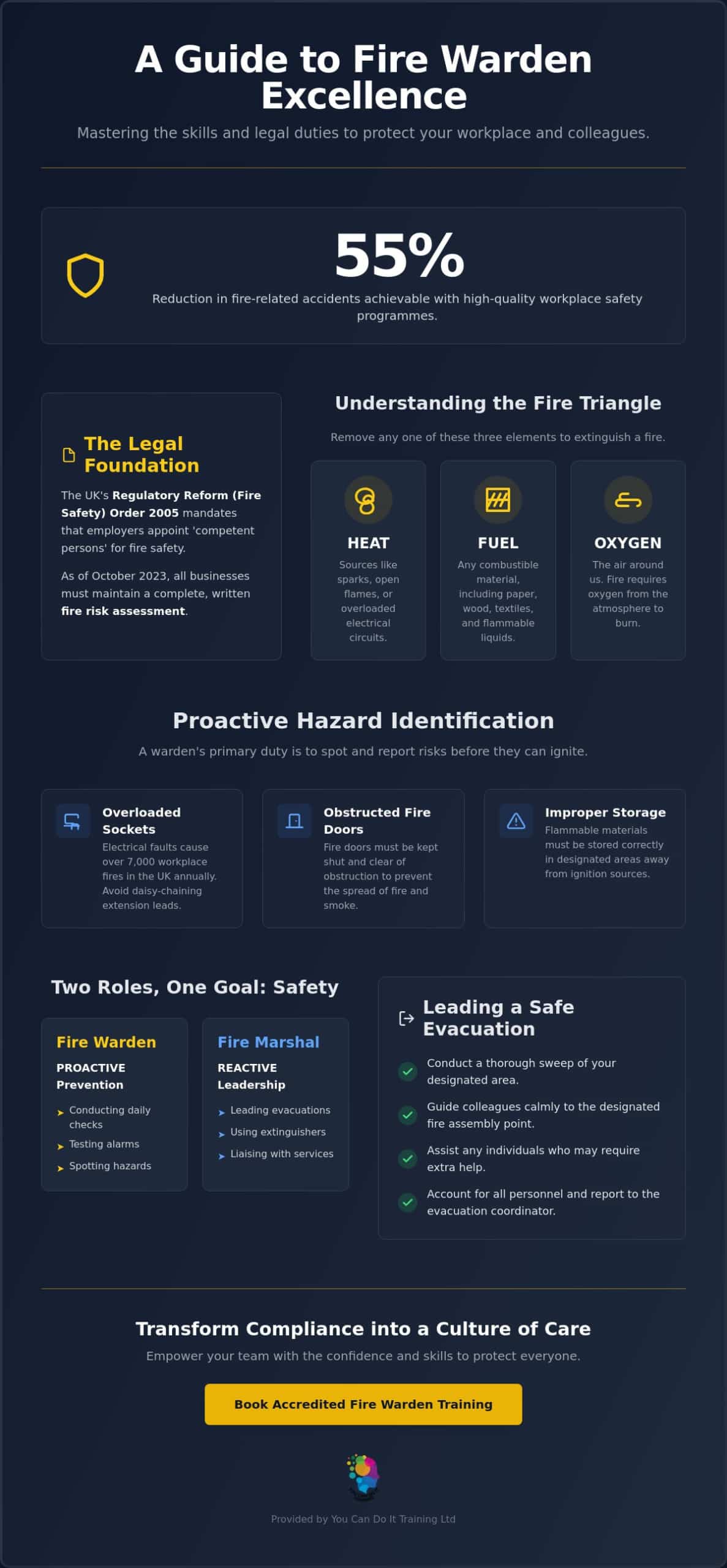
You might often hear the terms “Fire Warden” and Fire marshal used interchangeably across UK offices and building sites. While they share the same life-saving objective, a warden often focuses on proactive prevention, such as checking fire doors and testing alarms, whereas a marshal typically takes the lead during the reactive phase of an evacuation. By embracing both aspects, you foster a “hearts and minds” safety culture where technical compliance feels like a shared commitment to human connection and mutual respect rather than a clinical chore.
The Legal Framework: HSE Guidelines and the Fire Safety Order
The legal backbone of workplace safety is the Regulatory Reform (Fire Safety) Order 2005, which mandates that employers appoint “competent persons” to handle fire safety duties. According to the Health and Safety Executive (HSE), all businesses must now maintain a complete written fire risk assessment, a requirement that became universal in October 2023 regardless of staff numbers. This proactive approach to safety ensures that hazards are documented and mitigated before they cause harm. Effective training also supports your wider compliance strategy, working alongside protocols like RIDDOR reporting to create a transparent and secure environment for everyone. To start today, check that your current fire risk assessment is dated within the last twelve months and clearly identifies your designated wardens.
Key Components of a Comprehensive Fire Warden Course
Effective fire warden training transforms a list of safety rules into a proactive shield for your workplace. Research shows that robust training programmes can reduce fire-related accidents by as much as 55%, proving that knowledge is the most powerful tool in your safety arsenal. A comprehensive course doesn’t just ask you to memorise a handbook; it invites you to understand the “why” behind the risks, from the microscopic chemistry of a flame to the complex psychology of a crowded room under pressure.
Understanding the chemistry of fire is your first line of defence. The Fire Triangle represents the fundamental principle of fire suppression, illustrating that removing any one of the three elements, heat, fuel, or oxygen, will effectively extinguish a blaze. By mastering this concept, you’ll see your office or site through new eyes, identifying how to starve a potential fire before it even begins. This technical insight is balanced with practical hazard identification, where you’ll learn to spot the “silent” risks. With electrical malfunctions causing over 7,000 workplace fires annually, and the rising danger of lithium-ion battery overloads, knowing how to spot an overheated socket or a blocked fire exit is a daily act of care for your team.
Managing the human element is just as vital as managing the equipment. In an emergency, smoke and stress can cloud judgement, making the role of a calm leader essential. You’ll explore how people react to crisis and learn the specific Evacuation Personnel Duties required to guide others to safety without panic. This human-centric approach ensures that when the alarm sounds, you aren’t just following a procedure; you’re protecting your friends and colleagues. If you’re ready to empower your team with these life-saving skills, exploring a professional Fire Marshal Training course is a fantastic next step.
Mastering Fire Safety Equipment and Signage
A coordinated safety strategy relies on clear communication and reliable hardware. You’ll learn to distinguish between mandatory blue signs, which dictate specific actions, and green emergency exit signs that light the way to safety. As of January 2026, regulations for multi-occupied buildings over 11 metres now mandate quarterly checks of all fire doors in common areas, highlighting how vital these barriers are. Your training will ensure you understand how alarms, smoke detectors, and fire doors work together to provide the precious minutes needed for a safe exit.
Practical Duties: From Daily Checks to Emergency Evacuation
While the technical theory found in a fire warden training course curriculum is vital, the true impact of the role is felt in the quiet moments of daily vigilance. Real safety isn’t a one-off event; it’s a habit of care that ensures your colleagues return home safely every single day. Your proactive duties involve keeping fire paths clear, ensuring extinguishers remain in their designated spots, and checking that fire doors aren’t being propped open by a stray wedge or a heavy box. These small, consistent actions are what prevent a minor spark from turning into a major incident.
When the alarm does sound, your training shifts from prevention to leadership. You’ll conduct a systematic sweep of your designated area, checking toilets and storerooms to ensure no one is left behind. Once outside, your focus turns to the assembly point, where you’ll account for all personnel and prepare a clear, concise handover for the Fire and Rescue Service. Providing emergency responders with critical information, such as the location of the fire or the status of missing persons, is a key responsibility that saves precious seconds. If you want to ensure your team is fully prepared for these high-pressure moments, you can book your Fire Marshal Training today to build that essential confidence.
Creating a safety mindset amongst your colleagues is perhaps your most rewarding duty. By encouraging everyone to take ownership of their environment, you transform fire safety from a top-down rule into a collective effort of mutual respect. This “hearts and minds” approach ensures that safety becomes part of the office culture, making your job easier and your workplace significantly more secure.
Actionable Tips for Maintaining a Fire-Safe Environment
- Conduct “Five-Minute Fire Walks”: At the start of every shift, take five minutes to walk your floor. Check that escape routes are completely unobstructed and that all fire-fighting equipment is visible and accessible.
- Day-One Inductions: Ensure every new staff member is shown both the primary and secondary escape routes on their first day. Knowing two ways out is a simple step that drastically improves survival rates in smoky conditions.
- Holistic Emergency Response: Coordinate regularly with first aid at work course graduates in your building. A joined-up approach ensures that whilst you lead the evacuation, there’s a clear plan for anyone who might need medical assistance at the assembly point.
Choosing the Right Fire Warden Training for Your Team
Selecting the right fire warden training is a decision that impacts the safety and morale of your entire workplace. You should look for accredited providers who don’t just read from a slide deck but instead follow the latest UK safety standards and HSE guidance. To see how these professional standards are maintained across the broader security sector, you can learn more about Insight Security Training. The best courses prioritise a healthy balance of technical theory and hands-on experience, ensuring that when a warden returns to your site, they don’t just have a certificate; they have the muscle memory and confidence to act. Ask your provider if they include practical extinguisher practice, as this remains one of the most requested skills for 2026.
We believe that the environment where you learn is just as important as the curriculum itself. Technical health and safety can feel intimidating, but a relaxed atmosphere filled with camaraderie, proper tea, and perhaps a few bourbon creams can significantly boost information retention. When people feel comfortable and respected, they engage more deeply with the material. This person-first approach puts the learner at the heart of the experience, transforming a mandatory chore into a genuine opportunity for growth and achievement. Backed by a 99% pass rate, this supportive style ensures your team leaves feeling capable and inspired.
The “Hearts and Minds” Approach to Safety
Safety is as much about emotion as it is about equipment. By engaging your wardens’ “hearts and minds,” you ensure they take their responsibilities home with them, viewing safety as a way to protect their friends rather than a clinical checklist. Our “You Can Do It” mantra is designed to dismantle the fear often associated with complex regulations, making compliance accessible to everyone. Managers looking to build a truly comprehensive safety culture often combine this with an IOSH working safely course to ensure every team member understands their role in keeping the workplace secure. This joined-up approach fosters a workplace where everyone looks out for one another, and extending that care to your team’s wellbeing means also considering mental health first aid at work training to support colleagues who may be struggling beyond the physical environment, creating a resilient environment that goes far beyond simple legal compliance.
Ignite Your Team’s Safety Culture Today
Mastering fire safety is a journey that moves from understanding the chemistry of a flame to leading a calm, life-saving evacuation. By choosing the right fire warden training, you aren’t just meeting a legal requirement; you’re fostering a workplace where every individual feels protected and valued. We’ve seen how a “hearts and minds” approach transforms technical compliance into a shared mission, ensuring that vigilance becomes a daily habit rather than an annual chore.
When you train with us, you join a supportive community that puts the learner at the heart of everything. We’re proud of our 99% pass rate across all safety courses and our accreditation by leading UK safety bodies, but we’re equally proud of the relaxed, professional environment we provide. You’ll find the technical guidance you need alongside the best biscuits in the industry, making the learning experience as comfortable as it is vital for your team’s success.
Empower your team with our accredited Fire Marshal training today and take the first step toward a safer, more confident future. Remember, with the right support and a bit of camaraderie, you really can do it.
Frequently Asked Questions
How many fire wardens do I need in my workplace?
The number of wardens depends on your specific fire risk assessment, the size of your building, and the complexity of your floor plan. To ensure your assessment is fully compliant and accurately reflects your staffing needs, you can visit UK Fire Risk Assessments for professional guidance. For low-risk environments like small offices, you might only need one warden per 50 people, but higher-risk sites or multi-storey buildings require at least one per floor or department to ensure a thorough sweep. Always account for holidays and sickness to ensure you’re never left without a competent person on site.
How often should fire warden training be refreshed in the UK?
Most safety professionals recommend that full fire warden training is refreshed every three years to keep pace with changing legislation and equipment standards. However, conducting annual refresher sessions is a brilliant way to keep the “hearts and minds” of your team engaged and ensure their confidence doesn’t dip. Regular practice ensures that if an alarm sounds, your wardens react with instinct rather than hesitation.
What is the difference between a fire warden and a fire marshal?
In the UK, these terms are frequently used interchangeably, though they often describe two halves of the same vital role. A fire warden typically focuses on proactive prevention, such as daily checks of fire doors and extinguishers, whilst a fire marshal takes the lead during the reactive phase of an evacuation. Most comprehensive courses cover both aspects to ensure your team is equipped for every stage of fire safety.
Do fire wardens need to use fire extinguishers during a real fire?
A fire warden’s priority is always the safe evacuation of people rather than fighting the fire itself. You should only use an extinguisher if you’ve been trained, it’s safe to do so, and the action helps to clear an escape route for yourself or others. Life safety must always come first; if the fire is larger than a small wastepaper bin, it’s time to lead everyone to the assembly point.
Is fire warden training a legal requirement for all businesses?
Yes, appointing “competent persons” to assist with fire safety is a legal requirement under the Regulatory Reform (Fire Safety) Order 2005. Regardless of your business size, you must ensure that enough staff have received adequate training to manage evacuations and fire prevention duties. This ensures you remain compliant with HSE standards whilst fostering a culture where the safety of your colleagues is placed at the heart of your operations.










Trackbacks & Pingbacks
[…] Category A is the essential foundation that keeps you safe and compliant. Pairing this with fire warden training is an excellent way to build a comprehensive workplace safety skill set that covers multiple […]
Leave a Reply
Want to join the discussion?Feel free to contribute!