

Working at Height Training: 2026 UK Construction Guide
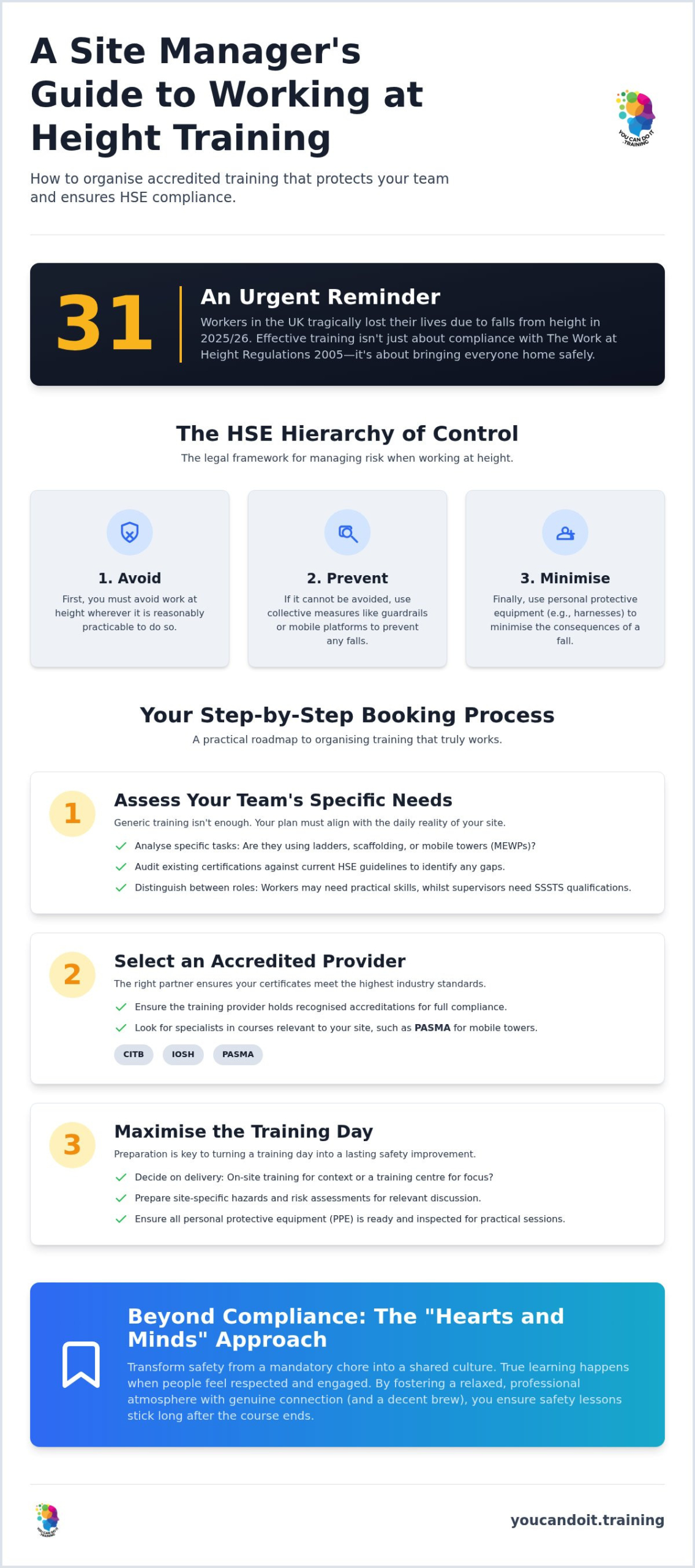
With 31 workers tragically losing their lives to falls from height in the UK during the 2025/26 period, the gravity of site safety has never felt more personal or more urgent. As a site manager, you aren’t just looking to tick a box; you’re looking to protect the people who make your projects possible. Knowing how to book working at height training for construction teams uk shouldn’t be a logistical headache that stalls your schedule. It should be a seamless process that builds confidence, ensures full HSE compliance, and brings everyone home safely at the end of the shift.
We understand that navigating the Work at Height Regulations 2005 can feel like a mountain of paperwork, especially when you’re trying to balance tight deadlines with the need for a provider your workers will actually respect. This guide provides a practical, step-by-step roadmap to organising accredited training that fits your site’s specific needs without the usual stress. You’ll learn how to select the right courses, from basic awareness to PASMA towers, whilst discovering how a "Hearts and Minds" approach to learning can transform safety from a chore into a shared culture. We’ll explore everything from the hierarchy of control to the simple comfort of a decent brew and a bourbon cream in the training room.
Key Takeaways
- Identify the specific tasks your team performs, such as using ladders or mobile towers, to ensure your training plan aligns perfectly with the Work at Height Regulations 2005.
- Learn how to book working at height training for construction teams uk by selecting delivery methods that minimise downtime, whether through on-site sessions or a professional training centre.
- Secure your project’s reputation by verifying that your provider holds recognised accreditations like CITB or IOSH, ensuring every certificate meets the highest industry standards.
- Transform safety from a mandatory chore into a growth opportunity by using a “Hearts and Minds” approach that focuses on human connection and mutual respect.
- Maximise the day’s impact by preparing site-specific hazards for discussion and ensuring all PPE is ready, creating a relaxed but professional environment for practical learning.
Assessing Your Team’s Requirements Before You Book
Before you dive into the logistics of how to book working at height training for construction teams uk, you need a clear picture of what your site actually demands. It isn’t enough to just order a generic course; you must look at the specific tasks your crew handles daily, whether they’re balancing on ladders for quick fixes or erecting mobile towers for long-term projects. Under the Work at Height Regulations 2005, your legal duties change depending on whether a person is physically doing the work or supervising it. For those in charge, you might find they need a specific SSSTS qualification to oversee height safety effectively. Auditing your team’s current certifications against 2026 HSE guidelines ensures your risk assessments aren’t just pieces of paper, but active tools that keep people safe.
Understanding the Hierarchy of Control
The HSE is very clear about the steps you must take: avoid work at height if possible, use collective measures to prevent falls, and finally, minimise the consequences using personal protective equipment. This hierarchy is the foundation of choosing the right training for your crew. If your team cannot avoid the height, they need to be experts in prevention. This might mean booking a PASMA course for those using towers or specialised harness training for those working where collective protection isn’t an option. Matching the training to these specific legal steps ensures you aren’t just compliant; you’re being smart with your team’s time and safety.
Group Size and Skill Levels
Sites are rarely filled with people at the exact same stage of their careers, and that’s where a "Hearts and Minds" approach makes the difference. Mixed-ability groups can feel intimidating for less experienced workers, so we focus on fostering a sense of camaraderie where everyone feels comfortable asking questions. You might decide that a standard accredited course is perfect for a general refresh, or perhaps your project involves unique site equipment that requires a bespoke session. Either way, the goal is to ignite a spark of genuine interest in safety, ensuring that whether it’s their first day or their thirtieth year, every worker leaves feeling confident and capable. We believe that putting the learner at the heart of the process, perhaps over a cup of tea and a bourbon cream, is the best way to ensure those safety lessons really stick.
How to Organise and Book Your Training: A Step-by-Step Process
Once you’ve assessed your team’s specific needs, the focus shifts to the logistics of how to book working at height training for construction teams uk without disrupting your project’s momentum. It’s about finding a strategic partner who understands that your crew’s time is valuable and that safety isn’t just a tick-box exercise. Start by deciding where the learning should happen. Bringing a trainer to your site can slash travel time; however, a dedicated training centre often offers a distraction-free environment that allows for deeper focus. Regardless of the location, always verify that the provider holds the correct credentials. Major contractors and the CITB won’t accept certificates that don’t meet the rigorous standards outlined in The Work at Height Regulations 2005.
We know that many workers dread the "back to school" feeling often associated with technical safety courses. To combat this, look for a provider that prioritises a relaxed but professional atmosphere. This involves more than just a set of slides. It’s about genuine hospitality, decent tea, and perhaps some "leagues ahead" bourbon creams to keep spirits high during the technical sessions. Confirming these small details, along with equipment requirements, ensures the day runs smoothly from start to finish.
On-Site vs. Training Centre: Which is Better for Construction Teams?
Training on-site allows your team to use the exact equipment they handle every day, which is brilliant for practical context. If your crew regularly uses mobile access towers, ensuring you book PASMA accredited training is essential for both legal compliance and site safety. Conversely, a training centre provides a neutral, psychological space where workers can focus entirely on the curriculum away from the noise and pressure of the live plant.
The Booking Checklist: Questions to Ask Your Provider
Don’t be afraid to grill your training partner before signing off. Ask if they use a "Hearts and Minds" strategy to engage learners emotionally as well as intellectually. Check their pass rates; a 99% pass rate suggests they know how to support individuals who might struggle with complex jargon. If you want a partner that treats your team with genuine interest and respect, you can explore our approach to accredited safety training to see how we make compliance feel achievable for everyone.
Maximising the Impact of Your Training Day
The real value of your investment isn’t just in the certificate; it’s in the lasting change it brings to your site. When you’ve mastered how to book working at height training for construction teams uk, the next step is ensuring your crew is mentally and physically ready to engage. Frame the day as an opportunity for professional growth rather than a mandatory chore. This shift in mindset aligns with The official Work at Height Regulations, which emphasise that competence is a blend of technical training and genuine understanding.
Preparation is key to making the practical elements stick. Ensure everyone has their PPE ready and identify specific site hazards you want the trainer to address. This transforms the session from a generic lecture into a bespoke problem-solving workshop. It’s about igniting a spark of genuine interest in workplace welfare that stays with the team long after the trainer has left. By focusing on the "why" behind the rules, you foster a culture where workers look out for one another instinctively.
Creating a Supportive Learning Environment
We’ve found that mutual respect starts with hospitality. Small details, like providing high-quality tea and "leagues ahead" bourbon creams, create a relaxed atmosphere where workers feel comfortable sharing real-world experiences. When a veteran scaffolder shares a story about a near-miss, it makes technical safety content far more relatable than any textbook ever could. This "Hearts and Minds" approach ensures no one is left behind, regardless of their previous experience or skill level.
Extending this supportive culture to other disciplines, such as those offered by Siren Training, ensures your team is prepared for any eventuality, from medical emergencies to fire prevention.
Post-Training: Managing Certificates and Compliance
Safety doesn’t end when the classroom doors close. You should integrate working at height training into your annual competency matrix to stay ahead of the curve. Store digital certificates in a central hub for easy access during site audits. Set automated reminders for refresher courses; this simple step prevents the risk of your team working with expired credentials and keeps your project fully compliant with HSE standards throughout 2026 and beyond.
Elevate Your Site Safety Standards Today
Ensuring your team is competent at height is about more than just avoiding significant HSE fines; it’s about fostering a culture where every worker feels empowered and protected. By auditing your specific site risks and choosing a partner that prioritises the "Hearts and Minds" of its learners, you turn a legal necessity into a strategic advantage. For organisations seeking to integrate these safety standards into a wider framework of operational performance, consulting with specialists like Formatour Incorporated can help build long-term organisational resilience. You now have the roadmap for how to book working at height training for construction teams uk, from verifying CITB accreditations to ensuring the learning environment is welcoming and inclusive.
With 30 years of industry-leading experience and a 99% pass rate across our safety courses, we know how to make technical compliance feel achievable. Our training is fully accredited by CITB, IOSH, and UKATA, giving you total peace of mind that your certifications will stand up to any site audit. We believe that a relaxed but professional atmosphere is the key to genuine student achievement, which is why we take such pride in the personalized service we provide at You Can Do It Training Ltd.
Let’s work together to ignite a spark of genuine safety awareness on your site. Remember, with the right support and a bit of mutual respect, you can do it.
Frequently Asked Questions
How long does a Working at Height certificate remain valid in the UK?
A Working at Height certificate typically remains valid for three years. Whilst there is no strict legal expiry date set in stone, the HSE recommends regular refresher training to ensure that safety knowledge and technical skills stay current. Keeping your team’s credentials up to date ensures you remain compliant with site safety standards and helps maintain a high level of competence across your workforce.
Can we book Working at Height training to be delivered on our own construction site?
Yes, we can bring the training directly to your site to help minimise travel time and project downtime for your crew. When you are looking at how to book working at height training for construction teams uk, opting for on-site delivery is a fantastic way to ensure the learning is as practical as possible. It allows your team to train using the specific equipment they handle every day in a familiar environment they already understand.
What is the minimum group size required for a private team booking?
We pride ourselves on being flexible and student-centric, so we encourage you to get in touch to discuss your specific team requirements. Whether you have a small group of supervisors or a larger team of site workers, we can tailor a bespoke session that fits your schedule. Our goal is always to provide a relaxed but professional environment where every learner feels at the heart of the experience, regardless of the group size.
Do your courses cover the specific requirements of the Working at Height Regulations 2005?
Every course we deliver is built around the legal framework of the Working at Height Regulations 2005. We cover the essential hierarchy of control, proper risk assessment techniques, and the correct use of safety equipment to ensure your site meets all HSE standards. By focusing on both the "how" and the "why" of these regulations, we help your team feel more confident and capable when working at any level.








Leave a Reply
Want to join the discussion?Feel free to contribute!