

Career progression with SMSTS into site management
SMSTS can support a move into site management, but the qualification alone does not guarantee promotion. Career progression with an SMSTS qualification is most relevant for supervisors moving towards responsibility for planning, organising and controlling construction work. The five-day course covers health and safety responsibilities, risk assessments, method statements and the CDM Regulations, helping learners build knowledge to manage safety on site.
If you are already taking on more responsibility, it is natural to ask whether SMSTS is the right next step. This article explains what the training covers, how it differs from SSSTS and how it can fit into a route towards site or construction management. It also explains what the qualification can support, and why practical experience and other role requirements still matter.
Key Takeaways
- Match your next training step to the responsibilities you’re aiming to take on, from supervising a team to managing a site.
- See how SMSTS training builds practical knowledge of risk assessments, method statements and site safety responsibilities.
- Keep the certificate’s five-year validity in mind and plan refresher training to maintain it.
- Explore how HSA, SSSTS and SMSTS training can support development at different stages of a construction career.
Career progression into site and construction management
An SMSTS course lasts five days. Its cost depends on format and location, with the price provided after a quote request.
Progression from Supervisor to Site Manager
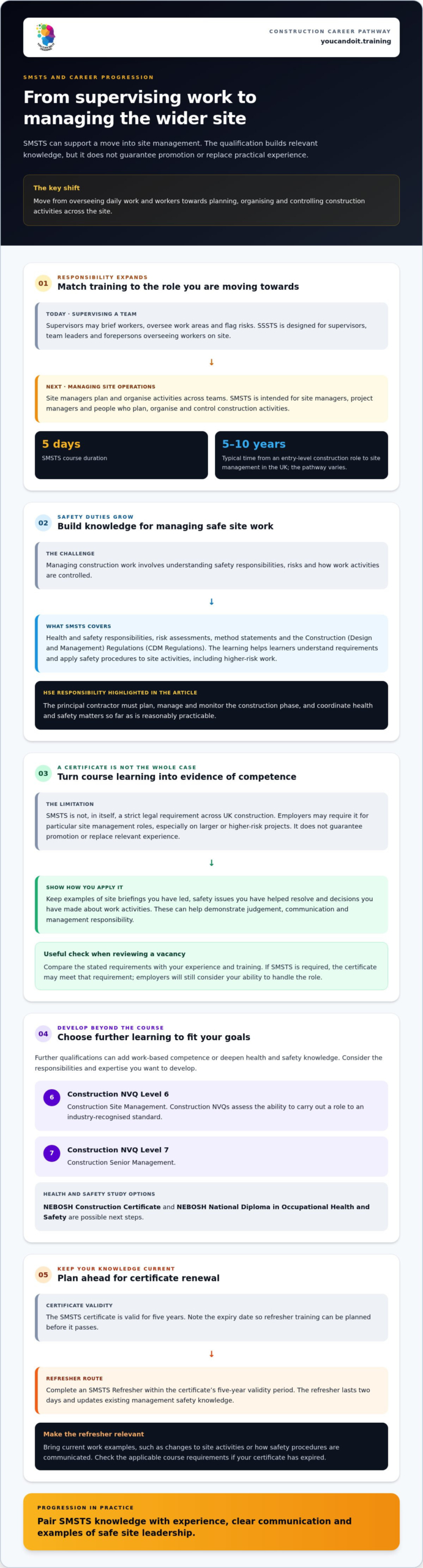
Progression means moving from supervising daily work to coordinating wider site operations. An SSSTS-to-SMSTS step can support that shift as responsibilities expand. Supervisors may brief workers, oversee work areas and flag risks; site managers plan and organise activities across teams. In the UK, progressing from an entry-level construction role to site management typically takes between 5 and 10 years. The pathway varies with experience and opportunities to demonstrate competence.
Eligibility for Management Roles
SMSTS is intended for site managers, project managers and people who plan, organise and control construction activities. There are no formal prerequisites, so entry is not tied to an earlier qualification. SSSTS is designed for supervisors, team leaders and forepersons overseeing workers on site. This distinction helps match learning to the responsibility involved, from supervising a team to managing the wider site. Employers, including principal contractors and major construction firms, may require SMSTS for site management roles, particularly on larger or higher-risk projects.
Site Management Responsibilities
SMSTS develops knowledge relevant to the health and safety responsibilities involved in managing construction work. The Health and Safety Executive says the principal contractor must plan, manage and monitor the construction phase and coordinate health and safety matters to ensure, so far as is reasonably practicable, that construction work is carried out without risks to health or safety. The course covers the Construction (Design and Management) Regulations (CDM Regulations) and helps learners understand requirements and apply safety procedures to site activities, including higher-risk work.
Qualifications Complementing SMSTS
Further qualifications can add work-based competence or deepen health and safety knowledge. A Construction NVQ Level 6 in Construction Site Management or Level 7 in Construction Senior Management can complement SMSTS. Construction NVQs assess a person’s ability to carry out their role to an industry-recognised standard. The NEBOSH Construction Certificate and NEBOSH National Diploma in Occupational Health and Safety are also possible next steps. Consider which route best matches the responsibilities and expertise you want to develop.
What Is SMSTS Training?
The Site Management Safety Training Scheme develops health and safety knowledge for people managing construction operations. The certificate is valid for five years. Planning refresher training before it expires helps keep the qualification current and supports continued development as a leader.
Certificate validity and refresher training
Complete an SMSTS Refresher within the certificate’s five-year validity period. The two-day refresher updates existing management safety knowledge. If your certificate has expired, check the applicable course requirements before booking further training. Note the expiry date and arrange refresher training before it passes.
Choosing training and using tutor support
SMSTS is part of CITB Site Safety Plus, a scheme created by the Construction Industry Training Board. Choose a CITB-approved provider that delivers this specific course, rather than a general health and safety course. Check that the content, assessment and certificate relate to SMSTS.
Tutor explanations can make regulations and site examples easier to apply. Use practice questions or mock tests to identify topics that need more attention before assessment. For example, revisit a question about managing site operations if you cannot explain the reasoning behind your answer.
Making the refresher useful
Bring current work examples into refresher discussions, such as changes to site activities or how safety procedures are communicated. This helps connect the learning to your responsibilities and highlights where your knowledge may need updating. A refresher can help certificate holders keep their SMSTS knowledge current, but it may not be suitable for everyone. You can explore SMSTS Refresher training when your renewal is due.
SMSTS and career progression
SMSTS can support a move into management by developing knowledge for leading site safety and compliance. The Site Management Safety Training Scheme is designed for site managers, agents and project managers. Its value comes from applying what you learn to construction site responsibilities, not simply adding a certificate to your CV.
SMSTS is not, in itself, a strict legal requirement across UK construction. However, employers, principal contractors and major construction firms often require it for site management roles, particularly on larger or higher-risk projects. The distinction is important: legislation sets legal duties, while an employer may make SMSTS a condition of a particular role.
For career progression with an SMSTS qualification, connect course learning to evidence of your competence. Keep records of site briefings you have led, safety issues you have helped resolve and decisions you have made about work activities. These examples can show employers how you handle management responsibilities, rather than relying on the certificate alone.
Use the qualification to build towards wider leadership: take responsibility for coordinating teams, communicate safety procedures clearly and understand how compliance affects daily operations. When reviewing a management vacancy, compare its stated requirements with your experience and training. If SMSTS is required, the certificate may meet that requirement, but it does not replace relevant experience or guarantee promotion.
Treat SMSTS as a foundation for demonstrating site management knowledge. Pair it with examples of your judgement, communication and ability to support safe work on construction sites. Together, these give employers a clearer picture of the contribution you could make in a senior role.
You Can Do It Training: CITB Health and Safety Awareness (HSA)
You Can Do It Training Ltd offers CITB Health and Safety Awareness (HSA) for people building a foundation in construction site safety. HSA supports applications for the Construction Skills Certification Scheme (CSCS) Green Card, making it relevant for those starting out before progressing towards supervisory responsibilities.
As your role develops, choose training that matches the work you are taking on. The CITB Site Supervisor Safety Training Scheme (SSSTS) is aimed at supervisors overseeing workers, while the CITB Site Management Safety Training Scheme (SMSTS) supports people responsible for managing site activities. This creates a clear training pathway from safety awareness to supervision and site management.
Planning your next step in construction training? Explore You Can Do It Training Ltd’s accredited CITB courses and choose a learning format that suits you.
Take the next step towards site leadership
Set a practical goal for your next role, then identify the experience that would help you work towards it. You might aim to lead site briefings, coordinate a work area or take responsibility for communicating safety procedures. Discussing a specific development goal with your manager can connect learning to opportunities in your current role.
Career progression with an SMSTS qualification is strongest when you can show how your knowledge informs your decisions on site. Keep examples of challenges you have handled, responsibilities you have taken on and skills you are developing. They can help you explain your readiness for greater responsibility in an interview or progression discussion.
Keep building your experience one responsibility at a time. Your next step in site leadership is within reach.
Frequently Asked Questions
What Does the SMSTS Qualification Cover?
SMSTS covers construction health and safety topics, including the Health and Safety at Work etc. Act, CDM Regulations, risk assessments and method statements. It also develops skills in identifying hazards, communicating safety procedures, investigating incidents and supporting legal compliance. For example, learners consider how to assess the risks of a work activity and explain the controls workers need to follow.
What Is the SMSTS Course?
SMSTS is a CITB Site Safety Plus course for people managing construction work. The five-day programme includes an exam and assessment exercises, so learners need to engage with the material as well as attend. There are no formal prerequisites. Before enrolling, consider whether your current or intended role involves coordinating site activities and making health and safety decisions.
How do I move from site worker to supervisor?
Build towards supervision by taking responsibility for communicating instructions, helping organise work and raising safety concerns through the right channels. Discuss opportunities to develop these skills with your manager, then consider SSSTS, which is designed for supervisors, team leaders and forepersons overseeing workers. Keep examples of tasks you have handled to explain your readiness for greater responsibility.
SMSTS vs SSSTS: What’s the Difference?
SSSTS is intended for people supervising workers, while SMSTS is designed for managers responsible for planning, organising and controlling construction activities. In practice, a supervisor may oversee a team’s work, while a manager coordinates broader site operations. If your duties are expanding beyond direct supervision, compare the course focus with the responsibilities you are expected to take on.
What Jobs Can I Get with SMSTS?
SMSTS is designed for roles such as site manager, site agent and project manager, and can support progression towards senior site supervisor or general foreman positions. Employers may set their own requirements for each vacancy, so compare the job description with your experience and other qualifications. Use examples of decisions and responsibilities from your work to show how your skills fit the role.









Leave a Reply
Want to join the discussion?Feel free to contribute!