
HSE Site Inspection Checklist: What Construction Managers Must Check
Last Updated: 15 November 2026
Quick Summary
A site inspection checklist is a structured document that guides a construction manager through the hazards, controls and legal duties to verify on a live site. Build it around your actual site risks, covering housekeeping, access, traffic, PPE, plant, task-specific hazards and welfare, with observable checks and a Red, Amber or Green rating.
- Daily documented checks on active areas are the baseline, with weekly and monthly inspections at greater depth.
- Write one observable check per control so any manager reaches the same conclusion.
- Rate each finding Red, Amber or Green and give every failed check a named owner and due date.
- Inspect excavations at the start of each shift and after heavy rain or nearby plant movement.
- Start each inspection by verifying whether last time’s corrective actions were completed.
Table of Contents
- What a Site Inspection Checklist Must Cover
- Construction Site Inspection Checklist Template
- Construction Site Inspection Frequency: How Often Is Enough?
- Construction Site Inspection Best Practices
- Construction Site Inspection Report Example and Record-Keeping
- Turning Findings into Corrective Actions
- Book Health and Safety Training for Your Site Team
- Frequently Asked Questions
What a Site Inspection Checklist Must Cover
A site inspection checklist is a structured document that guides a construction manager through the hazards, controls and legal duties that must be verified on a live site.
The core areas every inspection should touch:
- Site conditions and housekeeping – tidiness, rubbish control and waste management
- Access and egress – walkways, work areas and pedestrian routes kept clear
- Traffic management – vehicle movements and workplace transport segregation
These map directly onto duties under the Construction (Design and Management) Regulations 2015 and the wider framework the HSE publishes for construction. For a clear breakdown of your legal duties and inspection responsibilities, see our guide to the health and safety responsibilities of a site manager in the UK.
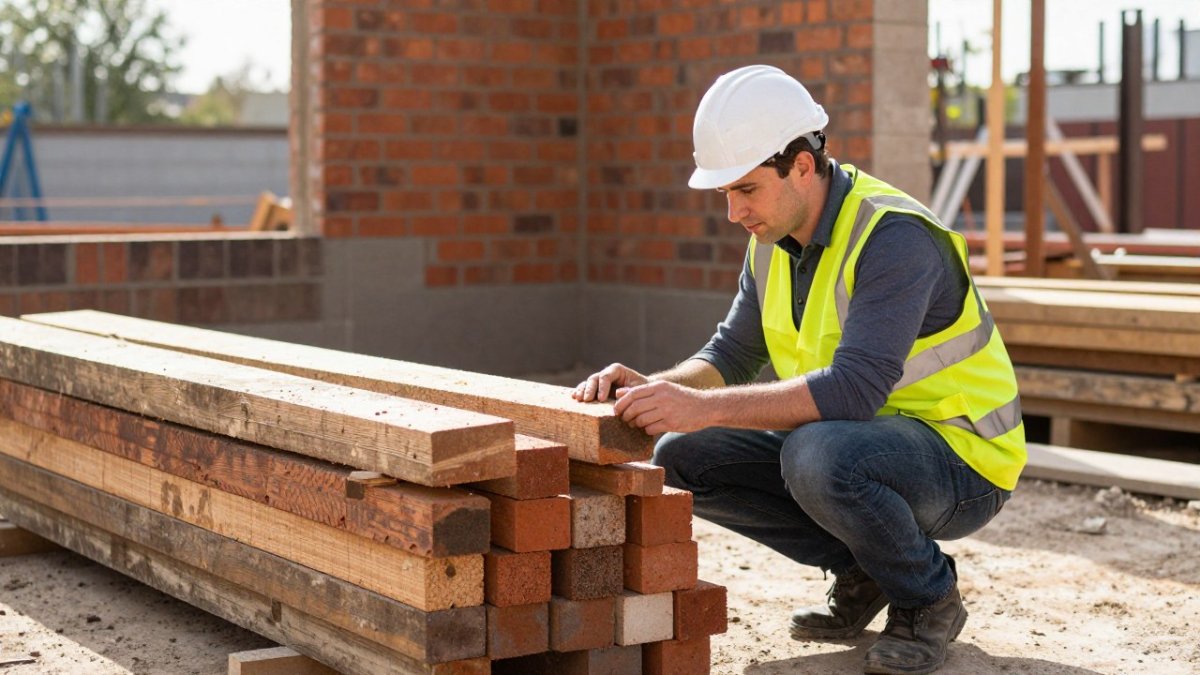
The core areas every inspection should touch
Each area needs specific, observable checks rather than vague prompts. “Housekeeping adequate” tells you nothing. “Walkways clear of trailing cables and offcuts between plots 4 and 7” tells you exactly what to look at and what to fix. Write every line so a different manager could walk the same route and reach the same conclusion.
Construction Site Inspection Checklist Template
A construction site inspection checklist template is a pre-formatted document with the site areas, hazards and control measures already laid out, so a manager fills in findings rather than writing the checklist from scratch each time. The best templates are starting points, not finished articles.
How to build a template that works on your site
Start from the HSE’s own health and safety toolkit for small construction sites, then adapt it. Here is how we would build one:
- List the work activities happening on your site this week, not last year.
- Map each activity to its hazards and the control measures your risk assessments and method statements specify.
- Write one observable check per control – something you can see or verify in seconds.
- Add a scoring column – rate each item Red, Amber or Green so priorities surface immediately.
- Add an owner and due date field for every failed check.
- Review the template monthly and after any incident or near miss.
A template that never changes is a template that has stopped matching the site.
| Section | What to check | Frequency |
|---|---|---|
| Housekeeping | Walkways clear, waste removed, materials stacked safely | Daily |
| Access and egress | Routes open, signage in place, lighting working | Daily |
| PPE | Correct equipment worn and in good condition | Daily |
| Plant and equipment | Inspection records current, guards fitted | Weekly |
| Scaffolding and work at height | Tags in date, edge protection intact | Weekly |
| Excavations | Support, edge protection, access | Per shift |
| Electrical safety | Distribution boards, cable condition, RCDs | Weekly |
| COSHH and hazardous substances | Storage, labelling, safety data sheets | Monthly |
Construction Site Inspection Frequency: How Often Is Enough?
Daily documented checks on active areas are the baseline most construction managers work to, with more detailed inspections weekly and a full review monthly. Frequency should follow risk, not habit. A site with live excavations, lifting operations or work at height needs closer attention than a finishing site with a settled workforce.
A workable pattern:
- Daily – walk the site before work starts, checking housekeeping, access, PPE and any overnight changes
- Weekly – plant, scaffolding, electrical and traffic management
- Monthly – full review against the checklist, plus a look at trends in near misses and corrective actions
Who should inspect, and how often
Frequency means little without a named person. A common and workable split on a typical project:
- Site manager or supervisor – daily walk, recorded on a short form covering housekeeping, access, PPE and any overnight changes
- Competent person – weekly checks of plant, scaffolding, excavations and electrical installations, where the law or guidance requires a competent person to inspect
- Principal contractor or health and safety adviser – monthly full review, plus event-driven inspections after incidents or programme changes
Where a subcontractor controls an area, agree in writing who inspects it and how findings are passed back. Gaps usually appear at the boundary between trades, not in the middle of a well-run package.
Matching frequency to risk and site phase
A static frequency table stops matching the site within weeks. Adjust the pattern as the work changes:
- Groundworks and excavations – inspect excavations at the start of each shift and after any event that could affect stability, such as heavy rain or plant movement nearby
- Frame and work at height – increase scaffolding and edge-protection checks during erection, alteration and dismantling
- Fit-out and finishing – shift emphasis to housekeeping, access, electrical safety and COSHH as the workforce density rises
Watch out: a checklist completed at the same time every day can miss night shifts, weekend working and early starts, so agree who inspects outside core hours and record it.
The broader compliance picture, including how inspection duties sit alongside CDM 2015 and Building Safety Act requirements, is covered in our construction health and safety compliance guide.
Construction Site Inspection Best Practices
The best inspections are quick, consistent and acted on. A manager who walks the same route at the same time each day spots change faster than one who improvises.
- Follow a fixed route so no area gets skipped
- Inspect with the workforce, not past them – ask what is getting in the way
- Link findings to your permit to work system where the task involves high-risk activity, so controls are coordinated – our guide on why permit to work systems matter explains how this fits together
A common mistake is treating the inspection as a paper exercise. The moment the checklist becomes something completed at the desk rather than on the walk, it stops finding anything.
Construction Site Inspection Report Example and Record-Keeping
A construction site inspection report should record the date, time, inspector, areas covered, each finding with its risk rating, the corrective action agreed, the named owner and the target completion date.
A usable report looks like this:
- Header – site name, date, inspector, weather, workforce numbers
- Findings table – area, check, rating, description, photo reference
- Actions – owner, due date, status
Keep records for the life of the project and beyond, in line with your company’s document retention policy. Digital tools make this easier, but a well-structured paper form still works if it is completed honestly.
Turning Findings into Corrective Actions
Findings only matter if they close out. Every Red item needs an owner, a deadline and a verification step, and the next inspection should start by checking whether last time’s actions were completed. That single habit separates sites that improve from sites that accumulate the same problems.
Risk-based scoring that prioritises action
A simple Red, Amber, Green rating works, but it helps to agree what each rating means before the inspection starts so different managers reach the same conclusion:
- Red – imminent risk of serious injury or a breach of a prohibition notice; stop the work, make safe immediately and record the action taken
- Amber – a control is missing or degraded but the risk is not immediate; fix within an agreed short timescale, usually the same week
- Green – the control is in place and working; monitor at the next inspection
Where a more granular approach suits a larger site, rate each finding on likelihood and severity using a simple matrix, then convert the score to Red, Amber or Green. The value is consistency, not precision: two managers walking the same route should reach the same rating.
A corrective-action tracker that closes the loop
A simple tracking method:
- Log every finding with a unique reference number, the inspection date and the area
- Assign a risk rating – Red (stop and fix now), Amber (fix within the week), Green (monitor)
- Name one owner – never “the team”; a named person is accountable for the fix
- Set a realistic due date that reflects the rating
- Record the evidence – a photograph or signed note showing the control is now in place
- Verify completion at the next inspection and sign it off
- Review trends monthly – repeat findings point to a system failure, not a one-off
A tracker with these fields turns findings into an auditable record. Include the finding reference, location, description, rating, owner, due date, completion date, evidence reference and verifier. That is the record an inspector will ask to see when checking whether you identified and controlled risk.
Verification and escalation
Verification is the step most often skipped. At the next inspection, the inspector checks the action against the evidence and signs it off, or reopens it with a new due date.
Watch out: closing an action because the paperwork says so, without seeing the control in place, is how the same hazard reappears in the next inspection and the next incident report.
Using trends to fix the system
When the same issue keeps appearing, look at the risk assessment and the training behind it. Often the control is right but the competence or understanding is not. That is where targeted training pays back fastest. Review the tracker monthly for repeat findings by area, trade and hazard type, and use that pattern to adjust the checklist, the supervision or the training rather than simply re-issuing the same action.
Book Health and Safety Training for Your Site Team
A checklist is only as good as the people walking it and the workforce being checked. Competent supervisors spot hazards faster, record them accurately and know when to stop work.
You can see the full range of construction training courses available to your team and book directly.
The gap between a compliant site and a vulnerable one usually comes down to whether inspections are routine and acted on.
Frequently Asked Questions
What should a construction site safety inspection checklist include?
A useful site inspection checklist covers housekeeping and waste control, access and egress, walkways and work areas, traffic management, personal protective equipment, site fencing and controlled access, warning signage, materials storage, plant and equipment, work at height, excavations and welfare facilities. Add a section for inspection records and corrective actions so findings are tracked to closure rather than noted and forgotten.
How often should construction site inspections be carried out?
There is no single legal interval. Construction site inspection frequency should reflect the size of the site, the phase of work and how quickly conditions change. Many managers run daily walkovers during high-risk phases such as groundworks or steel erection, with fuller weekly or monthly checks. Record the frequency in your inspection schedule and review it whenever the programme changes.
Who is responsible for health and safety inspections on a construction site?
The site manager or supervisor usually carries out routine inspections, but responsibility sits with the principal contractor and duty holders under CDM 2015. Whoever inspects should be competent, understand the risks on site and have the authority to stop unsafe work. Inspection records should name the inspector, the date and any corrective actions assigned.
What records should be kept after a construction site inspection?
Keep the completed checklist, the inspection report, photographs of significant findings, and a corrective-action log showing who is responsible and when issues were closed out. Records of induction, training and competence should sit alongside them. These records demonstrate that risks were identified and controlled, which matters if an HSE inspector or client asks for evidence.
What should a site manager do after finding a safety issue?
Stop work in the affected area if there is an immediate risk, then record the finding with a photograph and a clear description. Assign a responsible person and a deadline, and re-check the issue at the next inspection. Serious findings should be reported to the principal contractor and, where the law requires it, under RIDDOR. Close the loop in the corrective-action log.


Leave a Reply
Want to join the discussion?Feel free to contribute!