
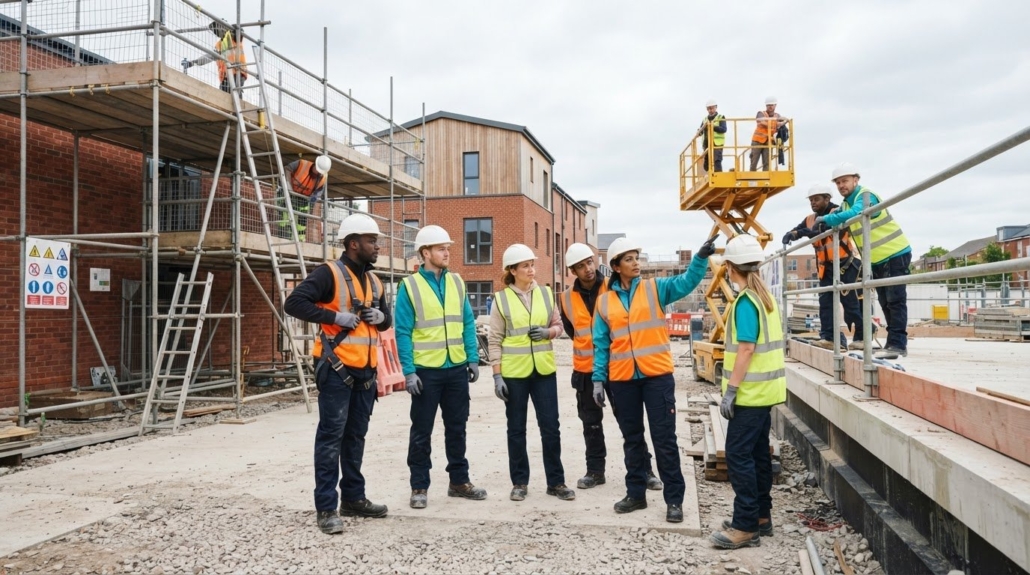
Working at Height Training for UK Site Teams
What if the most useful working at height training is measured not by what workers remember in a classroom, but by the decisions they make on site? For teams looking for working at height training for site teams UK, that practical difference matters. Tasks change, workers bring different experience, and a briefing that worked yesterday may not cover today’s hazards.
Training can build shared understanding, but it doesn’t replace planning, suitable equipment or supervision for the task. You’re right to expect more than theory: workers need to recognise hazards, follow sensible controls and know when they need further instruction or support. This guide explains how to plan work at height before it begins, use HSE guidance to think through ways to avoid or reduce fall risks, and spot when additional training or supervision may be needed. The aim is safer, more confident decisions across the team.
Key Takeaways
- Use HSE guidance to shape a pre-task sequence: avoid working at height where practicable, assess the risks and choose suitable controls.
- Brief workers on the task’s hazards, access equipment, responsibilities and any site conditions that could change the plan.
- Make working at height training for site teams UK practical by reinforcing learning through regular briefings, observation and review of tasks.
- Look for signs that a worker needs further instruction, equipment-specific training or closer supervision before they continue.
What Working at Height Training Means for UK Site Teams
The HSE describes work at height as work in any place where someone could fall and be injured if precautions aren’t taken. That can include a roof, ladder or raised platform, but also an opening or fragile surface at ground level. Check the HSE’s current wording before publication, and remember that the key question is whether a fall could cause harm, not how high the task is.
Useful working at height training for site teams UK builds understanding and supports competence, but it can’t make a task safe on its own. Work still needs to be planned, suitable equipment selected and workers appropriately supervised. Training explains safe principles; a task-specific risk assessment identifies the hazards, and a safe system of work sets out how that particular job will be done.
Which site workers need working at height training?
Training needs depend on what each person does, their experience and the responsibilities they hold. A worker who occasionally accesses a low-level work area may need general awareness, whilst someone using particular access or fall-protection equipment may need specific instruction before using it. An unfamiliar task or changed site conditions can also mean existing knowledge isn’t enough.
For example, understanding that fall arrest systems are designed to stop a fall is not the same as knowing how to use the specific equipment selected for a task. Supervisors should consider what each worker is expected to do and where further instruction or closer oversight is needed. For a broader overview of the subject, see our working at height training guide.
How site teams can plan and brief work at height safely
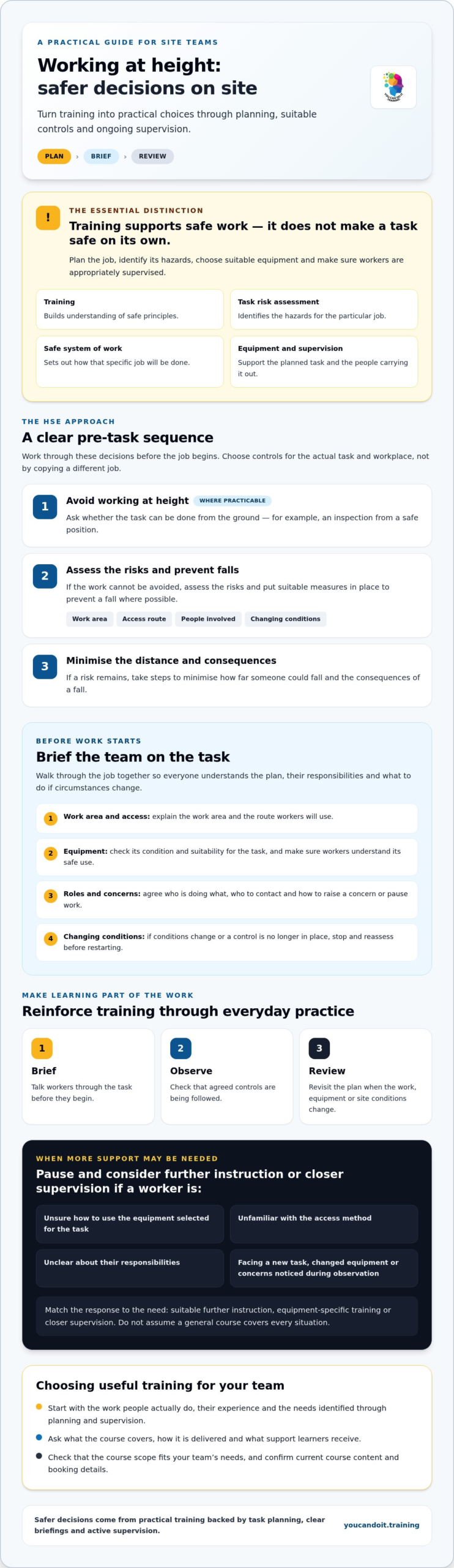
A clear pre-task sequence helps turn training into consistent decisions. Follow the HSE approach: avoid work at height where practicable; if it can’t be avoided, assess the risks and prevent falls where possible; then minimise the distance and consequences of a fall if risk remains.
- Avoid: Can the task be done from the ground, for example by carrying out an inspection from a safe position?
- Assess: Check the work area, access route, duration, people involved and conditions that could affect the job.
- Choose controls: Select suitable access equipment and other precautions for the hazards identified, and make sure workers know their responsibilities.
Controls should be chosen for the risks of the specific task and workplace, not copied from a different job. That practical principle sits at the heart of HSE guidance. When evaluating suitable access apparatus such as industrial steps and platforms, specialist providers like Springwell Industries Pte Ltd illustrate the wide variety of commercial ladders and configurations available for site maintenance tasks.
What should a pre-task working at height briefing cover?
Walk the team through the work area and access route, the condition and suitability of equipment, who is doing what, and what could change during the task. Agree how workers can raise concerns, who to contact and when to pause work. If conditions change or a control is no longer in place, stop and reassess before restarting.
If the task involves a mobile access tower, check that the team understands the arrangements for its safe use. The PASMA tower safety guide offers more detail. These briefings help put working at height training for site teams UK into practice, whilst training can build a useful foundation. You Can Do It Training provides Working at Height Training for teams looking to strengthen that understanding.
How to reinforce working at height training across your site team
A course can build understanding, but everyday supervision helps turn that learning into safer habits. Brief workers before tasks, observe how agreed controls are followed and review the plan when the work, equipment or site conditions change. Keep the conversation open: workers should feel able to ask questions and raise concerns without being expected to improvise.
Look for signs that someone may need extra support. They might be unsure how to use the equipment selected for a task, unfamiliar with the access method, or unclear about their responsibilities. A new task, changed equipment or gaps noticed during observation can also prompt a review. Respond with suitable further instruction, equipment-specific training or closer supervision, rather than assuming a general course covers every situation.
How can employers choose useful training for their team?
Start with the work people actually do, their experience and the training needs identified through planning and supervision. Then ask providers what the course covers, how it’s delivered and what support learners receive. Check that the scope fits your team’s needs, and confirm current course content and booking details before making arrangements.
You Can Do It Training lists Working at Height Training as part of its workplace safety training portfolio, alongside PASMA Towers for Users. If you’re considering working at height training for site teams UK, explore You Can Do It Training and discuss your team’s requirements, then confirm the course is suitable for the tasks and experience involved.
Make safer working at height part of every task
Safer work at height comes from more than completing a course. Plan each task around its specific risks, brief the people involved and revisit the controls when conditions change. The right working at height training for site teams UK can build practical understanding, while observation and follow-up help supervisors spot when workers need further instruction or support.
You Can Do It Training includes Working at Height Training and PASMA Towers for Users in its course portfolio. Before booking, check the course content, delivery and learner support to make sure they suit your team’s activities and experience.
With clear planning and the right learning in place, your team can approach each task with greater confidence and care.
Frequently Asked Questions
Is working at height training a legal requirement in the UK?
UK rules require work at height to be properly planned, supervised and carried out by competent people, with suitable training and instruction supporting competence. This doesn’t mean one particular working at height course is universally mandatory for every worker. Employers should consider the tasks, risks and workers’ capabilities, then follow applicable HSE guidance to identify the training and supervision needed.
Who needs working at height training on a construction site?
Anyone whose work involves a risk of falling may need training or instruction suited to their role. This could include workers carrying out tasks at height, people setting up or using access equipment, and supervisors responsible for planning or overseeing the work. The level and type of training should reflect each person’s tasks, responsibilities, experience and the risks of the workplace.
What should working at height training cover for site teams?
Useful working at height training for site teams UK should help workers recognise hazards, understand why tasks need planning and follow suitable controls. It may also build awareness of equipment selection and safe use, and clarify individual responsibilities, including how to raise concerns. Course content varies, so ask the provider what’s covered and check it against your team’s actual tasks and training needs.
How often should site workers refresh working at height training?
There isn’t one universal refresher interval that suits every worker and task. Employers should review training needs when work activities, equipment or workplace risks change, or when observation shows a worker needs more support. Also consider whether skills are still current after a period away from the task. Check the training remains suitable, and arrange further instruction or closer supervision where needed.







Leave a Reply
Want to join the discussion?Feel free to contribute!