

Construction Site Safety: Practical 2026 UK Guide
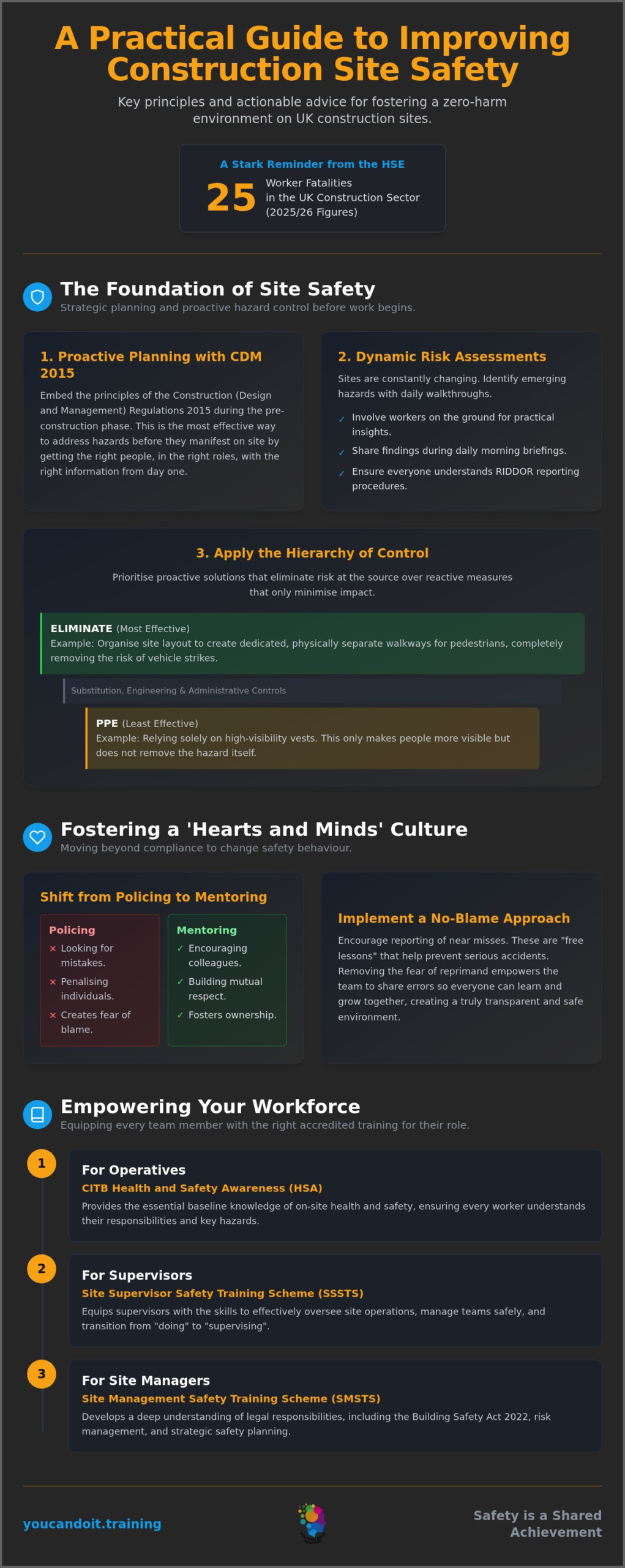
With 25 worker fatalities recorded in the UK construction sector during 2025/26, the weight of responsibility on your shoulders can feel immense. You likely agree that keeping up with the new Building Safety Regulator transition whilst hitting demanding project milestones is a relentless challenge. It’s frustrating when vital procedures are viewed as just another chore, yet your goal remains a zero-harm environment where every person returns home safely. This guide provides actionable advice on how to improve construction site safety by fostering a “Hearts and Minds” culture that goes beyond basic compliance. We’ll explore how to navigate the latest HSE standards, empower your team to take personal ownership of their welfare, and ensure you have the right systems, for the right risks, at the right time. Let’s make safety achievable for everyone, starting with an approach as welcoming as a fresh brew and a bourbon cream.
Key Takeaways
- Learn how to implement CDM 2015 principles and organise your site layout to effectively separate pedestrians from vehicles, reducing the risk of major injuries.
- Discover how to improve construction site safety by shifting from a policing mindset to a mentoring approach that encourages personal ownership and a positive “Hearts and Minds” culture.
- Master the art of fostering a no-blame environment where reporting near misses becomes a vital learning tool to prevent accidents before they occur.
- Equip your supervisors and operatives with the confidence to lead a zero-harm site through essential accredited training like CITB HSA and SSSTS.
The Foundation of Site Safety: Strategic Planning and Hazard Control
Building a safe site starts long before the first spade hits the ground. By embedding the principles of the Construction (Design and Management) Regulations 2015 (CDM 2015) during the pre-construction phase, you’re setting a standard of excellence. This proactive planning is the most effective way to understand how to improve construction site safety because it addresses hazards before they even manifest on site. It’s about getting the right people in the right roles with the right information from day one.
When you look at a Construction site safety overview, you’ll see that the most successful managers follow the hierarchy of control. This means you should always try to eliminate a risk at its source. For example, instead of just relying on high-vis vests, you should organise your site layout to physically separate pedestrians from moving plant and vehicles. Since vehicle strikes remain a primary cause of major injuries in the UK, creating dedicated walkways isn’t just a suggestion; it’s a life-saving necessity.
Conducting Dynamic Risk Assessments for Emerging Hazards
Sites are living, breathing environments that change by the hour. Performing daily walkthroughs allows you to spot emerging hazards, like a newly formed trip hazard or a changing excavation edge. You’ll get the best results by involving the workers actually performing the tasks. They have the practical, ground-level insights that a clipboard might miss. Once identified, ensure these findings are shared during the morning briefing. It’s also vital that everyone understands RIDDOR reporting procedures so that any significant incidents are documented correctly. Knowing how to improve construction site safety means staying agile and keeping your team’s welfare at the heart of every decision.
Fostering a ‘Hearts and Minds’ Culture to Change Safety Behaviour
True site safety isn’t found in a dusty folder on a shelf; it’s found in the conversations shared over a morning brew. Shifting your focus from ‘policing’ to mentoring is a powerful way to understand how to improve construction site safety. Instead of looking for mistakes to penalise, encourage your team to look out for their colleagues’ wellbeing. When safety becomes the first item on every agenda, from high-level board meetings to the 7 am site briefing, it signals to everyone that lives are more important than deadlines. This isn’t just about compliance; it’s about building mutual respect.
This culture of respect is built on the foundation of a highly skilled workforce. For those looking to see how specialised trade skills are developed in technicians, you can learn more about National Technical Institute (NTI) and their vocational programs for HVAC and electrical professionals.
A vital part of this culture is implementing a no-blame approach to near misses. According to the HSE construction safety guidance, learning from these “free lessons” helps prevent serious accidents. By removing the fear of reprimand, you ignite a spark of honesty where the team feels comfortable sharing errors so everyone can grow together. This transparency is the cornerstone of a zero-harm environment where people feel safe to speak up without hesitation.
Delivering Engaging Toolbox Talks and Safety Briefings
Forget dry, clinical instructions that go in one ear and out the other. Use real-world scenarios and storytelling to make safety lessons stick. Keep these sessions short and interactive, allowing workers to share their own experiences. We’ve seen first-hand that a relaxed atmosphere fosters much better engagement. Our accredited safety training mirrors this approach, prioritising camaraderie and comfort to ensure the message truly hits home. When people feel respected and heard, they take personal ownership of site safety, transforming it from a mandatory chore into a shared achievement.
Empowering Your Workforce through Accredited Safety Training
Knowledge is the ultimate safeguard on any project. While culture and planning are vital, they must be supported by a workforce that knows exactly what “safe” looks like in practice. Enrolling operatives in the CITB Health and Safety Awareness (HSA) course provides that essential baseline. However, to truly understand how to improve construction site safety, leadership must be equipped with specific skills. Supervisors need the SSSTS course to transition from “doing” to “overseeing” safely. Meanwhile, site managers require the SMSTS course to master the legal complexities of the Building Safety Act 2022. This tiered approach ensures that every person on site has the right training for their specific level of responsibility.
Building a Training Matrix for Long-Term Compliance
A robust training matrix is your roadmap to a zero-harm site. It’s not just about ticking boxes; it’s about ensuring you have the right expertise exactly where it’s needed. Your matrix should include specific roles such as first aiders, fire marshals, and those with UKATA asbestos awareness. Tracking certificate expiry dates is crucial for preventing costly gaps in compliance. By using resources like the CITB Hearts and Minds toolkit, you can integrate technical skills with emotional intelligence. This is a fundamental part of how to improve construction site safety for the long term. Choose a training partner that treats your team as individuals. When learners feel supported in a relaxed environment, perhaps with a bourbon cream in hand, they leave with the genuine confidence to make a difference. No matter the complexity of the regulations, the goal of a safe site is achievable. You can do it.
To complement your site-specific training with a wider range of online compliance and HR modules, you can explore Per-Course Enrolment and Corporate Licensing Fees at WH eLearning to find flexible solutions that fit your business needs.
Building Your Zero-Harm Legacy on Site
Creating a safer site isn’t about rigid enforcement; it’s about the synergy between technical planning and a genuine “Hearts and Minds” culture. By mastering CDM 2015 regulations, fostering open communication, and investing in your team’s competence, you’ve unlocked the secret of how to improve construction site safety for the long term. Safety is a journey where every small win, from a successful toolbox talk to a reported near miss, protects your most valuable asset: your people.
At our fully accredited CITB and IOSH training centre, we pride ourselves on a student-centred approach that boasts a 99% pass rate. We’re here to help your team soar with confidence while keeping the atmosphere relaxed, professional, and personal.
Remember, no matter the regulatory hurdles 2026 brings, you have the passion and the tools to succeed. You can do it.
Frequently Asked Questions
What is the most effective way to improve construction site safety?
The most effective way is to combine robust strategic planning with a proactive safety culture where every worker feels empowered to act. This ensures that technical hazard controls are supported by a team that truly cares about their colleagues’ welfare. Focusing on how to improve construction site safety through this dual approach makes compliance feel like a shared achievement rather than a mandatory chore.
What are the three main causes of accidents on construction sites?
Falls from height, being struck by moving vehicles, and being hit by falling objects are the three primary causes of construction accidents in the UK. These risks require constant vigilance and physical separation between workers and hazards. Implementing clear pedestrian walkways and secure edge protection is a practical starting point when considering how to improve construction site safety on your project.
How does the SSSTS course help improve site safety?
The SSSTS course provides supervisors with the essential tools to identify hazards and lead their teams with professional authority. It focuses on the practical application of safety laws, ensuring those on the front line can mentor their crews effectively. This training builds the confidence needed to manage sites whilst maintaining a welcoming atmosphere, much like our classroom sessions fueled by tea and bourbon creams.
What is the “Hearts and Minds” approach to safety?
The “Hearts and Minds” approach is a philosophy that engages workers’ emotions and intellect to foster a genuine personal commitment to safety. It moves safety beyond a set of rules and into the realm of human connection and mutual respect. By prioritising the psychological comfort of the team, you ignite a spark of ownership that ensures everyone returns home safely every single day.









Leave a Reply
Want to join the discussion?Feel free to contribute!