

PASMA Training Course: The Ultimate 2026 Guide to Mobile Tower Safety
What if the most daunting part of working at height isn’t the elevation, but the nagging doubt that your tower isn’t as secure as it looks? It’s a common worry for site workers who feel the pressure of meeting the Work at Height Regulations 2005 without stalling the day’s progress. We know that technical jargon can feel intimidating when your safety depends on getting it right. This ultimate 2026 guide shows how a pasma training course transforms that uncertainty into total confidence, helping you master the “3T” method and secure your valid ID card with ease.
We’ll walk you through everything from choosing the right course to understanding EN1004-1 safety standards. You’ll discover how our “hearts and minds” approach, complete with a warm cup of tea and some bourbon creams, makes complex inspections feel manageable. By the end, you’ll know exactly how to stay compliant, safe, and ready to soar.
Key Takeaways
- Understand why PASMA is the definitive authority on mobile tower safety and how meeting HSE guidelines ensures you stay compliant whilst working at height.
- Identify the right pasma training course for your career path, from foundational user skills to specialist configurations for awkward spaces.
- Gain a clear understanding of the five-year certification validity and the steps required to maintain your professional status on site.
- Learn what to expect from a “Hearts and Minds” learning environment that prioritises your comfort and confidence during both theory and practical assessments.
Understanding PASMA Training: Why Tower Safety is Non-Negotiable in 2026
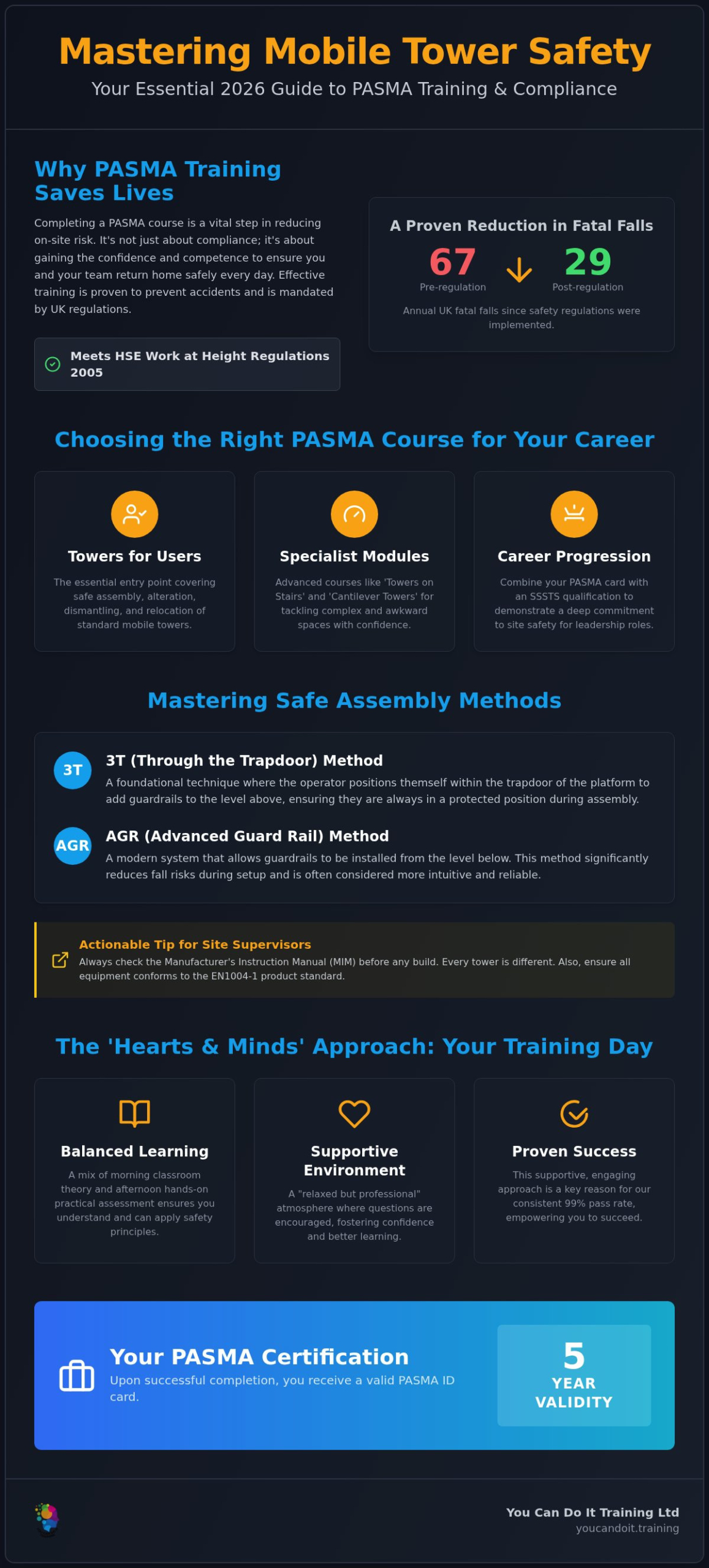
PASMA, or the Prefabricated Access Suppliers’ and Manufacturers’ Association, stands as the UK’s primary authority for mobile access towers. Many workers reach for a standard ladder out of habit, yet these often lack the stability required for intricate, long-duration tasks. In contrast, a mobile tower offers a spacious, multi-level platform that allows you to move freely without the constant fear of overbalancing. Completing a pasma training course is a vital step in reducing risk on site. While many view it as a hurdle, its real purpose is to prevent accidents. Since the implementation of current safety regulations, fatal falls in the UK have dropped from 67 to 29 annually, proving that the right training genuinely saves lives. We believe that safety shouldn’t feel like a chore; it’s an opportunity to ensure you return home safely every single day.
The Legal Landscape: HSE Guidelines and Work at Height Regulations
Staying legal means understanding the Work at Height Regulations 2005. These rules demand that any person involved in the assembly, dismantling, or inspection of a tower must be ‘competent’. Competence isn’t just a buzzword; it’s a legal requirement to ensure you know how to handle equipment safely. By following specific HSE guidelines, you can be sure you’ve picked the right tool for the job. The PASMA Code of Practice works alongside established scaffolding standards to provide a blueprint for a secure work environment. A quick tip for supervisors: always ensure your equipment conforms to the EN1004-1 product standard before work begins. Our goal is to dismantle the intimidation of these regulations, replacing it with the confidence that comes from expert mentorship.
Choosing the Right PASMA Training Course for Your Career
The most popular entry point for many professionals is the pasma training course specifically designed for “Towers for Users”. This programme covers the essential skills needed to assemble, move, and dismantle mobile towers safely. For those facing more complex environments, specialist courses like “Towers on Stairs” or “Cantilever Towers” provide the technical expertise required for awkward spaces. These qualifications aren’t just about ticking boxes; they’re about building a robust foundation for your career. If you’re aiming for a leadership role, combining your PASMA card with an SSSTS qualification is a smart move. It demonstrates a deep commitment to the Work at Height Regulations that site managers highly value. If you’re ready to take that next step, our team is here to help you find the right training path for your goals.
From 3T to AGR: Mastering Safe Assembly Methods
Safety isn’t just about the equipment; it’s about the method. The “Through the Trapdoor” (3T) method ensures you’re always protected by a guardrail as you ascend. Alternatively, the “Advanced Guard Rail” (AGR) system allows for the rails to be put in place from the level below, significantly reducing fall risks during setup. It’s a modern approach that many of our students find intuitive and reliable. Here is a practical tip you can use on site today: always check the manufacturer’s instruction manual (MIM) before starting any build. Every tower has unique specifications, and your pasma training course is designed to help you interpret these manuals accurately. This ensures that every platform you build is stable, secure, and fully compliant with national safety standards.
The ‘Hearts and Minds’ Approach: What to Expect on the Day
Our pasma training course isn’t a cold, clinical lecture. We believe in a “Hearts and Minds” philosophy that balances classroom theory with a hands-on practical assessment on a real tower. This approach ensures you don’t just hear about safety; you experience it. By dismantling technical jargon, we make the PASMA training scheme accessible and engaging for every learner, regardless of their previous experience level. You’ll spend the morning mastering the theory before putting those skills into practice under the watchful eye of an expert.
Camaraderie is a huge part of the day. The “relaxed but professional” atmosphere we foster is often built over a hot cup of tea or coffee and a few bourbon creams during the breaks. We know that when you’re comfortable, you’re more likely to ask questions and absorb the vital safety protocols. This supportive environment is a key reason for our 99% pass rate; it’s about providing the right encouragement so you can succeed with confidence. It transforms a mandatory chore into a genuine opportunity for growth.
Why Your Choice of Training Partner Matters
While many companies provide a certificate, a “Knowledgeable Mentor” ensures the skills actually stick when you’re 6 metres in the air. We position you at the heart of the learning experience, focusing on your specific background and site needs. To ensure total site compliance, it’s wise to partner with a provider that offers a comprehensive Working at Height Training suite. This holistic approach keeps your career moving forward whilst ensuring every project stays safe, legal, and productive. Choosing a partner with thirty years of industry experience means you’re learning from someone who truly understands the daily challenges you face on site.
Take the Next Step in Your Tower Safety Career
Master the height of your potential by ensuring every tower you build is a beacon of safety. We’ve explored how a pasma training course isn’t just about obtaining a card; it’s about gaining the confidence to inspect, assemble, and work securely according to HSE guidelines. You now understand the legal necessity of competence and the practical edge that modern assembly methods provide on site.
Our expert instructors bring decades of site experience to every session, maintaining a standard accredited by PASMA and CITB that has led to a 99% pass rate. We put you at the heart of the learning experience. This ensures that when you’re high above the ground, the skills you’ve learned truly stick.
Let’s turn mandatory compliance into your personal achievement. You can do it.
Frequently Asked Questions
How long does a PASMA training course take to complete?
A standard pasma training course typically takes one full day to complete, usually lasting around seven hours. This timeframe allows our knowledgeable mentors to guide you through both the essential theory and the hands-on practical assessment. We keep the day moving with a steady flow of tea and coffee, ensuring you stay focused and refreshed as you master the skills needed for safe tower assembly.
Does a PASMA card expire, and how do I renew it?
Yes, your PASMA photo card and certificate are valid for five years. To renew your qualification, you must successfully retake the full course before your current card reaches its expiry date. This ensures your knowledge remains sharp and fully aligned with the latest HSE guidelines and equipment standards for mobile access towers. It’s the best way to keep your professional credentials current and site-ready.
Do I need to be physically fit to attend a PASMA course?
You don’t need to be an athlete, but you should have a reasonable level of physical fitness and be comfortable working at height. The practical assessment involves lifting components and climbing the tower, so it’s important that you’re physically capable of these tasks. If you have any specific concerns about your health or mobility, our supportive team is always happy to discuss them before you book.
What is the difference between PASMA and IPAF training?
The main difference lies in the type of access equipment you’ll be using. A pasma training course focuses specifically on the safe use of mobile access towers, which are manually assembled scaffolding structures. IPAF training covers powered access equipment, such as cherry pickers and scissor lifts. Both certifications are vital for site safety, but you’ll need the PASMA qualification specifically for tower assembly and inspection.









Leave a Reply
Want to join the discussion?Feel free to contribute!