

Asbestos Duty to Manage Training: UK Compliance Guide 2026
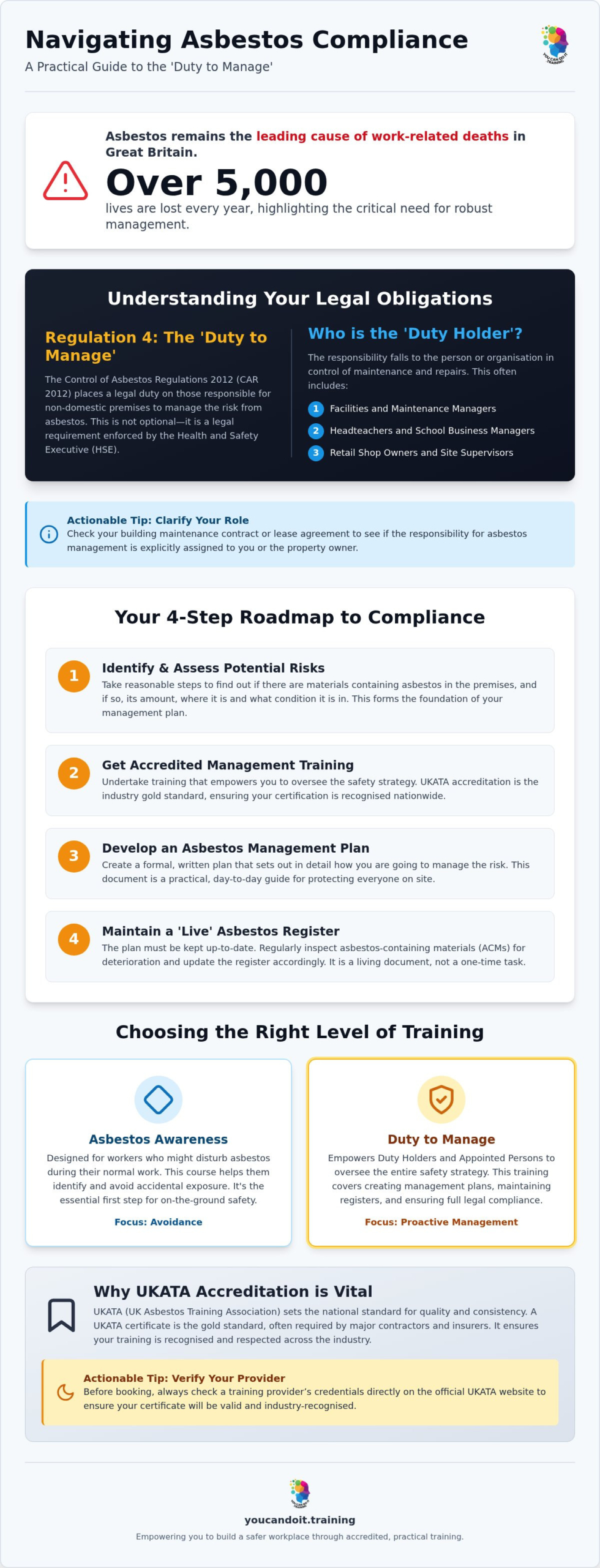
Did you know that asbestos remains the leading cause of work-related deaths in Great Britain, claiming over 5,000 lives every year? It’s a sobering figure that underscores why staying on top of your legal obligations isn’t just about avoiding a hefty HSE fine. It’s about the genuine safety of everyone in your building. Whether you’re new to asbestos management or already overseeing properties nationwide, understanding the jump from basic awareness to the formal Duty to Manage is vital for 2026.
We understand that interpreting Regulation 4 of the Control of Asbestos Regulations 2012 can feel like a mountain to climb. You might worry about jargon or the fear of prosecution, but we’re here to show you that you can do it. This guide provides a practical roadmap for compliance, ensuring you gain the accredited certification needed to protect your workforce. We’ll break down your legal duties and show how a supportive, hearts and minds approach makes mastering these safety standards achievable.
Key Takeaways
- Gain a clear, jargon-free understanding of Regulation 4 under CAR 2012 and identify exactly who carries the legal responsibility of the ‘Duty Holder’.
- Learn why UKATA accreditation is vital for industry recognition and how finding the right asbestos awareness training stoke on trent helps you meet the specific management standards required by the HSE.
- Follow a simple, step-by-step roadmap to organise an effective Asbestos Management Plan that transforms technical requirements into a proactive safety culture.
- Discover how to keep your Asbestos Register ‘live’ and accurate through regular inspections, protecting your workforce and your business from potential prosecution.
Understanding Regulation 4 and the Duty Holder’s Role
Regulation 4 of the Control of Asbestos Regulations 2012 (CAR 2012) isn’t just a dry piece of legislation; it’s a vital safety framework that puts you in control. Understanding the history of UK asbestos legislation helps us see why these rules exist to prevent future tragedies. In plain English, if you’re responsible for the maintenance or repair of a non-domestic building, you’re the ‘Duty Holder’ according to HSE standards. This means you must identify if asbestos is present, assess its condition, and manage the risk. If you’re still unsure about the basics, our guide on what is asbestos provides a great starting point.
While the HSE has the power to issue prohibition notices or pursue prosecution, compliance is about more than avoiding fines or business disruption. It’s a ‘Hearts and Minds’ commitment to protecting every person who walks through your doors. Ignoring these duties doesn’t just risk your business continuity; it risks lives. That’s why high-quality asbestos awareness training stoke on trent is so important. It gives you the confidence to move beyond paperwork and foster a genuine culture of care that ensures everyone goes home safe at the end of the day.
Who exactly is the ‘Appointed Person’ for asbestos?
Whilst your organisation is technically the Duty Holder, the daily responsibility often falls to an ‘Appointed Person’. This individual ensures the management plan is actually followed on-site. It’s a role that requires a clear head and the right knowledge, which is why finding the right asbestos awareness training stoke on trent is so beneficial for your career. Typical roles requiring this include:
- Facilities Managers and Maintenance Directors
- Headteachers and School Business Managers
- Retail Shop Owners and Site Supervisors
For those in these roles, managing building safety often extends beyond asbestos; keeping up with other regulatory changes, such as the 2026 F-gas requirements outlined by The CFS Group, is equally vital for comprehensive facilities management.
If you find that the responsibility rests with you, it may be beneficial to discover Oxford Environmental Consultants (OEC) for professional support in managing your property’s compliance obligations.
Choosing the Right Asbestos Awareness and Management Training
Finding the right asbestos awareness training stoke on trent is about more than just ticking a box for the HSE. It’s about finding a partner who understands that you need practical skills to manage risks every single day. We bridge the gap between simply knowing asbestos exists and having the confidence to organise its safe management across your premises.
UKATA Accreditation vs. General Training: Why it Matters
UKATA (UK Asbestos Training Association) isn’t just another acronym; they set the highest bar for quality and consistency across the country. Many tier-one contractors and insurers strictly require UKATA-certified training before granting site access or providing cover. This accreditation ensures your certification is recognised nationwide as the gold standard for safety.
There’s a significant difference between a basic Asbestos Awareness course and the Duty to Manage level. While awareness training helps workers avoid accidental exposure, management training empowers you to oversee the entire safety strategy. Choosing high-quality asbestos awareness training stoke on trent ensures you’re competent in complex settings, such as managing asbestos in schools, where multiple occupants must be protected simultaneously.
At You Can Do It Training Ltd, we believe you learn best when you feel supported and relaxed. Our environment is professional yet warm, putting the student at the heart of everything we do. We’ll keep you fuelled with plenty of tea, coffee, and those essential bourbon creams whilst we work through the curriculum together. If you want to soar in your career, joining our accredited training is the perfect next step.
Turning Training into a Robust Asbestos Management Plan
Completing your asbestos awareness training stoke on trent is an inspiring first step, but the real transformation happens when you apply that knowledge to create a living Asbestos Management Plan (AMP). This document isn’t just a hurdle for compliance; it’s a practical roadmap for daily safety. Central to this is your Asbestos Register, which must remain ‘live’. Regular inspections are essential to check that asbestos-containing materials (ACMs) haven’t deteriorated, as even minor damage can lead to significant risks.
Effective management relies on clear communication, especially when external contractors arrive on site. If someone is working at height or drilling into walls, they need immediate access to your register to avoid accidental exposure. By fostering this open dialogue and performing regular condition monitoring, you’re looking after the hearts and minds of everyone in your building. It’s about ensuring that safety knowledge moves from the classroom into the corridors of your workplace.
Actionable Steps for Your First Asbestos Survey
HSE guidelines define two main survey types you’ll need to know. A Management Survey identifies ACMs during normal building use, whilst a Refurbishment or Demolition Survey is a deeper, more intrusive check required before any construction work. Should an accidental disturbance occur, following the correct RIDDOR Reporting procedures is a vital legal requirement. Here is your starting checklist:
- Locate: Identify all potential ACMs across your premises through a competent survey.
- Assess: Evaluate their current condition and the risk of future disturbance or decay.
- Record: Log every detail in your register, ensuring it’s accessible to anyone performing maintenance.
Lead Your Team with Confidence and Compliance
Mastering your obligations under Regulation 4 is about more than just paperwork; it’s about building a genuine culture of care within your workplace. You now have the roadmap to identify Duty Holders, understand the value of UKATA accreditation, and maintain a live Asbestos Register that keeps everyone safe. Whether you’re refreshing your knowledge or specifically seeking asbestos awareness training stoke on trent, the goal is to protect your people. Our UKATA-certified courses boast a 99% pass rate and a supportive ‘Hearts and Minds’ approach that removes the stress from safety compliance. You’ve got the tools to manage these risks effectively and ensure every contractor remains protected.
We’ll provide the expert guidance, the relaxed atmosphere, and the confidence you need to succeed. You can do it.
Frequently Asked Questions
Is Asbestos Awareness training the same as Duty to Manage training?
No, these courses serve different purposes. Asbestos awareness training stoke on trent is designed for workers who might accidentally disturb asbestos during their daily tasks. Duty to Manage training is more advanced, specifically for those responsible for the building’s maintenance. It focuses on creating management plans and registers to ensure everyone on site stays safe over the long term.
How often does Asbestos Duty to Manage training need to be refreshed?
There is no fixed legal expiry date set by the HSE, but regular refreshers are vital to keep your skills sharp. UKATA typically recommends an annual update to stay current with any regulatory changes. Keeping your knowledge fresh ensures you can confidently manage risks and continue to soar in your professional role, protecting your workforce as building conditions evolve.
Does the Duty to Manage apply to domestic houses and flats?
The Duty to Manage under Regulation 4 generally applies to non-domestic premises. However, it also covers the common parts of domestic buildings, such as foyers, corridors, and lift shafts in blocks of flats. If you’re responsible for the maintenance of these shared areas, you must have a management plan in place to protect residents and visiting contractors from potential exposure.
What happens if I do not have an Asbestos Management Plan in place?
Failing to have a plan puts you at risk of serious HSE enforcement action, including heavy fines or even prosecution. Beyond the legal side, it’s a moral failure to protect the hearts and minds of those in your care. Without a robust plan and proper asbestos awareness training stoke on trent, you cannot effectively communicate risks to contractors, which is a fundamental requirement for safety.








Leave a Reply
Want to join the discussion?Feel free to contribute!