

Workplace Health and Safety Policy UK: The Essential Guide for 2026
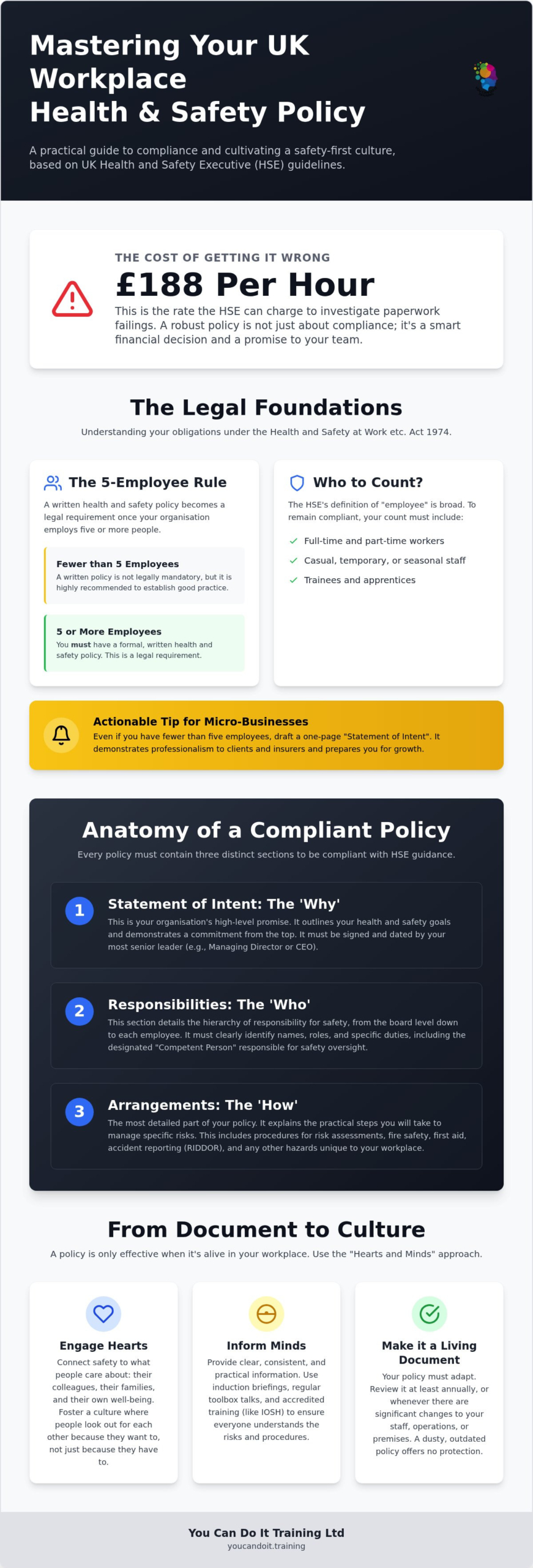
Did you know that the HSE now charges £188 per hour simply to investigate where your safety paperwork has missed the mark? It’s a heavy price to pay for a bit of admin, especially when you’re already working hard to keep your team thriving. Getting your workplace health and safety policy uk documentation right is about more than just dodging fines; it’s about making a genuine promise to the people who make your business possible.
We understand that the 5-employee rule and the latest 2026 updates can feel like a mountain of red tape. This guide will help you master the legal requirements and practical steps to build a robust policy that protects your staff and your livelihood. We’ll explore the essential sections every document needs, look at how Martyn’s Law changes the landscape, and show you that with the right approach, you can do it.
Key Takeaways
- Uncover the primary legal pillars of the Health and Safety at Work etc. Act 1974 to ensure your business remains fully compliant and protected.
- Master the three essential sections required to build a robust workplace health and safety policy uk that clearly defines responsibilities for everyone in the organisation.
- Learn how to transform your policy from a static document into a living record that adapts to your workplace through regular, meaningful reviews.
- Explore how the “Hearts and Minds” approach fosters a supportive culture where safety is a shared value rather than just a set of rules to follow.
Understanding the Legal Requirements for a Workplace Health and Safety Policy in the UK
A health and safety policy is far more than a dusty binder on a shelf; it is your organisation’s heartbeat and a formal promise to protect every person under your roof. In the UK, this commitment is underpinned by the Health and Safety at Work etc. Act 1974, which remains the primary legislation governing workplace welfare. Whilst every business must manage risks, your workplace health and safety policy uk documentation only becomes a strict legal requirement to be written down once you employ five or more people. This policy serves as the foundation for all the training we provide, ensuring that safety isn’t just a chore but a shared value.
The Five-Employee Rule: Do You Need to Write It Down?
If you have fewer than five staff, the law doesn’t strictly force you to record your policy in writing, but relying on verbal instructions is a risky strategy. We always suggest drafting a document regardless of your size. It builds consistency, fosters camaraderie, and shows you’re ready to soar as you grow. It’s much easier to update a simple document than it is to build one from scratch when you hire your fifth team member.
When counting your team, the HSE definition of an “employee” is broader than many realise. It’s not just your permanent office staff. To stay compliant, you must include:
- Full-time and part-time workers.
- Casual, temporary, or seasonal staff.
- Trainees and apprentices learning their trade.
Actionable Tip: Even if you are a micro-business, draft a one-page “Statement of Intent”. It’s a powerful way to prove to clients and insurers that you take safety seriously and put your people at the heart of everything you do.
How to Structure Your Health and Safety Policy: The Three Essential Sections
Building a compliant workplace health and safety policy uk requires a clear, rhythmic structure that ensures everyone knows their part. Rather than a static document, treat this as a living record that grows with your business. It should be reviewed at least annually or whenever significant changes occur in your operations. Following HSE guidance on the 1974 Act, your document must be split into three distinct sections to provide complete accountability across the organisation.
Statement of Intent, Responsibilities, and Practical Arrangements
The first step is the Statement of Intent. This is your high-level promise, signed by your most senior leader, which outlines your health and safety goals and sets the tone for a culture that puts people first. It’s the visionary “why” behind everything you do.
Next, you must define Responsibilities. This section lists names and roles, clarifying who is the “Competent Person” tasked with daily safety oversight. Often, this role is filled by someone who has completed IOSH Managing Safely or SMSTS training to gain the necessary expertise. Ensuring the right people have the right skills at the right time is vital for success.
Finally, the Arrangements section acts as the practical “how-to” guide for managing specific risks in your unique workplace. As the largest part of your policy, it details procedures for everything from fire safety to RIDDOR reporting. If you’re feeling overwhelmed, remember that you can do it with the right support.
Implementation: Bringing Your Policy to Life Through Hearts and Minds
A workplace health and safety policy uk document gathering dust in a filing cabinet provides no protection for your team. Real safety begins when that document leaves the office and enters the workspace through clear, rhythmic communication. By engaging staff emotionally, you ensure they follow procedures because they genuinely care about their mates, not just because they fear a site inspection. Igniting this culture requires a “Hearts and Minds” approach where every worker feels they have a stake in the outcome.
Include policy briefings in your induction programme and keep the momentum going with regular toolbox talks. These moments allow you to refer back to the full text of the Health and Safety at Work Act to remind everyone why these standards exist. It’s about turning a mandatory chore into a shared achievement that helps your business soar. When safety is spoken about daily, it becomes a natural part of the conversation rather than a cold instruction.
The Role of Accredited Training in Policy Compliance
Accredited training is the engine that drives your policy forward. Courses like CITB Health and Safety Awareness help workers understand their personal role in your safety framework. Meanwhile, supervisors with SSSTS or managers with SMSTS are essential for enforcing the “Responsibilities” section you’ve carefully drafted. These leaders ensure that the “Arrangements” you’ve set out are followed on the ground, every single day.
Actionable Tip: Create a relaxed learning environment to discuss the policy with your team. Put the kettle on, grab some bourbon creams, and gather their feedback. When people feel heard over a cuppa, they’re far more likely to take ownership of the rules that keep them safe.
Ignite Your Safety Culture Today
Your workplace health and safety policy uk is more than a legal tick-box; it’s the spark that ignites a thriving, protected workforce. By mastering the three essential sections and focusing on the hearts and minds of your team, you’ve taken the first step toward true peace of mind. We’ve seen thousands of businesses transform their approach over our 30 years of industry expertise, proving that technical compliance doesn’t have to be intimidating. With a 99% pass rate across our IOSH, CITB, and UKATA accredited certifications, we’re here to ensure your staff have the skills to back up your written promises. Whether you’re navigating the 5-employee rule or preparing for your next inspection, remember that a safer workplace is always within reach. You have the vision to protect your people, and with the right partner, you can do it.
Frequently Asked Questions
Is a health and safety policy a legal requirement in the UK?
Yes, every employer has a legal duty to manage health and safety. Under the Health and Safety at Work etc. Act 1974, you must have a policy. If you employ five or more people, your workplace health and safety policy uk must be a written document. Smaller teams can use a verbal policy, but writing it down ensures your safety culture can truly soar as you grow.
How often should a workplace health and safety policy be reviewed?
Review your policy at least once a year to ensure it remains relevant. You must also update it whenever significant changes occur, such as moving premises, hiring more staff, or introducing new equipment. Regular reviews keep your “Arrangements” section accurate and ensure your team is protected by the latest procedures. This proactive approach shows your staff that their welfare is always at the heart of your business.
Who is responsible for writing the health and safety policy?
The ultimate legal responsibility lies with the employer or the most senior person in the business. While you can’t delegate this duty, you can ask a “competent person” with the right training to help draft the document. This individual often holds certifications like IOSH Managing Safely or SMSTS, ensuring the policy is practical, compliant, and simple for your team to follow during their daily tasks.
What happens if a UK business does not have a health and safety policy?
Failing to have a compliant policy leaves your business vulnerable to heavy fines and criminal prosecution. If an inspector finds a material breach, you will likely face Fee for Intervention (FFI) charges, currently £188 per hour. Beyond the financial costs, a lack of clear guidance puts your people at risk, potentially leading to serious workplace injuries, costly civil claims, and a damaged professional reputation.










Leave a Reply
Want to join the discussion?Feel free to contribute!