

How to Lower Business Insurance Costs Through Safety Training
Insurance savings start with safer work, not paperwork alone. If you’re considering how to reduce insurance premiums with safety training, focus on training that addresses real workplace hazards, then keep clear records of what was taught and what changed. Insurers assess risk, including accident frequency and the effectiveness of safety measures, so consistent training and evidence of follow-through can strengthen your safety record.
It’s understandable to look for a clear link between training and lower insurance costs, but a course certificate alone does not guarantee a cheaper premium. This article explains how relevant training, practical hazard controls and documented compliance can help manage risk and inform discussions about your cover.
You’ll also learn what records to keep, why regular reviews matter and how to make safety a shared responsibility. Together, these steps help your team work more confidently and give insurers a clearer picture of how your business manages risk.
Key Takeaways
- Match safety training to the hazards people face in their roles, and revisit it as work practices change.
- Pair training with practical hazard controls so workers can put safer procedures into practice.
- Keep clear records of training, audits, identified risks and corrective actions to show how your business manages safety.
- Use relevant CITB training to build safety knowledge for workers, supervisors and managers.
Safety training and documented compliance programmes
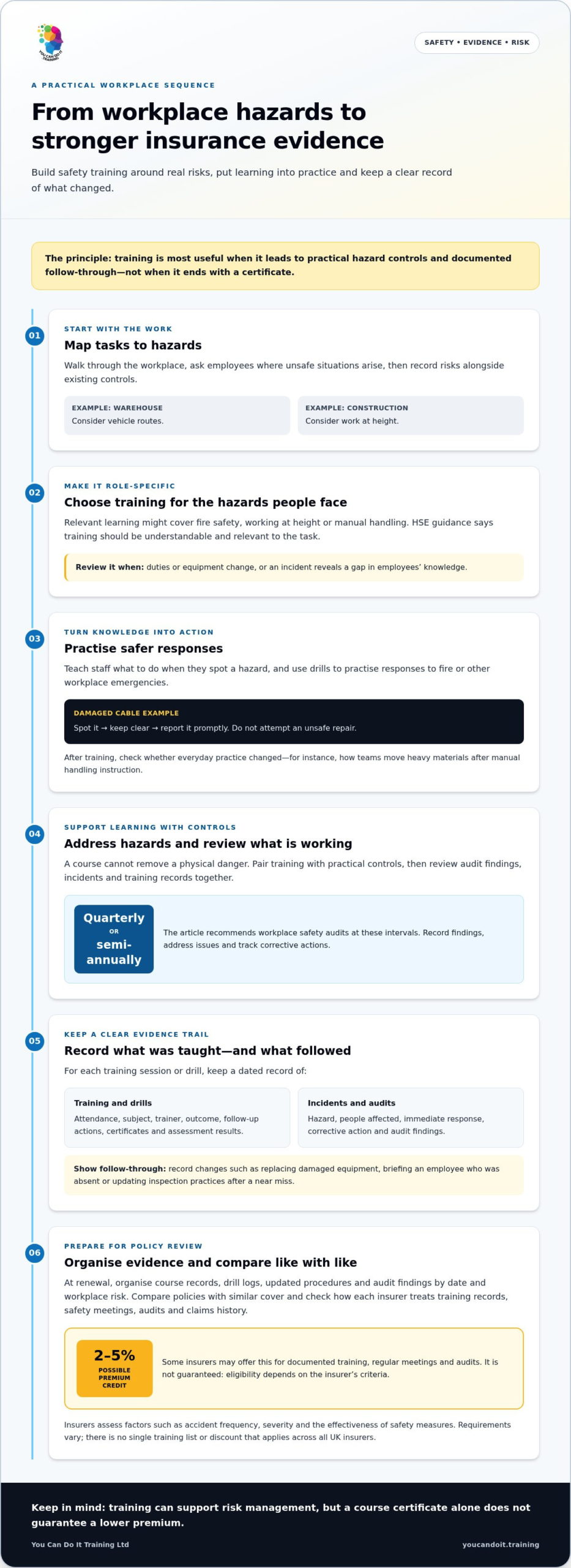
Safety training is most useful in insurance discussions when it addresses workplace risks and leads to practical changes. Record the session, attendees, hazards covered and agreed actions. For example, after manual handling training, note whether teams changed how they move heavy materials. This connects learning to everyday practice instead of relying on a certificate alone.
Which types of safety training do UK insurers recognise for premium discounts? There is no single training list or discount that applies across all UK insurers. Training relevant to your work, such as fire safety or working at height, can help explain the risks employees face and the steps you take to manage them.
For each training session or safety drill, keep a dated record of attendance, subject, trainer and outcome. Add any follow-up actions, such as replacing damaged equipment or briefing an employee who was absent. Store certificates and assessment results with these records. This makes it easier to maintain a consistent programme and show how safety measures work in practice.
What evidence of completed safety training do insurers require? Requirements vary by policy and insurer, so prepare concise records rather than assuming a certificate will be enough. At renewal, organise course records, drill logs, updated procedures and audit findings by date and workplace risk. This helps give the insurer a clearer view of your compliance programme.
Document incidents too, including the hazard, people affected, immediate response and corrective action. If a near miss reveals a blocked exit, record how it was cleared and whether inspection practices were updated. During policy reviews, compare these actions with training records and claims history to show what changed and whether the response addressed the cause.
What are the limitations or risks of relying on safety training to reduce insurance premiums? Training alone cannot remove hazards or determine insurance costs. Insurers also consider accident frequency, severity and how effective your safety measures are. Treat training as one part of risk management, alongside practical controls, regular reviews and clear incident records.
Employee safety training and hazard mitigation
Training is most useful when it reflects the hazards employees actually face. Start by mapping tasks to risks: a warehouse team may need instruction on vehicle routes, whilst a construction crew may need working-at-height training. Role-specific learning helps employees recognise dangers, choose safer practices and avoid preventable injuries. It also gives your risk management programme evidence of an active commitment to safety.
UK employers must provide employees with suitable health and safety information, instruction and training for their work. The Health and Safety Executive (HSE) advises that training should be understandable and relevant to the task. Review it when duties or equipment change, or when an incident reveals a gap in employees’ knowledge.
Assess hazards before choosing training. Walk through the workplace, ask employees where unsafe situations arise, and record risks alongside existing controls. A workplace safety audit reviews practices, procedures and safety arrangements. The article recommends audits quarterly or semi-annually, with findings recorded so the business can address issues and track corrective actions.
Recognition needs to lead to safe action. For example, teach staff to spot a damaged cable, keep clear of the area and report it promptly, rather than attempt an unsafe repair. Use drills to practise responses to fire or other workplace emergencies. Follow-up discussions can show whether instructions were clear and whether further training or controls are needed.
Training and hazard controls work together: a course cannot remove a physical danger, but it can help employees respond safely while the business addresses it. Review audit findings, incidents and training records together to assess changes in your risk profile. For role-specific learning, explore practical safety training that supports safer workplace practices.
Health and safety records and insurance premiums
Insurers assess risk using factors such as accident frequency, severity and the effectiveness of safety measures. Clear records help show how your proactive efforts connect to the workplace hazards you identify and address.
Comparing Insurer Discounts and Eligibility
Insurer discounts and eligibility criteria are the rules each insurer uses to assess safety measures and evidence. Compare policies with similar cover, then check how each insurer treats training records, safety meetings, audits and claims history. Some insurers may offer premium credits of 2-5% for documented training, regular meetings and audits. IOSH or NEBOSH training can evidence safety knowledge, but discount eligibility depends on the insurer’s criteria, not a qualification name alone.
Insurance Policies Affected by Safety Training
Safety training may inform an insurer’s risk assessment for business policies related to workplace hazards and injury claims. Employers’ liability and public liability cover may be relevant: the former concerns employee injury or illness at work, while the latter can relate to injury or damage involving third parties. Ask how training evidence is assessed for each policy, and compare the terms as well as the premium. This helps distinguish potential savings from changes to cover.
Training, Claims and Insurance Costs
Training can help reduce the likelihood of accidents and injuries by teaching employees to identify hazards and follow safer practices. Fewer or less serious incidents may mean fewer claims, which can support a stronger insurance record. For UK businesses, consider employee injury claims and employers’ liability costs rather than assuming a separate workers’ compensation discount. Track training alongside incident trends and corrective actions to show whether safety measures address recurring risks.
You Can Do It Training Ltd: CITB Health and Safety Awareness (HSA)
You Can Do It Training Ltd delivers CITB Health and Safety Awareness (HSA), which can help employees build a foundation in recognising workplace risks and safer working practices. It is a relevant next step when your records show workers need clearer health and safety knowledge, alongside practical controls and ongoing reviews.
Choose training that fits people’s roles. The CITB Site Supervisor Safety Training Scheme (SSSTS) is for supervisors, while the CITB Site Management Safety Training Scheme (SMSTS) is suited to site managers. The CITB SSSTS Refresher helps supervisors update their existing knowledge. Matching learning to responsibilities connects training with the hazards and decisions employees encounter at work.
Use training as part of your safety programme: identify the knowledge gap, train the relevant employees, then record attendance and follow-up actions. Training supports risk management, but works best alongside safer practices and clear evidence.
Contact You Can Do It Training Ltd to discuss suitable CITB training for your team.
Turn your next safety review into progress
Use your next renewal conversation as a prompt to set a clear safety goal for the months ahead. Choose one improvement your team can act on, assign responsibility and keep progress visible. This makes risk management an ongoing workplace habit, rather than a task that appears once a year. A steady, practical approach can help employees feel involved and make safer decisions part of everyday work.
A useful next step in learning how to reduce insurance premiums with safety training is to match learning to responsibility. You Can Do It Training Ltd delivers CITB Health and Safety Awareness (HSA), the CITB Site Supervisor Safety Training Scheme (SSSTS) and the CITB Site Management Safety Training Scheme (SMSTS), helping workers, supervisors and managers build relevant knowledge.
Keep taking practical steps, learn from each review and build a safer workplace together.
Frequently Asked Questions
How can safety training reduce business insurance premiums in the UK?
To understand how to reduce insurance premiums with safety training, connect role-specific learning to the hazards your insurer considers. For example, fire marshal training is relevant where fire response is part of your workplace risk plan. Track whether employees follow procedures during drills and reviews. This gives your broker a clearer account of how training supports controls and safer routines.
How much can health and safety training reduce UK business insurance premiums?
Some insurers may offer premium credits of 2-5% for documented safety training, regular meetings and audits, but no single reduction applies across UK business policies. The amount depends on the insurer’s criteria, your business’s risk profile and the evidence submitted. Compare renewal terms and cover alongside any credit, so a lower premium doesn’t come with unsuitable cover.
How should a UK business ask its insurer or broker about safety-training discounts?
Before renewal, send your insurer or broker a concise evidence pack: role-based training records, course certificates, recent audit actions, and a summary of incidents and changes made. Ask which evidence affects eligibility, whether the assessment applies to employers’ liability, public liability or another policy, and how discounts are calculated. Compare quotes only when the insured risks and cover limits match.










Leave a Reply
Want to join the discussion?Feel free to contribute!