
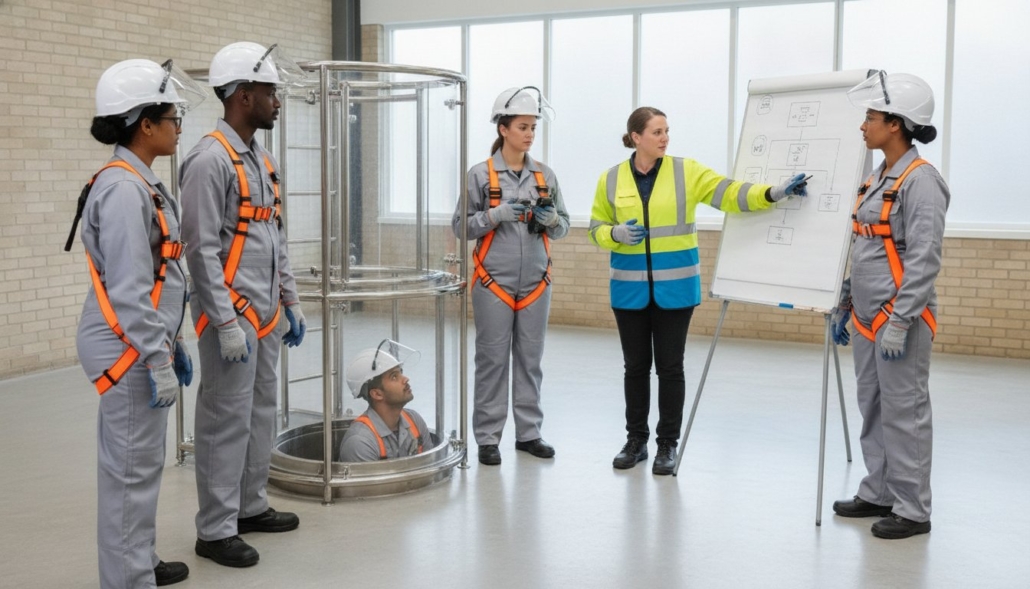
Confined spaces training Stoke on Trent
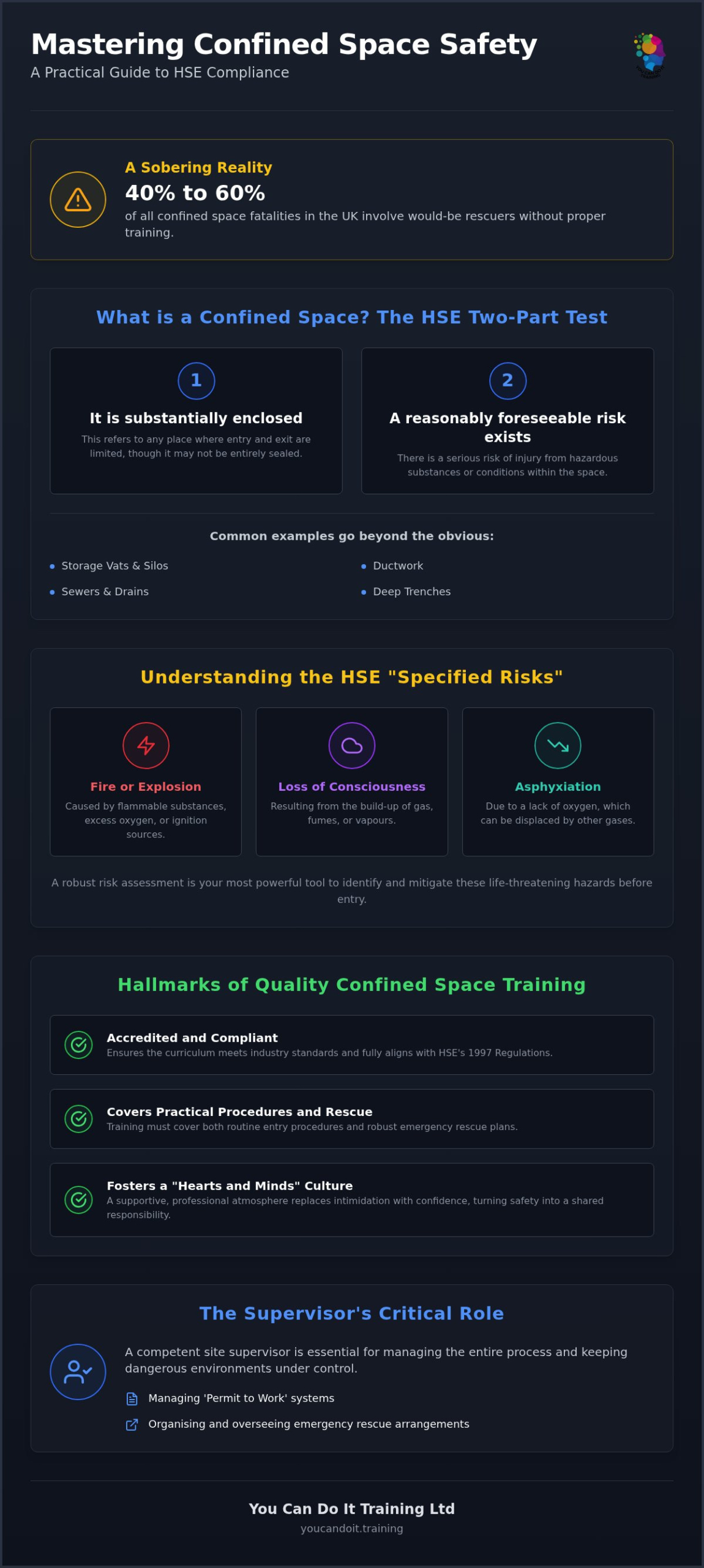
Did you know that between 40% and 60% of all confined space fatalities in the UK involve would-be rescuers who weren’t properly trained? It’s a sobering statistic that proves why securing quality confined spaces training is about far more than just ticking a compliance box. We know that the 1997 Regulations can feel like a maze of jargon, and the thought of working in high-risk environments often brings a heavy dose of anxiety for both managers and teams.
You deserve a learning experience that replaces “death by PowerPoint” with genuine confidence and camaraderie. This guide will help you identify specific risks, understand your legal duties under HSE guidelines, and choose accredited training that actually sticks. We’ll explore how a “hearts and minds” approach ensures your team stays compliant and, most importantly, returns home safely. With the right support, you’ll see that mastering safety isn’t just a requirement; it’s a goal you can definitely achieve.
Key Takeaways
- Learn to identify hidden hazards like gas build-up or oxygen deficiency by understanding the specific risks defined under the 1997 Regulations.
- Ensure your team remains compliant by choosing accredited confined spaces training stoke on trent that covers both practical entry procedures and robust emergency rescue plans.
- Discover how a “Hearts and Minds” philosophy transforms safety from a mandatory chore into a supportive culture where everyone looks out for one another.
- Master the role of a site supervisor in managing permits and rescue arrangements to keep dangerous environments under control and fully aligned with HSE standards.
Understanding Confined Space Hazards and HSE Regulations
Safety isn’t just a list of rules; it’s about protecting the people you work with every day. Many people assume a confined space is always a dark, underground sewer, but the reality is much broader. Any area with limited entry or exit where a serious injury could occur qualifies. Choosing the right confined spaces training stoke on trent helps your team look past the obvious and spot the hidden dangers that others might miss. It’s about fostering a culture where safety is a shared responsibility, not just a tick-box exercise.
Defining a Confined Space Under the 1997 Regulations
According to the HSE, a confined space is defined by a two-part test: it must be a place that is substantially enclosed and where there’s a reasonably foreseeable risk of serious injury from a “specified risk”. While you might immediately think of large storage vats or industrial silos, it’s vital to remember that ductwork and even deep trenches can meet these criteria. If you’re unsure about a specific area, checking a foundational guide on What is a confined space? can provide a helpful starting point for your team.
The HSE identifies several “specified risks” that turn a simple enclosed area into a dangerous environment. These include fire or explosion from flammable substances, loss of consciousness due to gas, fumes, or vapours, and asphyxiation due to a lack of oxygen. Without the right preparation, these hazards can become fatal in seconds, making it essential to have a clear understanding of the environment before anyone enters.
Before any work begins, a robust risk assessment is your most powerful tool. It allows you to identify these hazards and put mitigation steps in place. Remember, with the right knowledge and a supportive environment, you’ll find that staying compliant is something you can definitely do. Proper confined spaces training stoke on trent ensures your risk assessments are more than just paperwork; they’re a lifeline for your team.
Selecting the Right Accredited Training for Your Team
Choosing a training partner is about finding a knowledgeable mentor who understands that safety is personal. You need industry-recognised certifications that don’t just meet the bare minimum but actually prepare your team for real-world scenarios. Legislative compliance is key, so ensure the curriculum covers both entry procedures and robust emergency rescue arrangements. This isn’t just best practice; it’s a requirement under HSE regulations for confined spaces.
When scouting for confined spaces training stoke on trent, look for providers who offer:
- Accredited mentors who prioritise learner comfort and clear understanding.
- A relaxed, professional atmosphere that encourages open discussion.
- Curriculums that align with Working at Height training protocols, as vertical access is often required.
A hospitable environment, complete with a warm cup of tea and a relaxed atmosphere, helps dismantle the intimidation often felt during technical safety sessions. Our “You Can Do It” mantra is designed to build learner confidence, fostering the camaraderie needed to manage risks effectively once you’re back on site. If you’re looking to build your team’s skills, exploring accredited safety training is a great place to start.
Practical Preparation: Actionable Tips for Your Course
To get the most value from your session, familiarise yourself with your site’s specific RIDDOR reporting procedures before attending. We suggest bringing specific questions about your own workplace challenges to share with your mentor. This turns a standard confined spaces training stoke on trent course into a tailored problem-solving workshop. Remember that safety is a shared responsibility; engaging fully with the materials is your first step toward a safer site.
The ‘Hearts and Minds’ Approach to Safety Training
Safety training shouldn’t feel like a mandatory chore. Our ‘Hearts and Minds’ philosophy shifts the focus from cold instruction to a culture where everyone genuinely looks out for one another. When you book confined spaces training stoke on trent, you aren’t just signing up for a lecture; you’re entering a space designed to foster mutual respect and shared responsibility. We replace intimidation with encouragement, ensuring that every learner feels valued from the moment they walk through the door.
Small details matter. We find that high-quality hospitality, like a hot cup of tea or coffee paired with proper bourbon creams, does wonders for settling nerves. It creates a welcoming, hospitable British training culture that values your comfort as much as the curriculum. This relaxed atmosphere is the perfect backdrop for tackling serious safety protocols with a clear, focused mind.
Why a Supportive Environment Leads to Better Safety Outcomes
When learners feel comfortable, they’re far more likely to ask vital questions that could one day save a life. Technical details found in the Approved Code of Practice for confined spaces are easier to retain when the environment is inclusive rather than clinical. A personalised approach helps to ignite the spark of interest in health and safety, transforming it from a simple certificate into a lifelong commitment to site safety. By putting the student at the heart of everything, we ensure that the knowledge sticks long after the course is over.
Integrating Confined Space Safety into Site Management
Effective site management isn’t just about hitting timelines; it’s about the safety of every person on the ground. Confined space awareness is a critical component for those undertaking SMSTS training. Managers must oversee complex permit-to-work systems and ensure that a rescue plan isn’t just a piece of paper but a live, ready-for-action strategy. When you invest in confined spaces training stoke on trent, you’re equipping your leadership team with the vision to see hazards before they become incidents.
We encourage a holistic view of workplace safety. Confined space knowledge shouldn’t exist in a vacuum; it should complement other vital skills like First Aid or Fire Marshal duties. This integrated approach ensures that if something does go wrong, the response is swift, coordinated, and effective. It’s about building a versatile team where everyone understands how their specific certifications work together to create a safer environment for everyone involved.
The Supervisor’s Responsibility in Enclosed Environments
A supervisor’s role is pivotal when teams are working in enclosed spaces. Their key duties include verifying atmospheric testing results and ensuring all safety equipment is fit for purpose according to HSE guidelines. This level of oversight links directly to the broader skills learned in an SSSTS course. By focusing on effective communication and team leadership, supervisors can foster the camaraderie needed to manage high-pressure situations. Quality confined spaces training stoke on trent provides the technical foundation, while management courses provide the leadership spark to keep everyone safe. Remember, with the right mentorship and a supportive atmosphere, managing even the most dangerous environments is a goal you can definitely achieve.
Empowering Your Team for a Safer Future
Managing hazardous environments requires a blend of technical expertise and a genuine commitment to your team’s wellbeing. We’ve explored how identifying specified risks and choosing accredited mentors can transform your approach to site safety. By fostering a “hearts and minds” culture, you move beyond simple compliance to create a workplace where everyone looks out for one another. High-quality confined spaces training stoke on trent is the foundation of this transformation, providing the skills and confidence needed to handle challenging enclosed spaces.
Our student-centric approach has led to a 99% pass rate across all accredited courses, ensuring you receive the right training from a partner you can trust. We pride ourselves on creating a relaxed learning environment where the tea is hot and the bourbon creams are plentiful. As a partner accredited by IOSH and CITB, we provide professional guidance in a supportive atmosphere.
Safety is a journey we take together. With the right support and a bit of encouragement, you’ll find that keeping your team safe is a goal you can definitely achieve.
Frequently Asked Questions
What are the main risks associated with working in confined spaces?
The primary risks include fire, explosion, or loss of consciousness due to toxic gases or oxygen deficiency. Other dangers involve drowning or being trapped by collapsing materials. According to HSE data, atmospheric hazards cause the vast majority of fatalities. Identifying these “specified risks” is a vital part of safety training to ensure every worker returns home safely.
How often should confined spaces training be refreshed in the UK?
Most industry bodies recommend refreshing your certification every three years. While the law doesn’t set a hard expiry, regular updates ensure your team remains competent and aware of any changes to HSE guidance. Staying current with confined spaces training stoke on trent helps prevent safety knowledge from fading, keeping your site compliant and your team’s skills sharp.
Is a risk assessment mandatory for all confined space entries?
Yes, a thorough risk assessment is a legal requirement under the Confined Spaces Regulations 1997 for every entry. Safety isn’t a one-time event. You must identify all potential hazards and implement a safe system of work before anyone enters. This process helps you decide if entry is truly necessary or if the work can be done from the outside.
What is the difference between a confined space entry course and a rescue course?
An entry course covers safe access and working procedures within an enclosed area. A rescue course focuses on emergency arrangements and casualty recovery. Both are essential for meeting HSE standards. Completing confined spaces training stoke on trent helps you understand these differences, ensuring your team isn’t just trained to work, but also prepared to handle unexpected incidents with confidence.








Leave a Reply
Want to join the discussion?Feel free to contribute!