
Implementing a Fire Safety Plan for Evacuation and Staff Roles
Training alone won’t make an evacuation work. People need to know what to do in their own workplace. Implementing a fire safety plan after training means turning learning into clear actions: identify and reduce fire hazards, raise the alarm, evacuate safely and understand individual roles. The plan should reflect the premises and the people who use them.
It’s natural to focus on the training itself, but confidence grows when staff can put what they’ve learned into practice. Clear responsibilities, familiar escape routes and a suitable assembly point help turn a written plan into a response people can follow under pressure.
This article explains how to link fire prevention with emergency procedures, assign staff roles and plan for people who may need help to evacuate. You’ll also learn how drills and reviews can reveal what needs improving, keeping the plan practical, understood and ready to use.
Key Takeaways
- Make evacuation procedures clear, including escape routes, the assembly point and arrangements for anyone who may need assistance.
- Use hazard checks to spot fire risks early, keep escape routes clear and turn drill findings into practical improvements.
- Assign staff responsibilities clearly so everyone knows how to raise the alarm, support evacuation and report incidents.
- Fire Marshal Training can help staff prepare for specific fire safety responsibilities and put their learning into practice.
Emergency evacuation procedures and assembly points
Implementing a fire safety plan after training means turning evacuation learning into clear routes, responsibilities and a meeting point. Employees need procedures that match the workplace layout and fire risks.
Escape routes and evacuation procedures
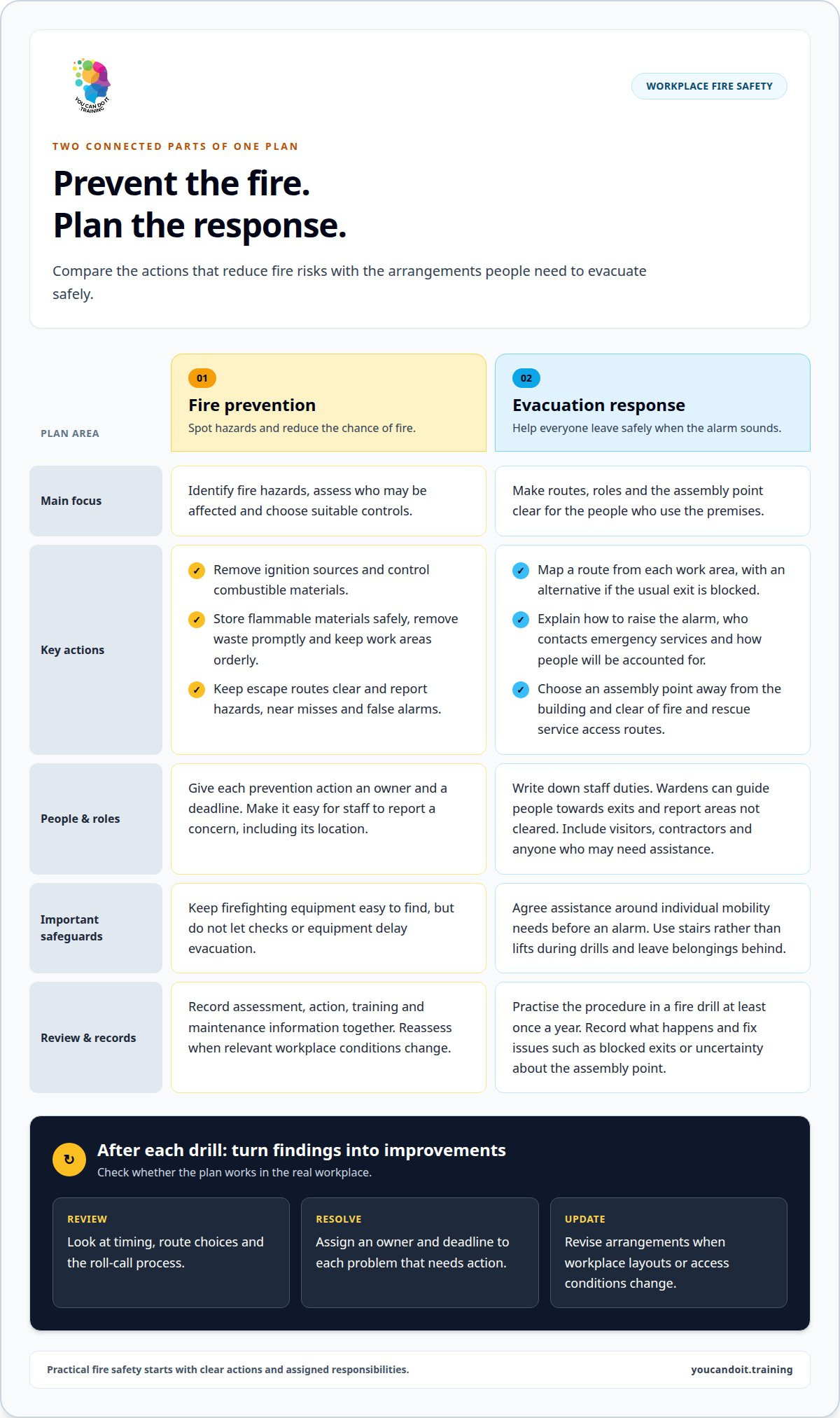
An escape route is a clear, planned way from a workplace area to a place of safety. Map a route from each work area, including an alternative if smoke or fire blocks the usual exit. During an alarm, employees should follow the agreed procedure, use stairs rather than lifts during drills and leave belongings behind. Keep routes and final exits clear, and make firefighting equipment easy to find without delaying evacuation.
Creating and practising the evacuation plan
An evacuation plan explains how people leave the premises and where they gather afterwards. Choose an assembly point away from the building and clear of access routes needed by the fire and rescue service. Explain how to raise the alarm, who contacts emergency services and how employees will be accounted for. Practise the procedure in a fire drill at least once a year. Record what happens and address problems such as blocked exits or confusion about the assembly point.
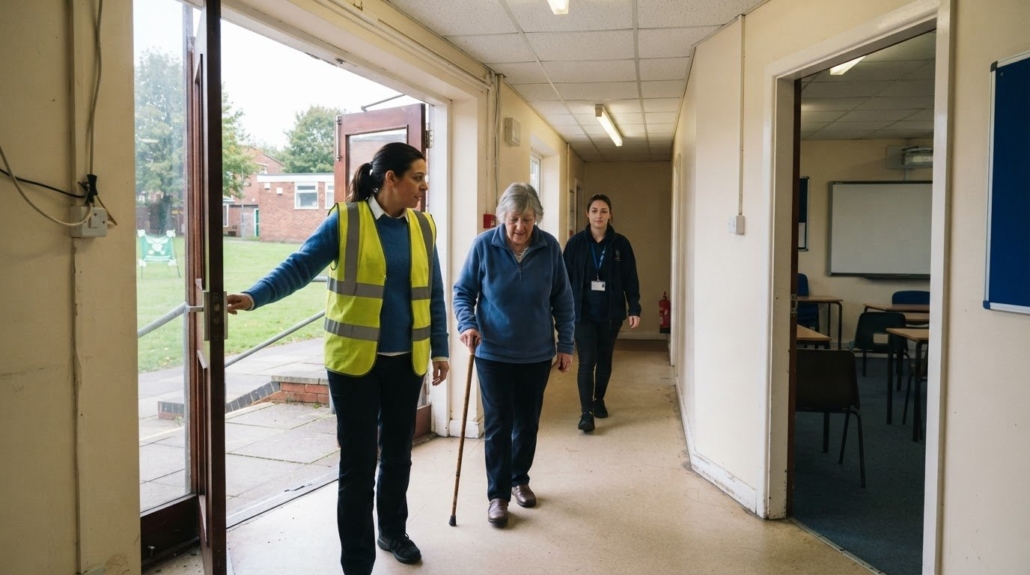
Plan assistance around individual mobility needs before an alarm sounds. For example, agree who will support a colleague using a wheelchair and which suitable route they will take. Never assume one arrangement works for everyone. Include visitors and contractors in the procedure, and make sure employees know how to report anyone still inside. A named person can pass that information to the fire and rescue service rather than re-entering the building.
After a drill, review the timing, route choices and roll-call process. Update the plan when workplace layouts or access arrangements change, so the next evacuation reflects current conditions.
Fire prevention, hazard identification and emergency response
Fire prevention means spotting hazards, reducing risks and keeping emergency arrangements usable. Staff need a clear way to raise concerns and record follow-up actions.
Prevention measures and risk reduction
Prevent fires by removing ignition sources, controlling combustible materials and keeping work areas orderly. For example, damaged electrical equipment beside cardboard can create a fire risk. Store flammable materials safely, remove waste promptly and keep escape routes clear. Use the Health and Safety Executive’s workplace fire safety guidance to support practical prevention measures and staff awareness.
According to The National Archives (legislation.gov.uk), the Regulatory Reform (Fire Safety) Order 2005 sets out UK employers’ duties, including risk assessment, fire precautions and staff training. Assessments should identify hazards, who may be affected and suitable controls. Give each action a named owner and deadline, then review it when relevant workplace conditions change.
Action deadlines and hazard reporting
An action deadline states when a fire safety problem must be addressed and who is responsible. Employees should report hazards, near misses and false alarms through the workplace reporting process, describing the location and concern. For example, report a damaged electrical lead promptly, then record the response and completion date. Keep assessment, drill, training and maintenance records together, and review them to track outstanding actions. How should staff report hazards and keep fire safety records? They should use the agreed reporting route, describe the issue clearly and record the action taken for review.
On construction sites, fire safety planning continues throughout project stages. According to The National Archives (legislation.gov.uk), the Construction (Design and Management) Regulations 2015 require site managers and principal contractors to plan, manage and monitor fire safety throughout project stages. Reassess hazards when site conditions, equipment or work activities change.
Roles and responsibilities for fire wardens and staff
Clear accountability turns an evacuation plan into coordinated action. Assign duties by role and make sure employees know who leads each response.
Fire safety accountability
Accountability means assigning an owner to each fire safety task and making responsibilities clear to staff. This matters because an alarm leaves little time to work out who should act next. The responsible person should ensure arrangements are communicated, while employees follow procedures and report incidents, near misses and false alarms. Record who checks safety measures and who updates arrangements after workplace changes.
Warden and safety officer responsibilities
Fire wardens or marshals help put the evacuation plan into practice. Safety officers may coordinate wider risk assessments and follow-up actions. Write down their duties, explain them and provide role-appropriate training. A warden can guide people towards escape routes, report an area that has not been cleared and share information with the incident lead. Staff should not delay evacuation to fight a fire or use extinguishers unless they are trained and it is safe.
After training, what fire safety equipment checks and maintenance are required? Set checks in the premises’ maintenance schedule: this can include weekly fire alarm call-point tests and fire-door checks, plus annual extinguisher testing and maintenance to British Standard 5306-3.
Workplace guidance and consequences of non-compliance
According to The National Archives (legislation.gov.uk), the Regulatory Reform (Fire Safety) Order 2005 sets out fire safety duties, including risk assessment, precautions and staff training. Other legal requirements may also affect workplace safety arrangements.
What are the penalties for failing to implement workplace fire safety measures in the UK? A failure can lead to enforcement action or prosecution, depending on the breach and risk. The consequences can be serious, so keep responsibilities, checks and records up to date.
You Can Do It Training Ltd: Fire Marshal Training
You Can Do It Training Ltd’s Fire Marshal Training is a practical next step for employees given fire safety responsibilities who need preparation for the role. It helps prepare the people expected to communicate procedures and put workplace arrangements into practice. Training works alongside your evacuation plan, risk assessments and equipment checks. It doesn’t replace those arrangements or the responsible person’s duties.
Consider Fire Marshal Training when appointing fire marshals, changing staff responsibilities or identifying a need to strengthen role-specific knowledge. For construction supervisors and managers, CITB Site Supervisor Safety Training Scheme (SSSTS) or CITB Site Management Safety Training Scheme (SMSTS) can also support wider site safety responsibilities. The right training helps people understand their role, act confidently and contribute to a workplace where safety is shared. Contact You Can Do It Training Ltd to discuss Fire Marshal Training for your team.
Keep building confidence through practical action
Successfully implementing a fire safety plan after training depends on keeping responsibilities active rather than letting them fade into paperwork. Give teams opportunities to use what they’ve learned, discuss changes to workplace risks and make fire safety part of everyday decisions. This ongoing effort helps people recognise their contribution and respond with greater clarity.
For broader workplace learning, You Can Do It Training Ltd also offers CITB Health and Safety Awareness (HSA), CITB Site Supervisor Safety Training Scheme (SSSTS) and CITB Site Management Safety Training Scheme (SMSTS). Choose a focus that matches people’s responsibilities and the knowledge they need to carry them out.
Keep learning, communicate clearly and give everyone a role in making the workplace safer.
Frequently Asked Questions
What should a UK fire safety plan include after staff training?
The plan should connect the fire risk assessment with instructions employees can use during everyday work and an emergency. Explain how staff raise an alarm, report hazards and manage equipment or processes that could increase fire risk. Include arrangements for visitors and contractors, and explain how updates will be shared when work areas or responsibilities change. Keep instructions accessible to relevant staff.
What steps should a business take to put its fire safety plan into practice?
Start by assigning an owner to each outstanding action from the risk assessment. Set a deadline and record when it is complete. Brief employees on changes that affect their work, such as a relocated work area or revised equipment procedure. Include the plan in new-starter induction, and review it after drills, incidents or significant workplace changes so improvements are captured and acted on.
Who is responsible for implementing a workplace fire safety plan in the UK?
The responsible person should lead the arrangements and ensure that fire safety duties are put into practice. They can delegate defined tasks, such as communicating procedures or coordinating checks, but employees also need to follow instructions and report concerns. In England and Wales, the Regulatory Reform (Fire Safety) Order 2005 sets out relevant duties; Scotland and Northern Ireland have separate fire safety legislation.
How often should fire drills and fire safety training be carried out in the UK?
Plan fire drills at least once a year, and provide fire safety induction training on an employee’s first day. Refresh general fire safety training at least once a year; staff with specific fire safety responsibilities should receive refresher training every six months. Review the schedule when staff roles, workplace risks or the people needing evacuation support change.
How should evacuation routes, assembly points and roll calls be organised?
Make route instructions clear from each work area, and identify an alternative if the usual exit is unusable. Choose an assembly point away from the building that does not obstruct emergency access. At the meeting point, use current staff and visitor records to account for people. Give a named lead responsibility for reporting anyone unaccounted for to the emergency services.










Leave a Reply
Want to join the discussion?Feel free to contribute!